Steccherinum ochraceum has carried its ochre-colored, tooth-covered surface through more than two centuries of taxonomy, first named Hydnum ochraceum by Johann Friedrich Gmelin in 1792 before Samuel Frederick Gray moved it into the genus Steccherinum in 1821.
Known commonly as the ochre spreading tooth, this is a hydnoid fungus belonging to the family Steccherinaceae, within the order Polyporales, class Agaricomycetes, and phylum Basidiomycota — placing it firmly among the wood-decaying fungi of the kingdom Fungi.
Its long taxonomic history and distinctive tooth-like spore surface make it a small but persistent thread connecting modern mycology back to the earliest systematic descriptions of European fungi.
Fruiting Body and Identification
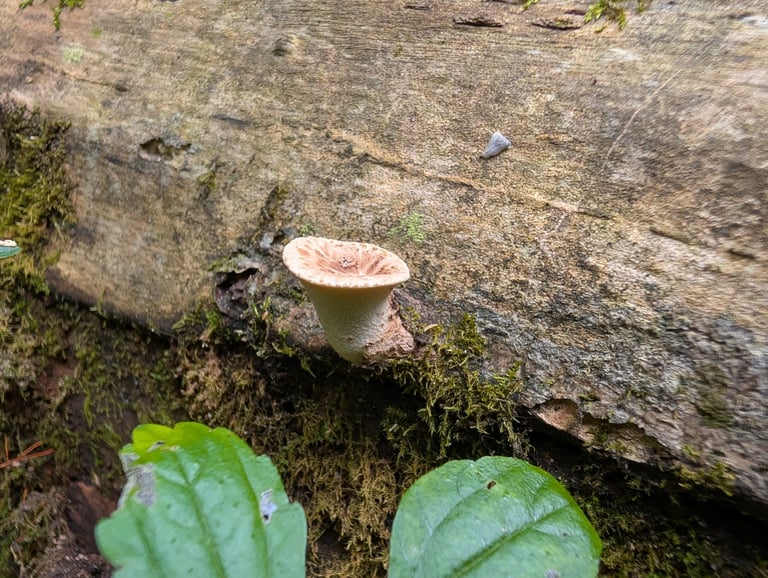
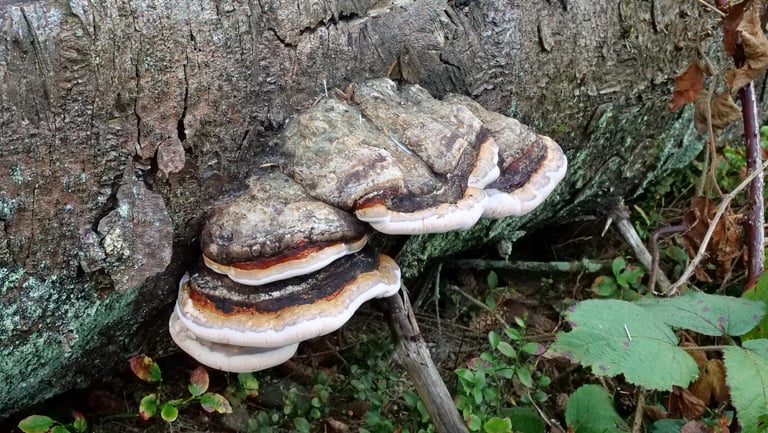
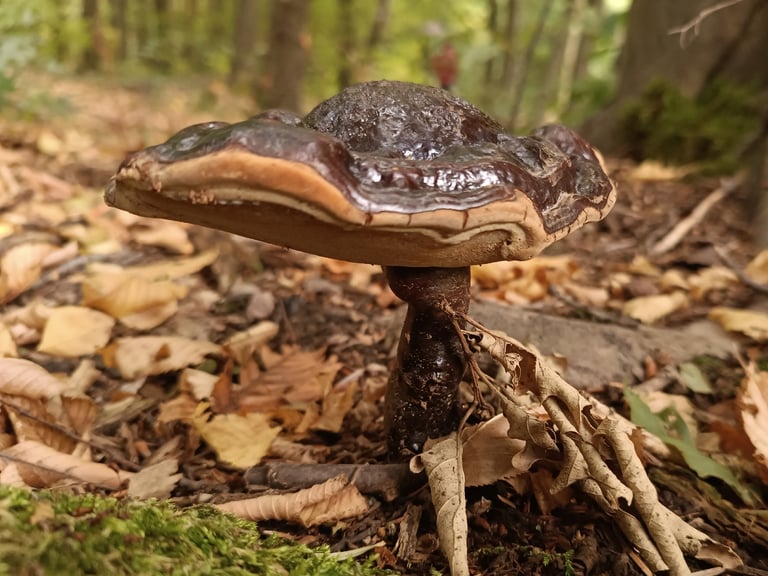
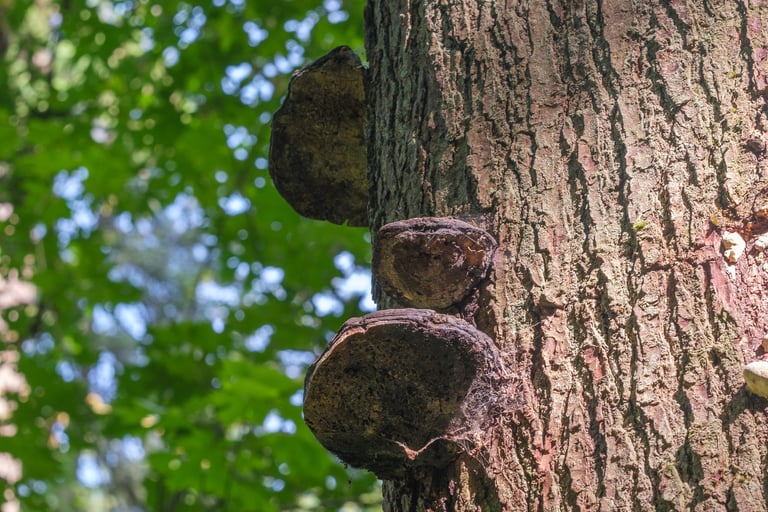
The most reliable identifying feature of Steccherinum ochraceum is its hydnoid spore-bearing surface — a spreading layer covered in small, tooth-like or spine-like projections rather than gills or pores, a structure shared by all members of the hydnoid fungi group.
Its common name, ochre spreading tooth, points to two defining traits: an ochre, yellowish-brown coloration and a growth habit that spreads as a thin, crust-like layer across the wood it colonizes rather than forming a discrete cap and stem.
Beyond these characteristics, detailed data on flesh texture, odor, spore print color, or how the fruiting body changes with age is not available.
Distribution and Habitat
Observation records for Steccherinum ochraceum show a clear seasonal pattern, with counts rising sharply from summer into autumn. Monthly totals climb from 659–775 in June and July to 1,319 in August, then peak at 2,027 in October before declining to 1,396 in November and 839 by December.
This autumn peak suggests that fruiting bodies are most frequently observed and reported during the fall months, likely reflecting favorable conditions for fruiting during that period. Numbers stay comparatively steady through winter and spring, ranging roughly between 700 and 900 per month from December through April.
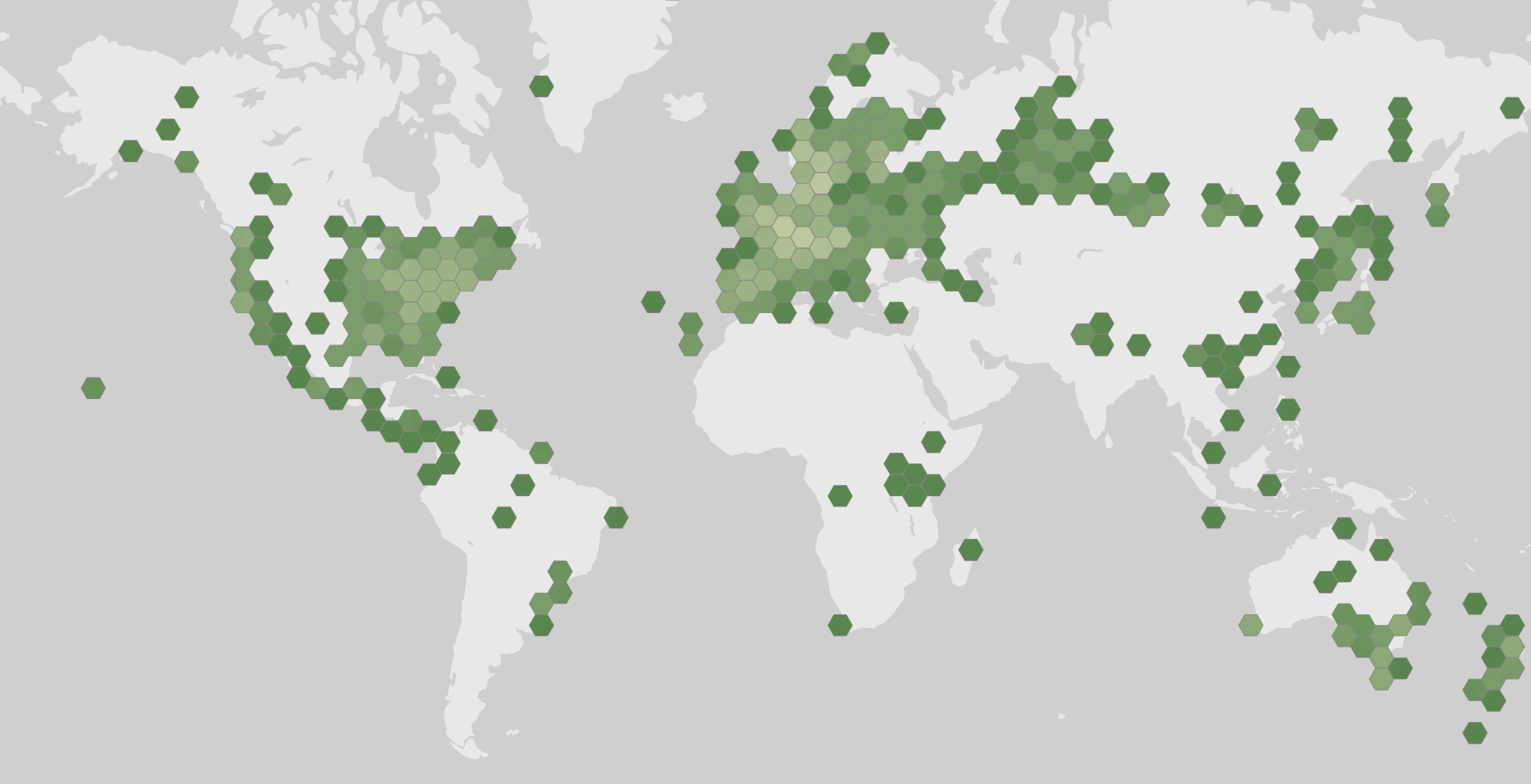
These figures come from GBIF occurrence data and represent presence observations only — they document where and when the species has been recorded, not its total abundance, population size, or the full extent of its native range.
Fun Facts
- Steccherinum ochraceum was originally described as Hydnum ochraceum by Johann Friedrich Gmelin in 1792.
- Samuel Frederick Gray reclassified the species into the genus Steccherinum in 1821, nearly thirty years after its original description.
- Its common name, ochre spreading tooth, directly describes both its color and its distinctive spreading, tooth-covered growth form.
- The species belongs to the family Steccherinaceae within the order Polyporales, a group known for its wood-decaying fungi.
Photos
Photographs from via iNaturalist, licensed under CC0 1.0., by Barry Cottam via iNaturalist, licensed under CC BY 4.0., by Atsushi Nakajima via iNaturalist, licensed under CC BY 4.0., by Theo Rickert via iNaturalist, licensed under CC BY 4.0., by Christina Moresi via iNaturalist, licensed under CC BY 4.0., by Sue Ann Kendall via iNaturalist, licensed under CC BY 4.0., by Enrico Tomschke via iNaturalist, licensed under CC BY 4.0., by Alexander Diaz via iNaturalist, licensed under CC BY 4.0., and by katifungi via iNaturalist, licensed under CC BY 4.0., credited on each photo.
Ecology and classification
Classification
- Phylum
- Basidiomycota
- Class
- Agaricomycetes
- Order
- Polyporales
- Family
- Steccherinaceae
- Genus
- Steccherinum
- Species
- Steccherinum ochraceum
Sources
- GBIF Species names and classification
- iNaturalist Photos
- Wikidata Common names and conservation status
- Wikipedia Summary extract