Some individual European yews alive today may have taken root before the pyramids of Giza were built. This slow-growing conifer, native across Europe, West Asia, the Caucasus, and Northwest Africa, can persist for millennia, making it one of the longest-lived organisms on the continent.
Taxus baccata, commonly called common yew or English yew, belongs to the family Taxaceae. It grows as a woodland tree throughout its native range and carries an IUCN status of Least Concern globally, even though populations in some regions face serious local pressure. Beyond its longevity, the yew is remarkable for a contradiction: every part of the plant is poisonous except the fleshy red aril, yet it has supplied humanity with everything from war bows to a modern chemotherapy drug.
Identification and Appearance
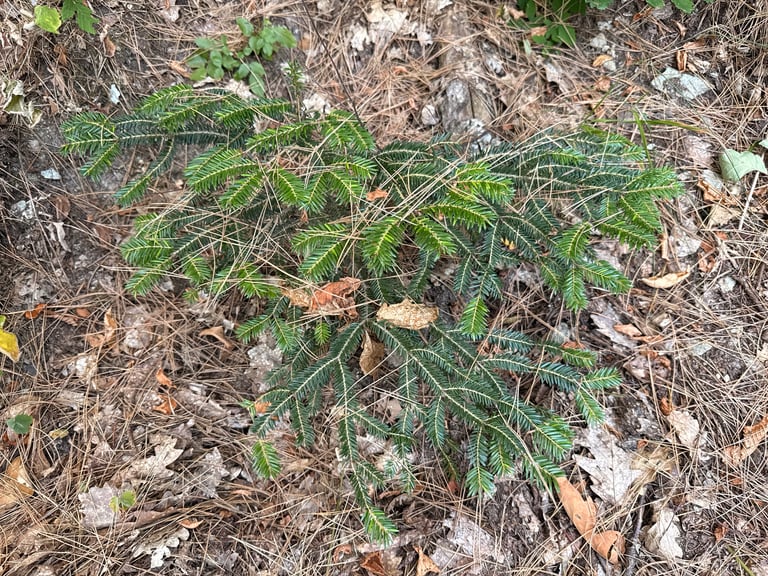
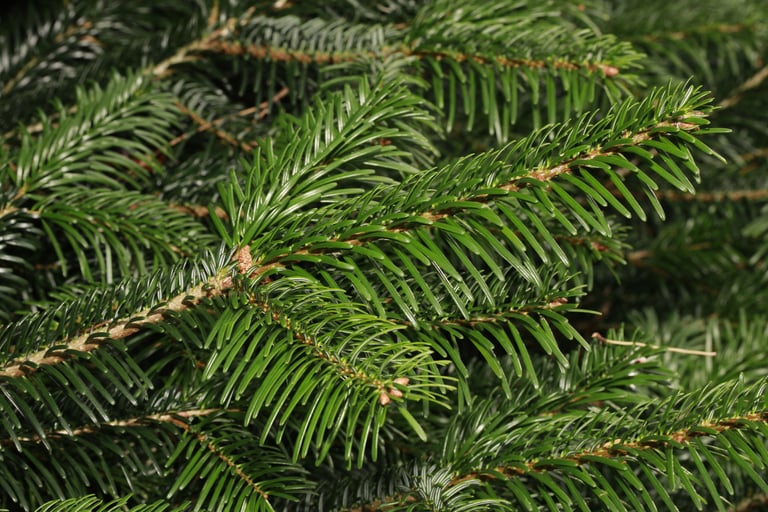
The clearest field mark is the arrangement of its flat, dark green needles: they twist at the base to lie in two neat rows along either side of the stem, giving mature branches a flattened, feathery look, though leading shoots show a more spiral pattern. Needles measure 1 to 4 centimeters long and 2 to 3 millimeters wide.
The tree typically reaches 10 to 20 meters in height, occasionally as much as 28 meters, with a trunk up to 2 meters in diameter and exceptionally up to 4 meters. Bark is thin, scaly, and reddish-brown, peeling off in small flakes running along the length of the stem.
Most yews are dioecious, with male and female cones borne on separate trees, though some individuals are variably monoecious or change sex over time. Male cones are small and globose, 3 to 6 millimeters across, releasing pollen in early spring. Female trees produce a single seed 4 to 7 millimeters long, largely enclosed in a soft, bright red, berry-like aril 8 to 15 millimeters long that matures 6 to 9 months after pollination.
The aril is the only non-toxic part of the plant and tastes distinctly sweet and gelatinous, a useful but risky way to distinguish it, since the seed inside remains poisonous even when the flesh around it is safe to touch.
Distribution and Habitat
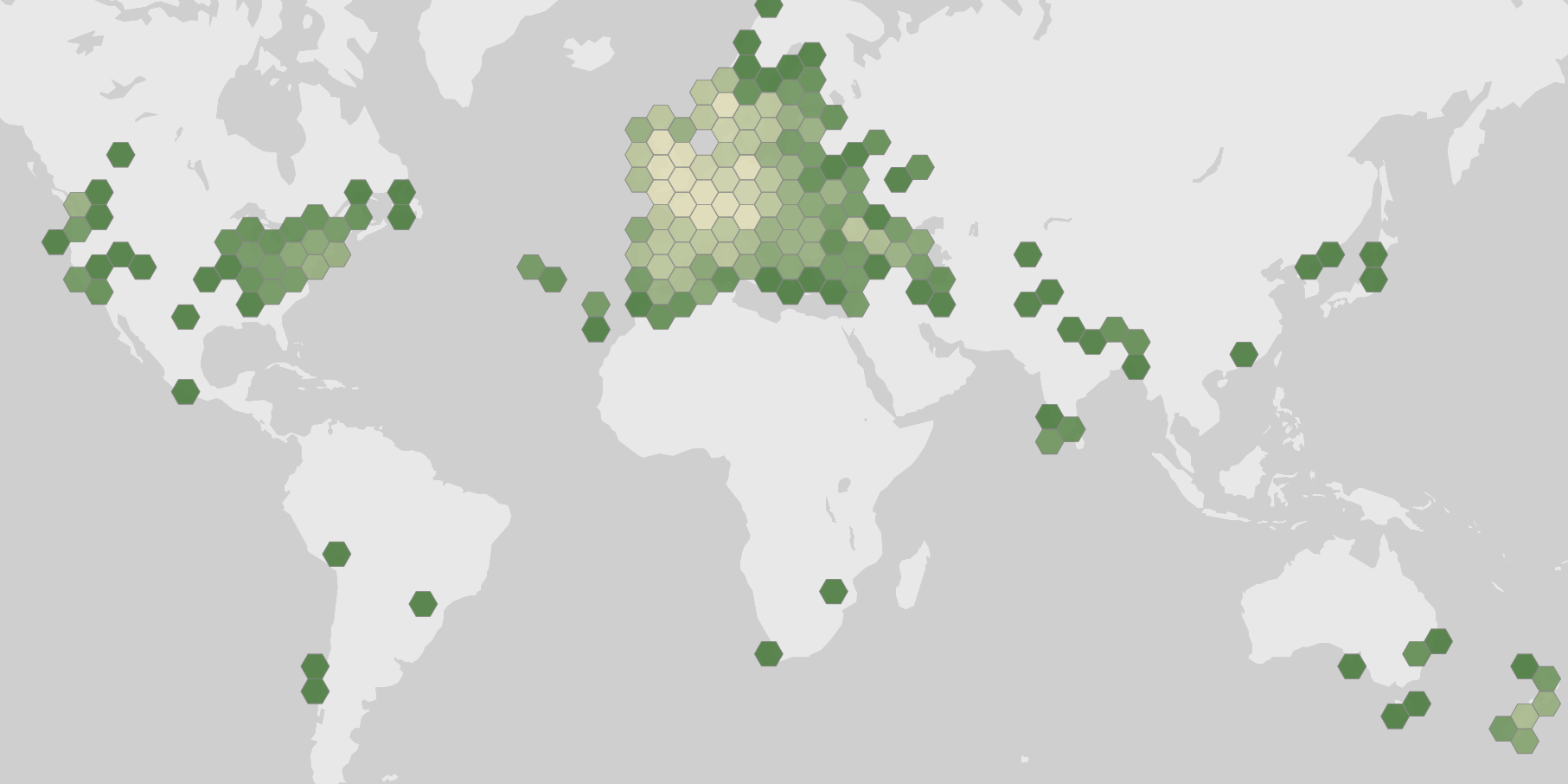
The common yew occurs natively across nearly every country in Europe except Iceland, extending through the Caucasus and Turkey into northern Iran, south to Morocco and Algeria, and into a few populations on the Azores and Madeira. It has also been introduced elsewhere, including the United States. Its northern limit in Scandinavia is set by frost sensitivity, and warming climates are expected to allow it to spread further inland.
Its richest central European populations grow in Swiss yew-beech woodlands on cool, steep marl slopes up to 1,400 meters in the Jura Mountains and Alpine foothills. In the United Kingdom it favors steep chalk downland slopes, sometimes spreading into grassland beyond the shelter of beech woods. In more continental climates it does better within mixed coniferous and broadleaf forests.
The species strongly prefers steep, rocky, calcareous slopes and well-drained, humus- and base-rich soils, though it tolerates a wide range of soil types when planted by people, as seen in its long tradition of use in churchyards and cemeteries. It is extremely shade-tolerant, with one of the widest temperature ranges for photosynthesis among European trees, allowing it to keep photosynthesizing through winter after deciduous neighbors have shed their leaves.
Monthly observation data shows a pronounced peak from May through August, with the highest counts in June, likely reflecting when the tree is most visible and actively observed by people rather than any true seasonal absence, since yew is evergreen year-round.
Growth and Form
The yew's growth is exceptionally slow but exceptionally durable, and this combination lets individual trees persist for centuries. It can reliably reach at least 600 years of age, and several trees in Britain are believed to predate the 10th century.
Determining exact ages beyond that becomes difficult, since old boughs often become hollow, erasing the annual rings needed for accurate counts. Growth-rate estimates and archaeological context suggest some of the oldest individuals, such as the Fortingall Yew in Perthshire, Scotland, may be 2,000 years old or more, while the Llangernyw Yew in Wales has been estimated at 4,000 to 5,000 years by botanist David Bellamy. The Ankerwycke Yew in Berkshire, England, is thought to be at least 1,400 and possibly up to 2,500 years old, with a girth of 8 meters near its base.
Other notable ancient specimens include the Balderschwang Yew in Germany, estimated at 600 to 1,000 years old, and the Bermiego Yew in Spain, which stands 15 meters tall with a trunk diameter of 6.82 meters and is protected as a Natural Monument. The Florence Court Yew in Northern Ireland is the source tree for the widely planted Irish Yew cultivar, with all known examples worldwide believed to descend from cuttings of this single individual.
Uses and Human Relationships
Yew wood shaped human history through its use in weaponry: it was prized above all other timbers for longbows because of its rare combination of hardness and springiness. The trade grew so large that English demand depleted mature yew stocks across much of Europe, prompting protective measures such as Poland's 1423 royal order restricting yew felling and England's 1472 Statute of Westminster, which required every ship arriving at an English port to carry bowstaves.
Beyond warfare, yew wood has long been valued for musical instruments, furniture, cabinetry, tool handles, gates, parquet floors, and paneling, prized for its hardness, elasticity, and richly patterned, often burled grain. Two of the oldest known wooden artifacts are made from yew: the roughly 400,000-year-old Clacton Spear found in England, and the approximately 120,000-year-old Lehringen spear from Germany, thought to have been made by Neanderthals and found near the remains of a straight-tusked elephant it may have helped kill.
The tree also carries deep cultural weight, appearing in Celtic mythology as a symbol linking life and death, and in Norse mythology as the tree surrounding the home of the bow god Ullr. In more recent times, compounds extracted from yew clippings have become precursors for the chemotherapy drug taxol, giving the ancient tree an unexpected role in modern medicine.
Conservation and Threats
The IUCN lists Taxus baccata as Least Concern globally, but this overall stability masks serious local declines, and the species is considered endangered in parts of its range due to intensive land use. Historically, the tree was pushed toward near-extinction across large areas of Europe by centuries of felling for longbow staves and by deliberate destruction to protect grazing livestock from its toxic foliage.
Today's threats are different but persistent: browsing and bark stripping by animals damage individual trees, the yew's thin bark leaves it vulnerable to fire, and continued harvesting to supply pharmaceutical demand for taxanes adds further pressure. Natural regeneration also faces obstacles, since the yew mite causes significant bud mortality and fungal pathogens can kill seedlings before they establish.
Conservation responses have focused on preserving genetic material from the oldest and most significant trees. The Royal Botanic Garden Edinburgh's Yew Conservation Hedge Project used clippings from ancient UK specimens, including the Fortingall Yew, to grow a mile-long hedge that preserves the species' genetic diversity. Dedicated programs in Catalonia, northern Portugal, and the Cantabrian Range of Spain have similarly worked to protect genetically distinct yew populations from overgrazing and forest fires.
Conservation status
- LC
- NT
- VU
- EN
- CR
Least Concern
Fun Facts
- One of the world's oldest surviving wooden artifacts, the roughly 400,000-year-old Clacton Spear, was carved from yew wood.
- In Norse mythology, the bow god Ullr was said to live in a house surrounded by yew trees because of the wood's prized use in longbows.
- Every Irish Yew cultivar tree in the world is believed to be a cutting descended from a single original specimen, the Florence Court Yew in Northern Ireland.
- Birds such as hawfinches, greenfinches, and great tits extract and eat the toxic seed kernels inside yew arils, something most animals avoid.
- Dried yew foliage does not lose its toxicity over time; it actually becomes more concentrated as water evaporates from the plant material, and even fallen leaves remain dangerous.
- William Shakespeare referenced the tree's dark reputation directly, having the Third Witch in Macbeth name "slips of yew slivered in the moon's eclipse" as an ingredient in her cauldron.
Ecology
Habitat
- Forest
- Woodland
- Mountain
- Grassland
Growth habit
- Tree