The two bean geese, the tundra and the taiga, split from a common ancestor about 2.5 million years ago. They came back into contact around 60,000 years ago, and extensive gene flow followed.
The tundra bean goose is a migratory goose in the family Anatidae. It breeds in northern Siberia and winters farther south in Asia.
The question of whether these geese are one species or two shapes how they are studied and named, which makes the tundra bean goose a useful case of how closely related populations can remain connected.
Identification and Appearance
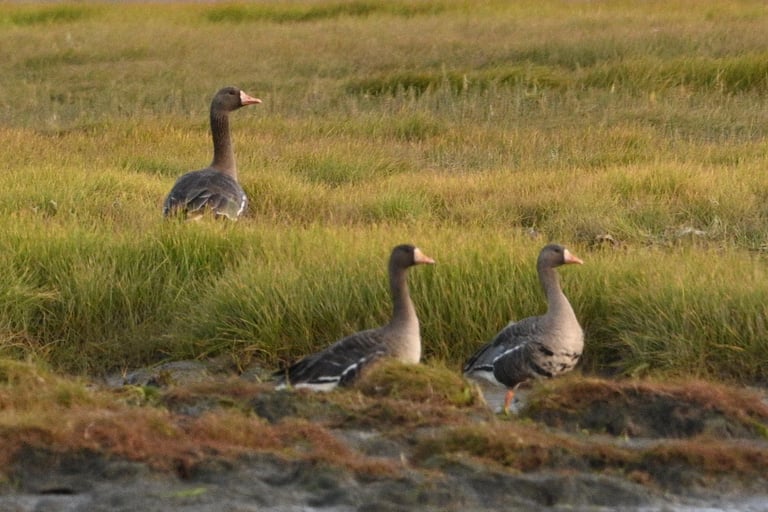
The bill is the most useful field mark. It is black at the base and tip, with an orange band across the middle, and the legs and feet are bright orange.
An adult measures 68 to 90 cm in length, with a wingspan of 140 to 174 cm, and weighs 1.7 to 4 kg. In the nominate subspecies, males average 3.2 kg and females average 2.84 kg.
The upper wing-coverts are dark brown, like those of the white-fronted goose and the lesser white-fronted goose. Each feather has a narrow white fringe, which separates it from those two species.
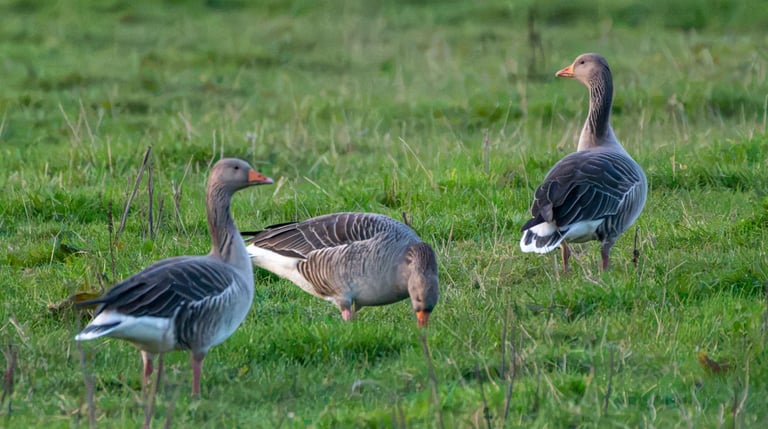
The pink-footed goose is the closely related species most likely to be confused with it. That goose has a short bill that is bright pink in the middle, pink feet, and upper wing-coverts of nearly the same bluish-grey as the greylag goose. The tundra bean goose calls with a loud honk, and the smaller subspecies has a higher-pitched voice.
Distribution and Habitat
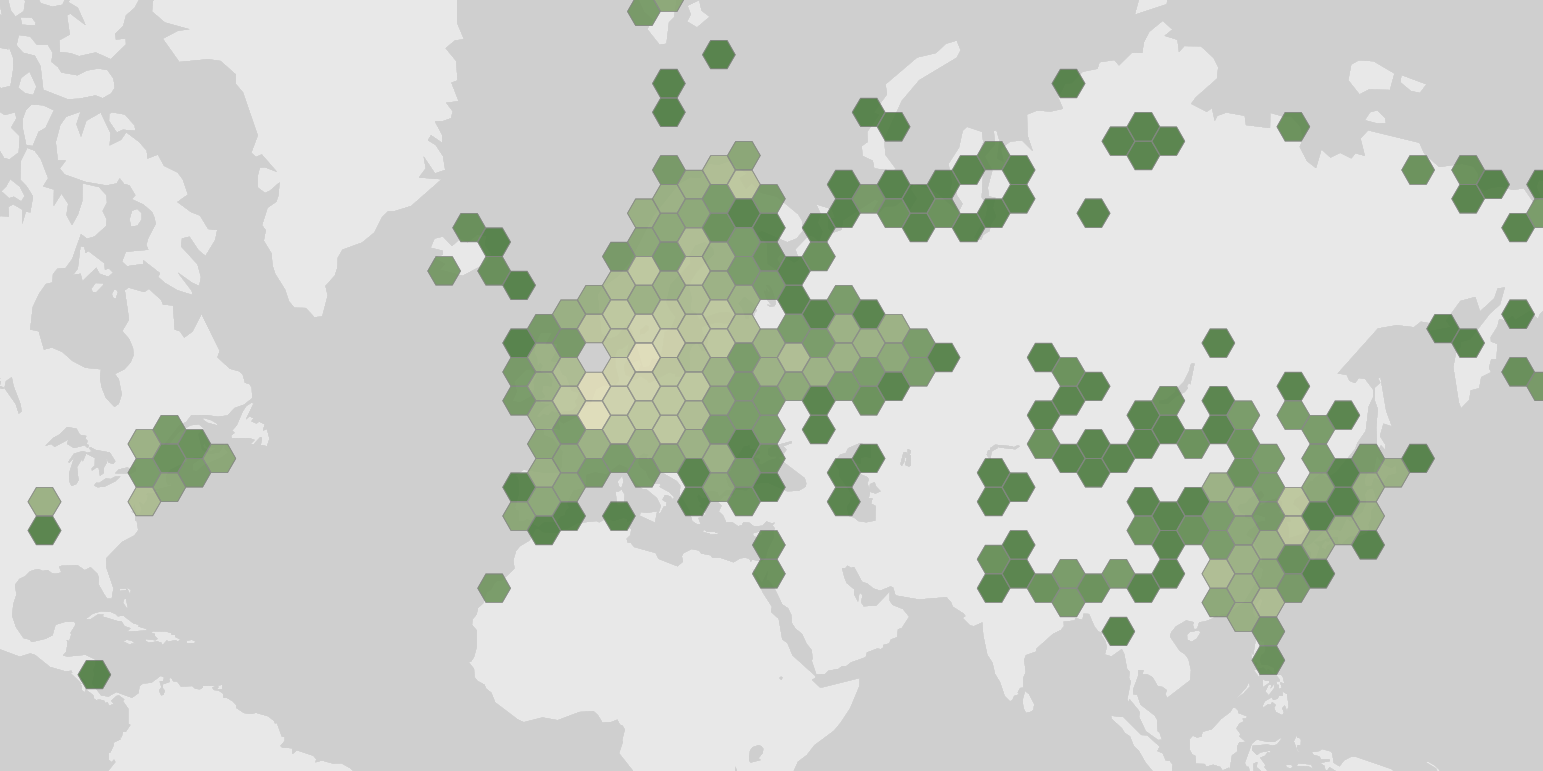
The tundra bean goose breeds in the tundra of northern Siberia. It has no regular wintering sites, and in winter it moves south in Asia and joins mixed flocks of other grey geese.
In Britain, it is found among grey geese at a few regular localities. The most regular of these are WWT Slimbridge in Gloucestershire and Holkham Marshes in Norfolk.
Records cluster in the winter months, peaking in January, and fall to their lowest in July and August. This pattern reflects when the species is present in western Europe rather than how many birds exist.
Photos
Photographs from via iNaturalist, licensed under CC0 1.0., by maria_is via iNaturalist, licensed under CC BY 4.0., by Andrejus Gaidamavičius via iNaturalist, licensed under CC BY 4.0., by Юля и Ваня «Чай» via iNaturalist, licensed under CC BY 4.0., by Ingmar Gaberle via iNaturalist, licensed under CC BY 4.0., by tobijw via iNaturalist, licensed under CC BY 4.0., by Maciej Boenisch via iNaturalist, licensed under CC BY 4.0., and by s_schizik via iNaturalist, licensed under CC BY 4.0., credited on each photo.
Ecology and classification
Classification
- Phylum
- Chordata
- Class
- Aves
- Order
- Anseriformes
- Family
- Anatidae
- Genus
- Anser
- Species
- Anser serrirostris
Sources
- GBIF Species names and classification
- iNaturalist Photos
- Wikidata Common names and conservation status
- Wikipedia Summary extract