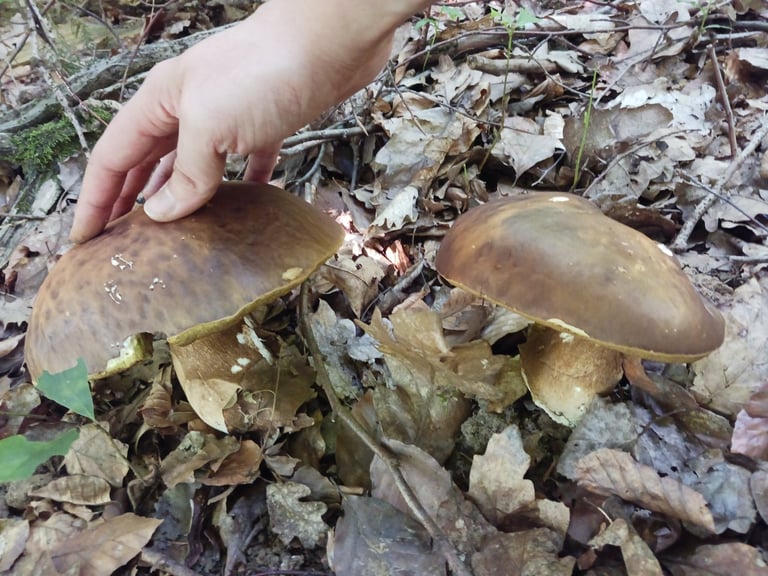
Foragers call it "The Great Betrayer" for good reason: this large, handsome bolete looks every bit as promising as the prized Boletus edulis, only to ruin a dish with a single bite of its intense, lingering bitterness. Even the smallest fragment of its flesh carries enough bitterness to overwhelm an entire pot of soup.
Tylopilus felleus, known as the bitter bolete or bitter tylopilus, belongs to the bolete family, Boletaceae, within the fungal order Boletales. French mycologist Pierre Bulliard first described it as Boletus felleus in 1788, and it was later moved into the newly created genus Tylopilus, of which it is the type species. It is notable as the only Tylopilus species found in Europe, making it something of an outlier in a genus otherwise concentrated elsewhere.
What makes this species worth knowing is less its taste and more the trap it sets: its close resemblance, especially when young, to some of the most sought-after edible boletes in the woods.
Fruiting Body and Identification
The single most reliable clue to this species' identity is the coarse, dark network of raised lines on a pale stalk, a pattern often compared to fishnet stockings. Crucially, this reticulation is dark-on-light, the reverse of the pale netting seen on the darker stalk of the prized Boletus edulis, and it offers one of the fastest ways to tell the two apart in the field.
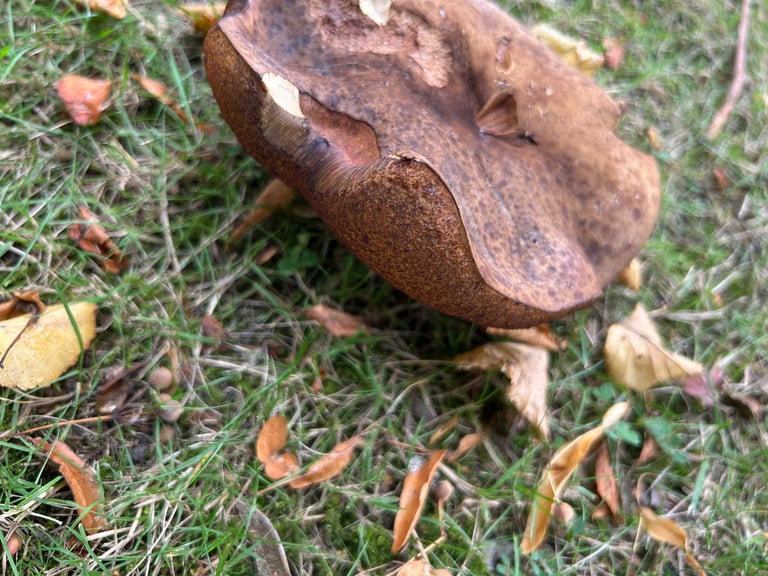
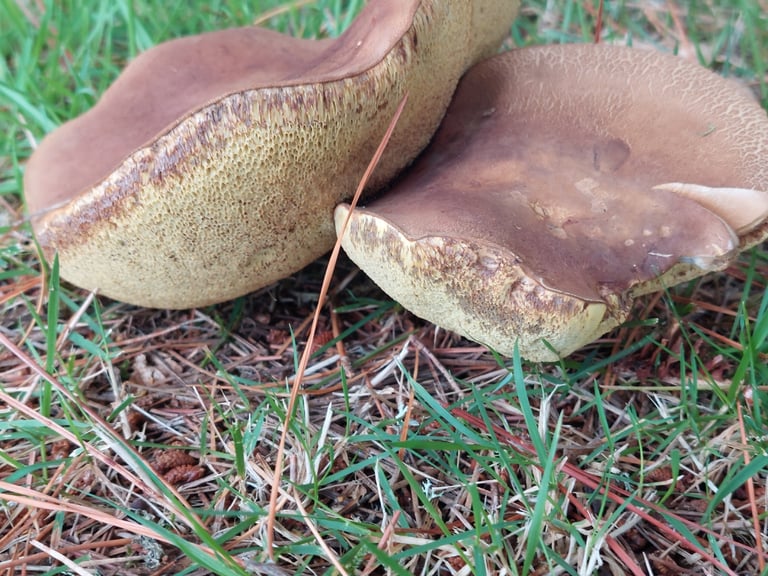
The cap reaches up to 15 cm (6 in) across in Europe, though some North American specimens grow to an enormous 30 cm (12 in). It starts grey-yellow to walnut-brown and slightly downy, becoming smooth with a matte sheen and flattening from its initial convex shape as it matures; the cap skin never peels away from the flesh beneath. The pores are white at first, turning pinkish with age, bruising carmine or brownish and sometimes developing rusty spots, at a density of about one to two pores per millimeter. The stalk stands 7–10 cm (2.8–3.9 in) tall, occasionally to 20 cm (7.9 in), starting bulbous and swelling to as much as 6 cm (2.4 in) at the base before narrowing higher up.
Inside, the flesh is white to creamy, tinged pink beneath the cap surface and where cut, with a smell described as both faintly pleasant and faintly unpleasant. It is notably softer and spongier than the flesh of other boletes, and it is rarely infested by insects, likely because of its strong bitter taste. The spore print is brownish with a reddish or pink cast, and the spores themselves are smooth and roughly spindle-shaped, measuring 11–17 by 3–5 μm.
Distribution and Habitat
Tylopilus felleus is mycorrhizal, forming partnerships with tree roots, and grows in both deciduous and coniferous woodland, most often under beech and oak in well-drained, acid soils that may be sandy, gravelly, or peaty. On calcareous, chalky ground it appears only in moist, waterlogged spots with plenty of leaf litter. Fruit bodies emerge singly, in small groups, or occasionally as two or three joined at the stem base, sometimes from the cavities of old trees, decaying conifer stumps, or buried rotten wood.
Fruiting runs from June through October or even November across the northern temperate zone, though yield swings sharply from year to year, generally tracking rainfall. GBIF observation records show a strong seasonal pattern, with counts climbing steeply from a low base in spring, peaking dramatically in July and August, and tapering off by autumn; these are presence records rather than a measure of true abundance, but the pattern points to a clear summer peak in reported sightings.
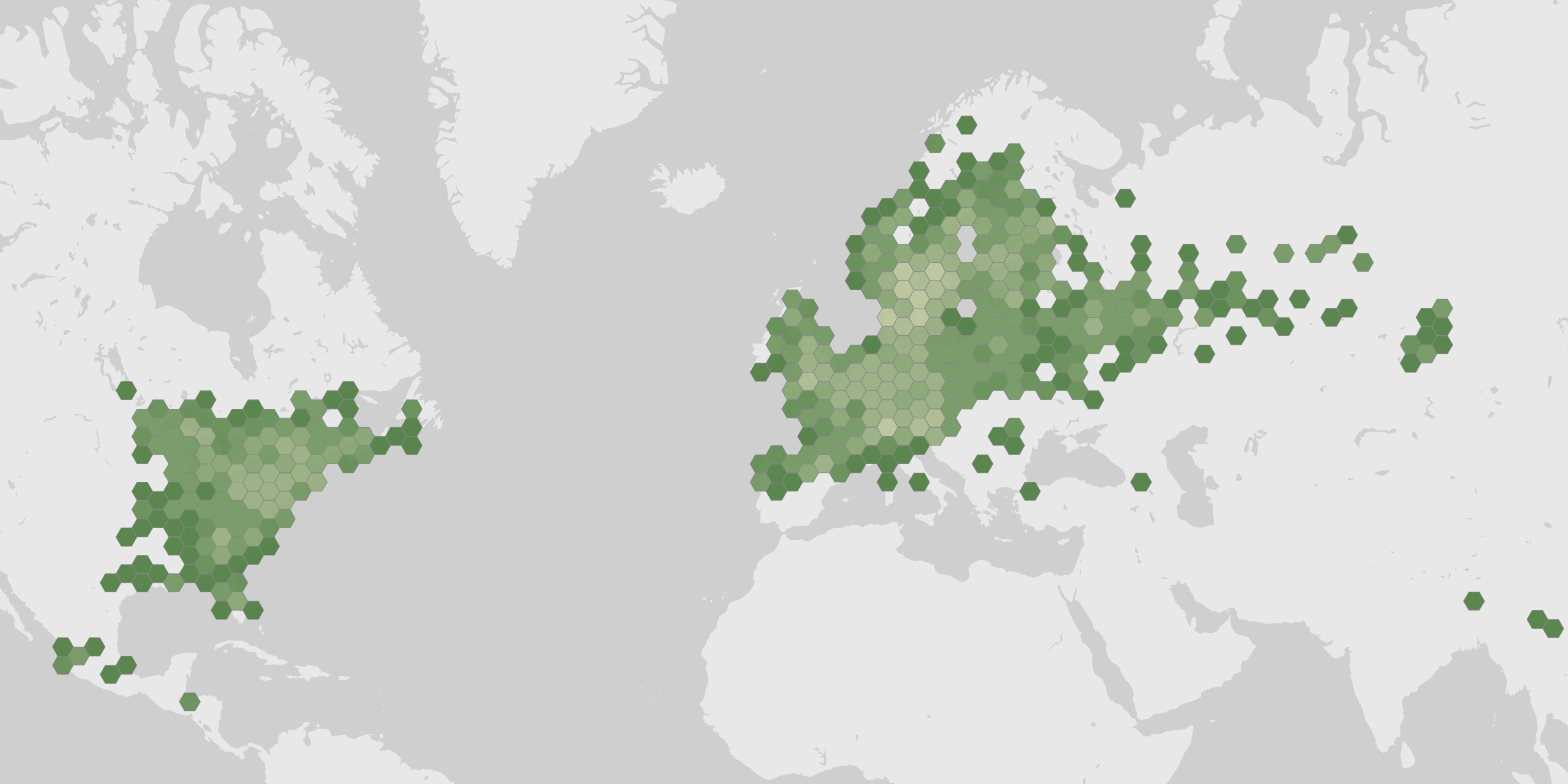
In North America the species ranges from eastern Canada south to Florida and west to Minnesota, extending into Mexico and Central America. It is widespread across Europe, common in many regions but rare or nearly absent in others. In Asia it has been recorded near Dashkin in Pakistan's Astore District and eastward into China, including Hebei, Jiangsu, Fujian, Guangdong, and Sichuan provinces, as well as in Korea.
Uses and Cultural History
In parts of Eastern Europe and Scandinavia, Tylopilus felleus has a recognized place in mushroom-foraging culture, though not as food. Mushroom clubs there include it in traditional guided walks, where experienced foragers pass on the practical knowledge needed to recognize and avoid it.
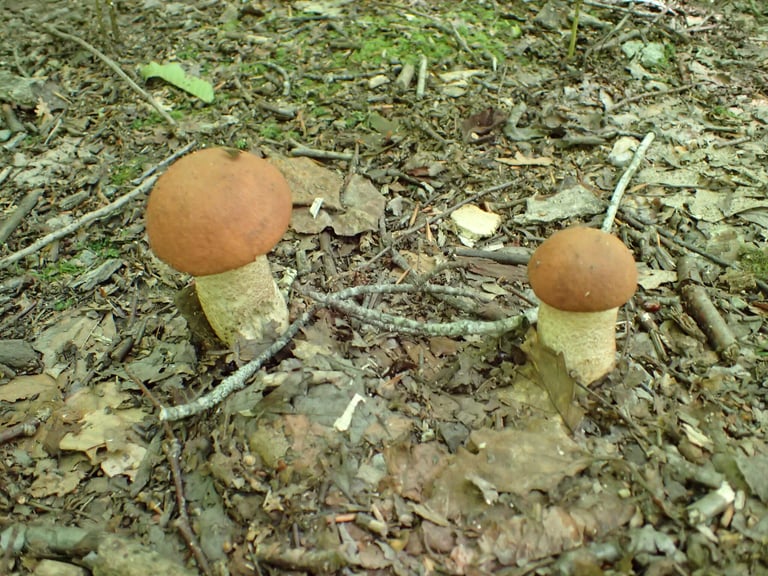
That knowledge matters most where it grows alongside prized lookalikes. In Finland, foragers hunting the highly valued cep, Boletus edulis, must learn to distinguish it from the sour-tasting bitter bolete, since the two can appear similar at a glance despite their very different qualities on the plate.
Fun Facts
- The species name felleus comes from the Latin fel, meaning "bile," a direct reference to its intensely bitter taste.
- Among foragers it has earned the nickname "The Great Betrayer," for raising hopes of a bountiful, good-looking find only to disappoint with its bitterness.
- The mycelium can be grown in axenic culture on agar and induced to fruit under suitable temperature and a simulated 12-hour day, though the resulting mushrooms are often deformed and frequently lack a proper stalk, with the cap growing directly from the growing medium.
- It features in traditional guided "walks-and-talks" run by mushroom clubs in Eastern Europe and Scandinavia, where identifying it is treated as essential foraging knowledge.
Photos
Photographs from via iNaturalist, licensed under CC0 1.0., by connormeredith via iNaturalist, licensed under CC BY 4.0., by Adam Górski via iNaturalist, licensed under CC BY 4.0., by Vitaly Radionov via iNaturalist, licensed under CC BY 4.0., by Igor Balashov via iNaturalist, licensed under CC BY 4.0., by David Sandler via iNaturalist, licensed under CC BY 4.0., by Andrejus Gaidamavičius via iNaturalist, licensed under CC BY 4.0., by Keith Wauthy via iNaturalist, licensed under CC BY 4.0., by Alexander Diaz via iNaturalist, licensed under CC BY 4.0., by Ewa Olchanowska via iNaturalist, licensed under CC BY 4.0., by xanderferret via iNaturalist, licensed under CC BY 4.0., and by Jeff Clark via iNaturalist, licensed under CC BY 4.0., credited on each photo.
Ecology and classification
Classification
- Phylum
- Basidiomycota
- Class
- Agaricomycetes
- Order
- Boletales
- Family
- Boletaceae
- Genus
- Tylopilus
- Species
- Tylopilus felleus
Sources
- GBIF Species names and classification
- iNaturalist Photos
- Wikidata Common names and conservation status
- Wikipedia Summary extract