The field elm can resprout vigorously from its roots and stumps even after being devastated by Dutch elm disease, which is why its genetic resources are not considered endangered despite the epidemic's toll.
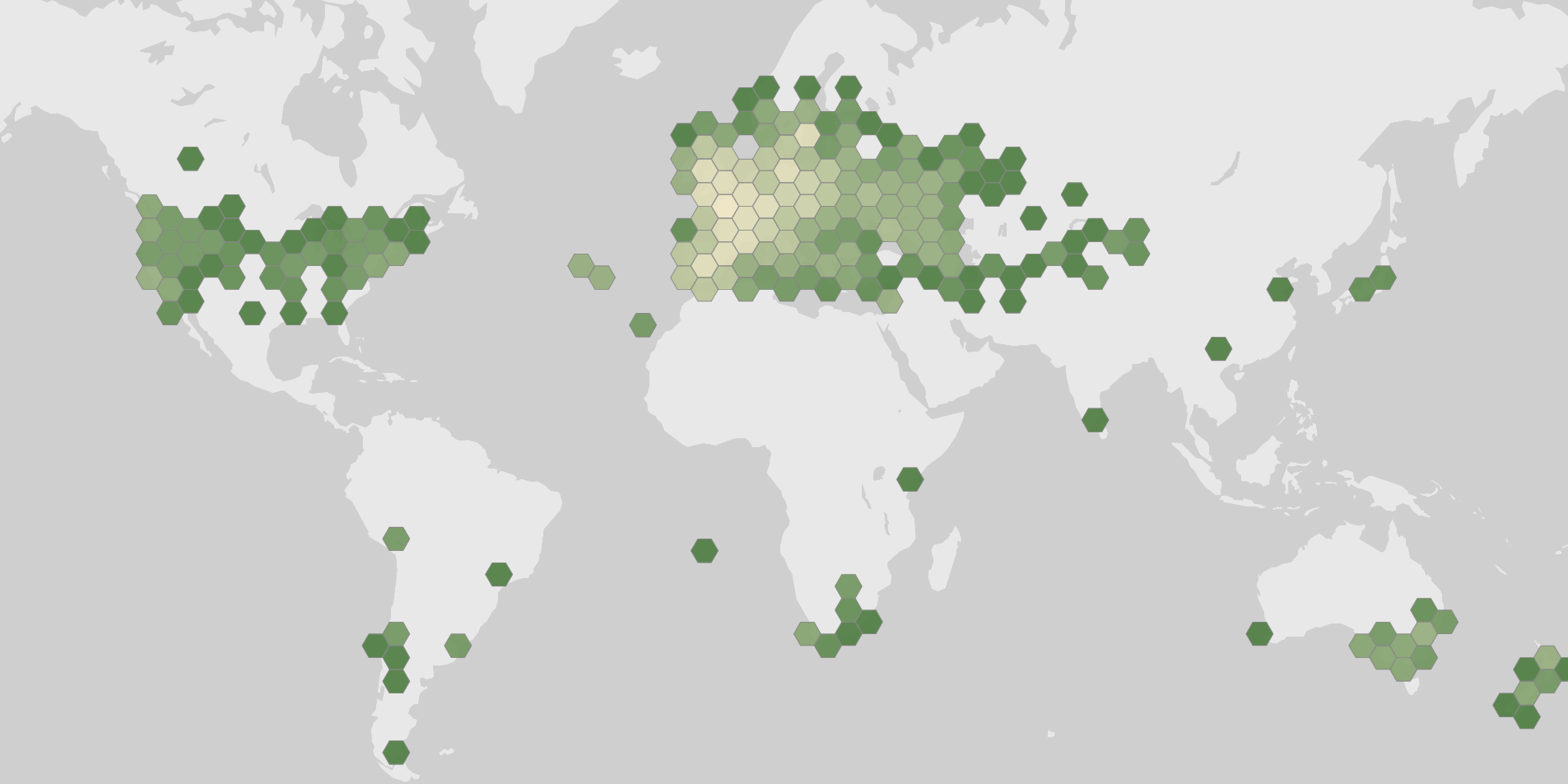
Ulmus minor, the field elm, is the most variable of Europe's elm species, so much so that its taxonomy remains disputed among botanists. It grows naturally across southern Europe into Asia Minor and Iran, with its northernmost outposts on the Baltic islands of Öland and Gotland, though those populations may be the result of human introduction. Its typical home is low-lying floodplain forest along major rivers, growing alongside oak and ash, where it withstands both summer floods and periods of drought. The IUCN currently lists it as Data Deficient.
Identification and Appearance
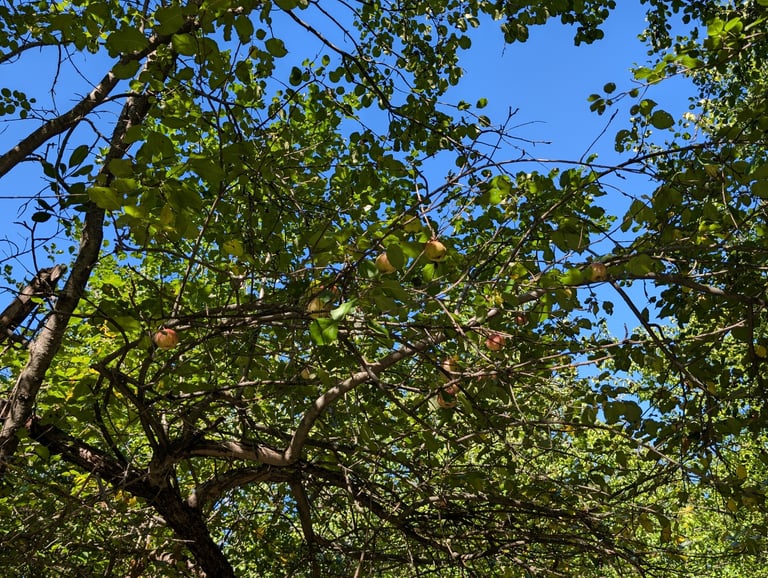
The most useful field mark is the combination of small, asymmetrical leaves with fewer than 12 pairs of side veins and minute black glands along the leaf veins, visible with a magnifying glass. The tree typically grows to under 30 meters and forms a rounded crown, with bark that is rough and lightly furrowed into a block pattern on older trunks.
Young branchlets sometimes develop corky wings, and the shoots are notably slender compared with those of wych elm. Leaf form varies greatly with the maturity of the growth: leaves on juvenile shoots, suckers, and seedlings are coarse and hairy, while those on mature branches are generally smooth, though still highly variable overall.
The fruit, a samara, is oval to obovate, hairless, 12 to 15 millimeters long, notched at the top with the seed sitting close to that notch. In France the species usually begins flowering and fruiting around age 10.
Because the leaves are smaller than those of other European elms, they gave the species its epithet minor, though the variability across individual trees makes leaf size alone an unreliable guide without checking the vein glands and count.
Distribution and Habitat
Ulmus minor occurs natively across a broad swath of Europe into Central Asia and northwest Iran, with a range stretching from Portugal and Great Britain in the west to Kazakhstan, Tajikistan, Turkmenistan, and Uzbekistan in the east, and south into North Africa including Algeria, Morocco, Tunisia, and Libya. It has also been introduced well beyond this native range, including to the Azores, Canary Islands, parts of the United States such as Connecticut, Illinois, Kentucky, Massachusetts, Missouri, New York, and Vermont, as well as to Ontario, Ireland, Bolivia, and the southern hemisphere in places like California and Cape Provinces.
Its characteristic habitat is low-lying floodplain forest along major rivers, where it grows in company with oak and ash and tolerates both summer flooding and drought, giving it a wider ecological tolerance than many of its forest neighbors.
Observation records through the year show counts rising sharply from spring into a peak around May, staying high through the summer months before tapering off by autumn and winter, a pattern consistent with seasonal visibility during leaf-out and foliage rather than any change in where the tree actually grows.
Growth and Form
Ulmus minor is a tree, typically reaching under 30 meters in height with a rounded crown. It readily produces suckers from its roots and stumps, a trait that lets it regenerate locally even after the loss of mature trunks.
Ecology and Relationships
Among the animals recorded feeding on field elm, beetles dominate the record, including several longhorn beetles such as Chlorophorus figuratus, Chlorophorus varius, Oberea linearis, and Phymatodes testaceus, alongside weevils like Phyllobius oblongus and bark-associated species such as Agrilus graecus and Eriococcus spurius scale insects.
Flower visitors recorded on the tree include lacewings such as Chrysoperla carnea, ladybird beetles like Harmonia axyridis, and several bumblebee species including Bombus lucorum, Bombus pascuorum, and Bombus terrestris, though a visit to the flowers is not proof that these insects actually pollinate the tree.
The tree's tolerance of both seasonal flooding and drought along riverside forests, growing alongside oak and ash, suggests it fills a particular niche in these fluctuating floodplain habitats.
Uses and Human Relationships
Field elm carries deep cultural symbolism reaching back to classical antiquity: in Roman culture the tree supported grapevines in viticulture, a practical agricultural role, while in ancient Greek mythology elms were linked to the underworld and to Morpheus, the god of dreams, marking a boundary between life and death. In Teutonic mythology the elm was said to have been given a soul by Odin, senses by Hoenir, and blood and warmth by Lodur to become Embla, the first woman, and in Finno-Ugric mythology elms were regarded as the mothers of fire.
U. minor and a number of its clones were once widely cultivated across Europe in towns and countryside, but its vulnerability to Dutch elm disease has made it uncommon in cultivation today. Since the 1990s, national research institutes across the EU have tested thousands of surviving field elms for innate disease resistance; results from Spain in 2013 found that roughly 0.5 percent of tested trees showed comparatively high tolerance, feeding hope for resistant hybrids in the future.
The species was also introduced to the UK as an ornamental, sometimes of French or Italian origin, and to North America and the southern hemisphere, including Australasia and Argentina, where old planted specimens still survive today.
Fun Facts
- Roman poets associated elms, including the field elm, with protective boundaries and the liminal space between worlds, and the trees were often planted as hedgerows believed to ward off malevolent spirits.
- In medieval England and France, elms were used to mark property boundaries and village greens, spaces where markets and festivals were held in their shade, and the trees came to symbolize longevity, practicality, and continuity.
Photos
Photographs from via iNaturalist, licensed under CC0 1.0., by SamKelly via iNaturalist, licensed under CC BY 4.0., by Daniel Cahen via iNaturalist, licensed under CC BY 4.0., by Maria Kohanovskaya via iNaturalist, licensed under CC BY 4.0., by maxmarengo via iNaturalist, licensed under CC BY 4.0., by Flavien Saboureau via iNaturalist, licensed under CC BY 4.0., by Tatiana Strus via iNaturalist, licensed under CC BY 4.0., by Oleksandr Shynder via iNaturalist, licensed under CC BY 4.0., by Murray McGoogan via iNaturalist, licensed under CC BY 4.0., by Dave Hernon via iNaturalist, licensed under CC BY 4.0., by zebedeugalinha via iNaturalist, licensed under CC BY 4.0., and by Louis Aureglia via iNaturalist, licensed under CC BY 4.0., credited on each photo.
Ecology and classification
Classification
- Phylum
- Tracheophyta
- Class
- Magnoliopsida
- Order
- Rosales
- Family
- Ulmaceae
- Genus
- Ulmus
- Species
- Ulmus minor
Sources
- GBIF Species names and classification
- iNaturalist Photos
- Wikidata Common names and conservation status
- Wikipedia Summary extract
- Plants of the World Online Native range, life form and climate (WCVP)
- GloBI What it eats, what eats it, parasites and pollinators
- trophiCH
- DoPI