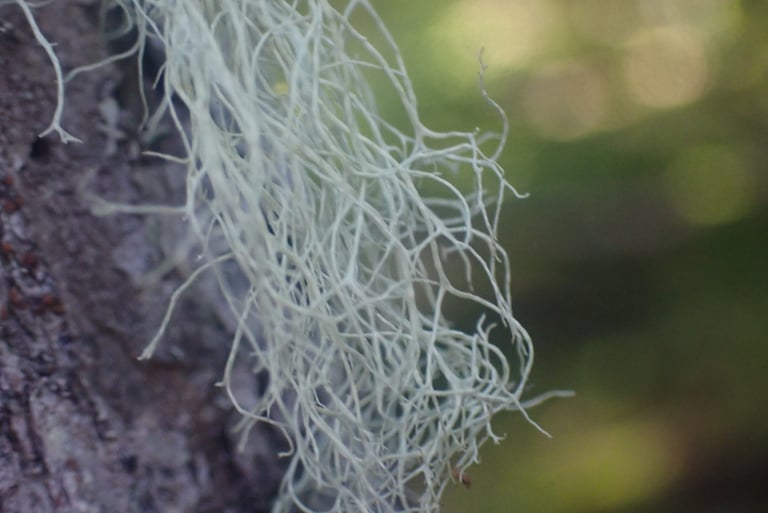
The red beard lichen hangs from tree branches in dense, hair-like clusters tinted orange to red, a color that sets it apart from most other lichens sharing its habitat.
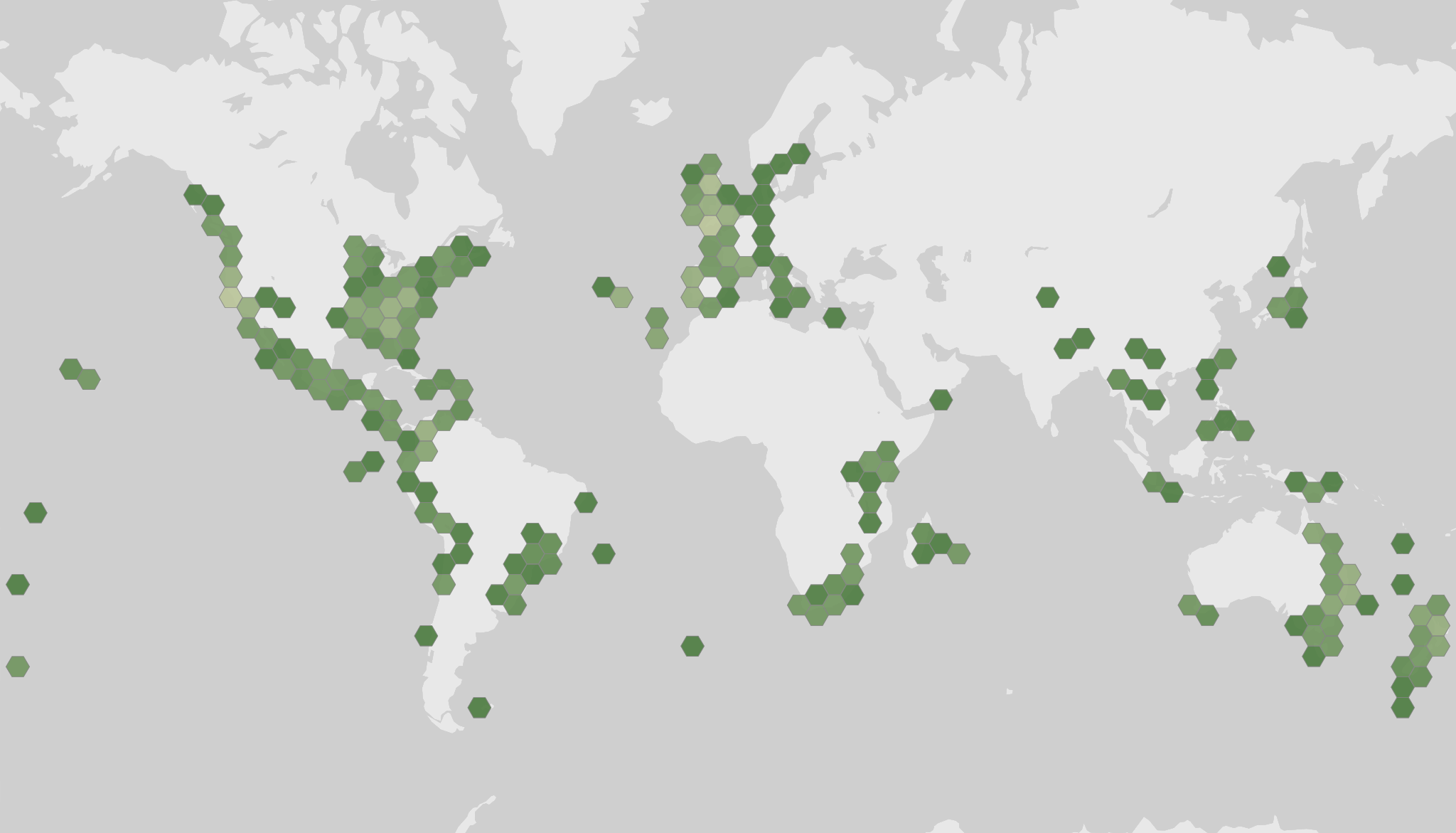
Usnea rubicunda is a fruticose, arboreal lichen native to temperate regions across North, Central, and South America, Europe, Eastern Asia, and North Africa. It grows on bark and branches rather than soil or rock, forming part of the lichen communities found in humid forest environments.
Its unusual color and broad distribution make it a distinctive subject for anyone exploring lichen diversity in humid, wooded landscapes.
Fruiting Body and Identification
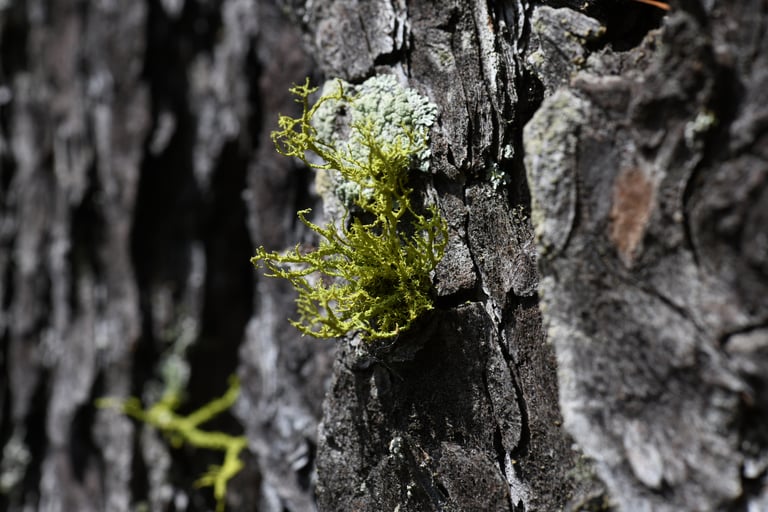
The most reliable identifying feature of Usnea rubicunda is its coloration: older lacinae (the thread-like branches) develop a distinctive reddish-brown to orange-red hue, unlike the pale greenish-gray tones typical of many other Usnea species.
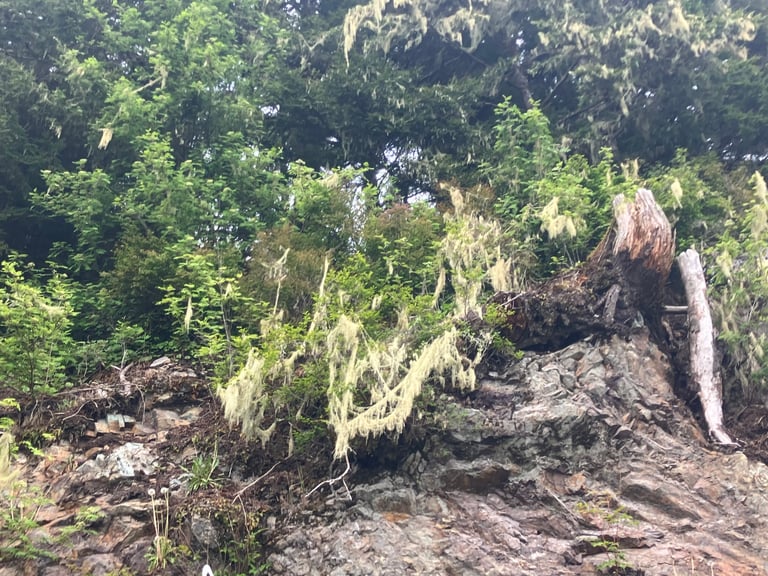
The thallus is fruticose, meaning it grows as a densely branched, hair-like structure rather than a flat crust or leafy form. These branches hang in thick, bushy clusters from the bark and branches of host trees.
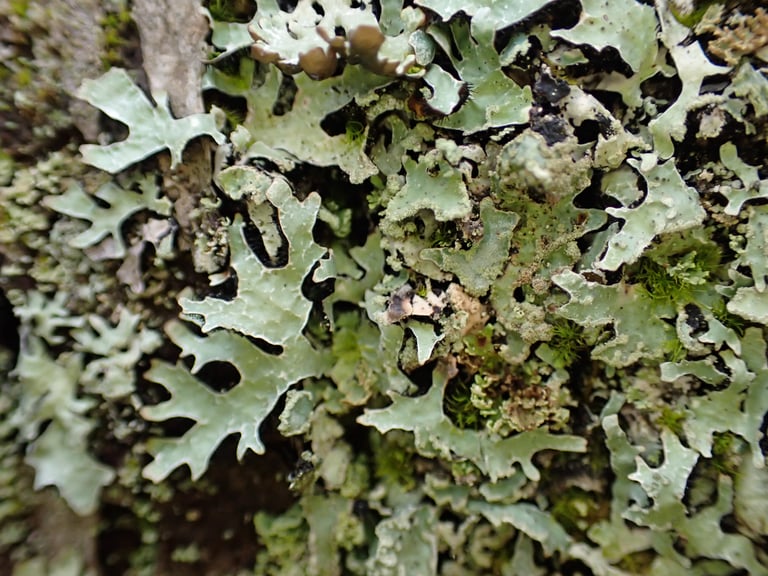
The species is described as very foliose in its branching pattern, forming dense, hairy aggregations. This distinguishes it visually from smoother or more sparsely branched lichens growing in the same habitat.
Distribution and Habitat
Usnea rubicunda grows on the bark of trees, branches, and shrubs, and occasionally on moss-covered rocks, favoring open microsites with very humid vegetation at mid elevations. It has been recorded in grazing areas, secondary vegetation, trails, and roadsides, suggesting some tolerance for disturbed or semi-open settings as long as humidity remains high.
Its range spans temperate regions of North, Central, and South America, Europe, Eastern Asia, and North Africa, reflecting a broad tolerance for varied temperate climates as long as suitable humid microhabitats are available.
Monthly observation records show relatively steady presence throughout the year, with somewhat higher counts in the early months and a dip toward the later months, though these figures reflect presence observations rather than actual abundance or a complete picture of its range.
Fun Facts
- Even in the highly humid Torcal de Antequera in Málaga, Spain, an observer found relatively few Usnea thalli, with only isolated specimens showing the lichen's characteristic brownish-red coloration on its older branches.
- The species carries the taxonomic serial number (TSN) 190827 in biological databases, reflecting its formal classification within the genus Usnea.
Photos
Photographs from via iNaturalist, licensed under CC0 1.0., by Kyle Elshoff via iNaturalist, licensed under CC BY 4.0., by Mary Jantsch via iNaturalist, licensed under CC BY 4.0., by Christopher Hynes via iNaturalist, licensed under CC BY 4.0., by Ian McFaul via iNaturalist, licensed under CC BY 4.0., by ruifigueira via iNaturalist, licensed under CC BY 4.0., by Ashwin Srinivasan via iNaturalist, licensed under CC BY 4.0., by willingarden via iNaturalist, licensed under CC BY 4.0., by David Ratledge via iNaturalist, licensed under CC BY 4.0., and by 祐 via iNaturalist, licensed under CC BY 4.0., credited on each photo.
Ecology and classification
Classification
- Phylum
- Ascomycota
- Class
- Lecanoromycetes
- Order
- Lecanorales
- Family
- Parmeliaceae
- Genus
- Usnea
- Species
- Usnea rubicunda
Sources
- GBIF Species names and classification
- iNaturalist Photos
- Wikidata Common names and conservation status
- Wikipedia Summary extract
- Encyclopedia of Life Habitat, diet and behavior traits