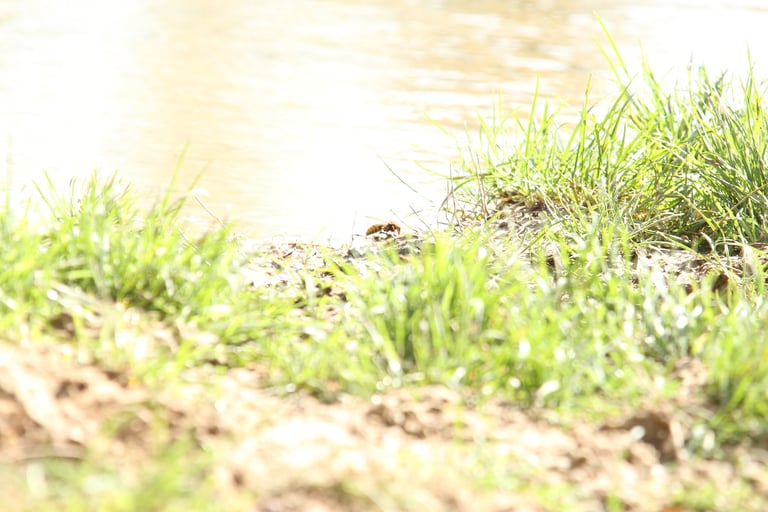
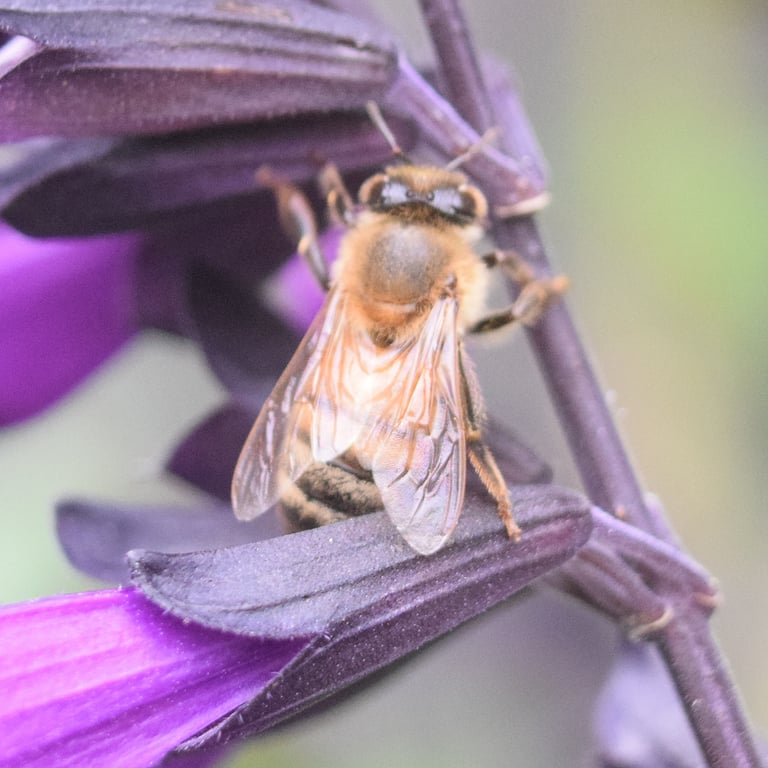
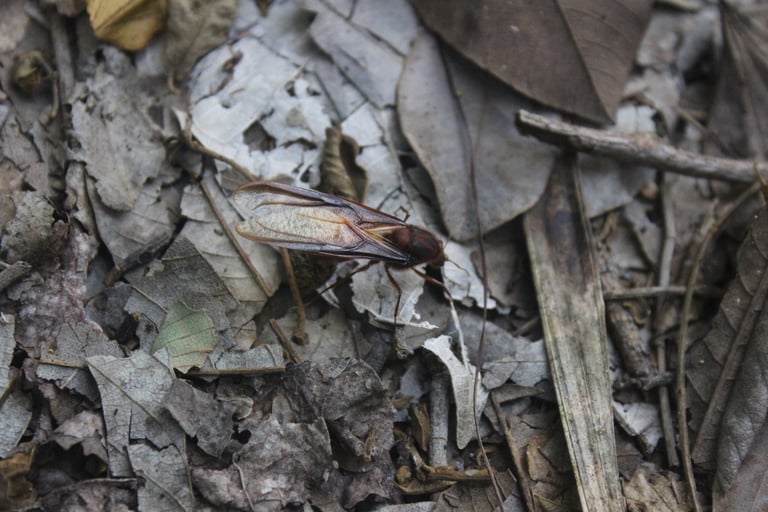
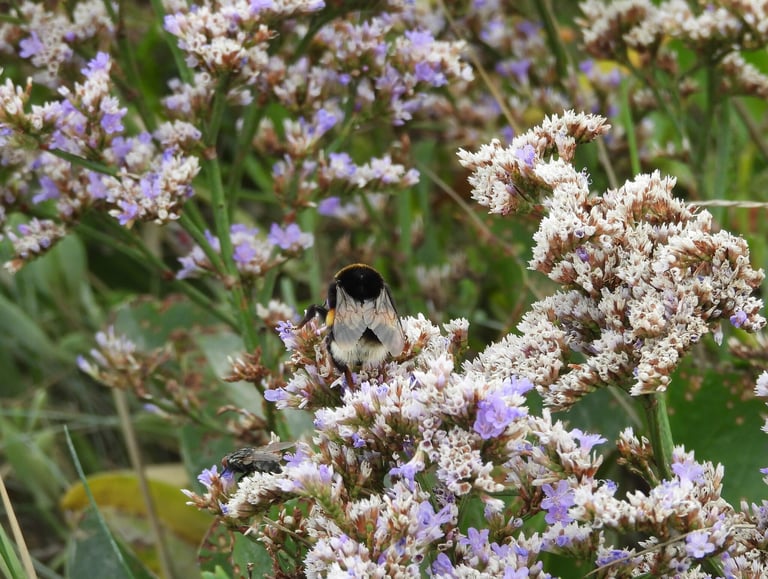
The Asian hornet, also called the yellow-legged hornet, is a predatory wasp native to Southeast Asia. It has become an invasive species in much of Europe, where it is a concern for beekeepers and wildlife managers.
The species belongs to the family Vespidae in the order Hymenoptera. Its native range runs from northern India and China to Malaysia and surrounding island groups, in tropical and subtropical regions.
Its stings are more serious than those of western honeybees because of its larger size. The European Union has listed it as an invasive alien species of concern, so it cannot be kept, bred, sold or released there.
Identification and Appearance
The yellow legs are the most useful field mark. The tarsi are distinctly yellow, and the face is yellow against a black head.
Queens are about 30 mm (1.2 in) long, males about 24 mm (0.94 in) and workers about 20 mm (0.79 in). The species is significantly smaller than the European hornet.
The thorax is a velvety brown or black, and the abdomen is brown. Each abdominal segment has a narrow yellow border at the rear, except the fourth segment, which is orange.
Colour varies between regions, which makes classification difficult. Several subspecies have been named and then rejected, and the colour form that causes concern in Europe was once called V. v. nigrithorax, a name with no current taxonomic standing.
Distribution and Habitat
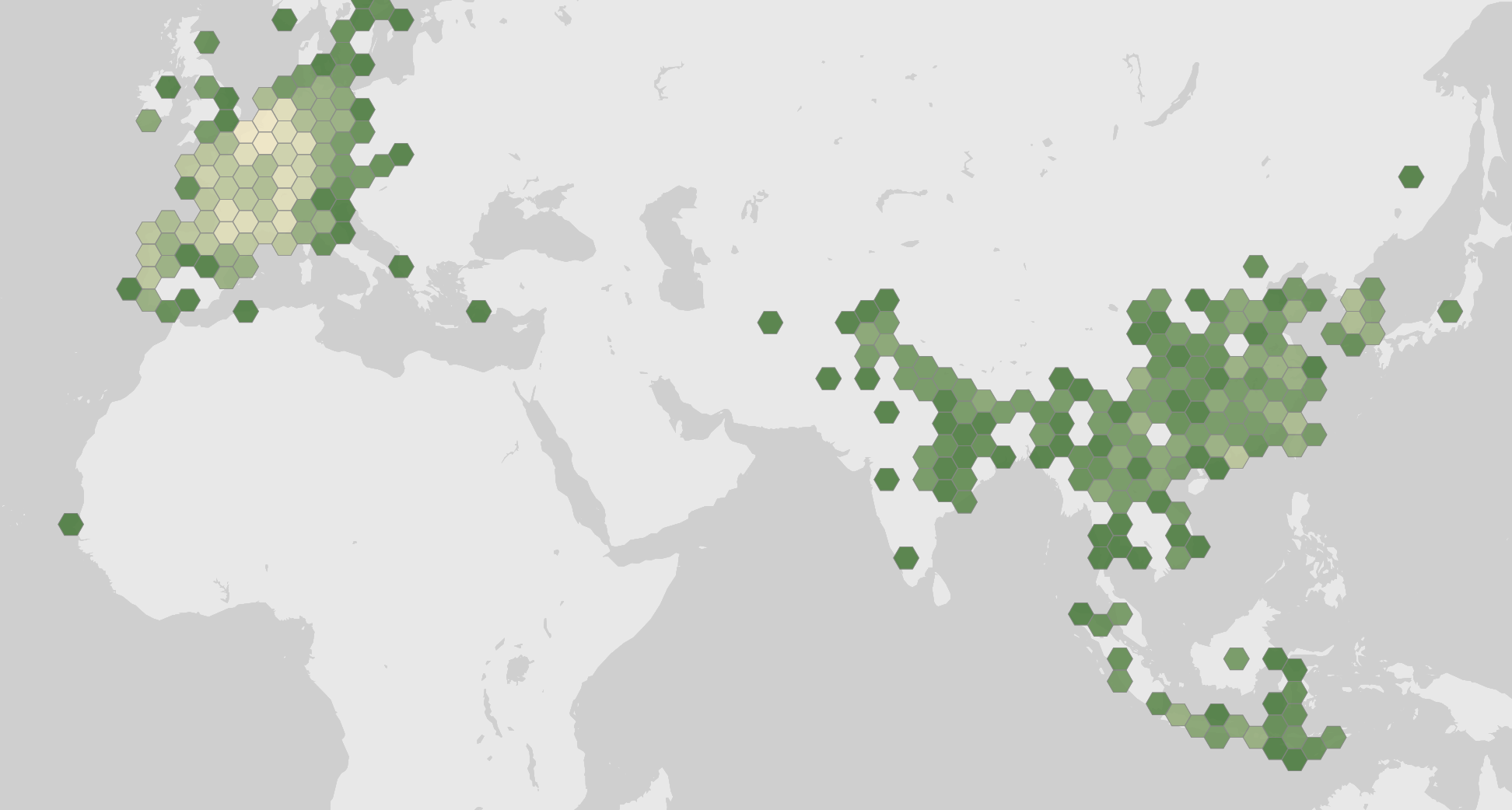
Vespa velutina originates from the tropical regions of Southeast and South Asia, including northern India, Pakistan, Afghanistan, Bhutan, China, Taiwan, Burma, Thailand, Laos, Vietnam and Malaysia. Its native habitats are these tropical regions and their archipelagoes.
In Europe, the species was first found in France, where it is believed to have arrived in boxes of pottery from China in 2004. By 2009, several thousand nests were in the Bordeaux area and surrounding departments, and by the end of 2015 nests were reported over most of France.
The hornet spread to Spain in 2010 and Portugal in 2011, then reached southern Belgium in 2011 and Italy in 2012. It was first sighted in Germany in 2014, and the German population tripled between 2021 and 2022 after a series of warm, dry summers. In the UK, the first mainland sighting came in 2016 near Tetbury in Gloucestershire. By 2023, 72 nests had been discovered in the UK. In Switzerland, the number of nests in the Geneva area had grown to over 3,000 by 2025.
The species has also reached New Zealand, where nests, queens and males were found in Auckland in 2025. By mid-May 2026, 132 nests had been located and destroyed there. Sightings in the Northern Hemisphere are most frequent from August to October.
Hunting and Diet
The Asian hornet is a hunter of other insects. Its prey is mainly flies, and blowflies such as Calliphora vicina and Chrysomya albiceps are among the best-established prey. Other flies are also important, including hoverflies such as Chrysotoxum bicinctum and Chrysotoxum cautum.
It also takes other hymenopterans, so wasps and bees appear among its established prey. Its prey list also includes a smaller group of other insects and arachnids, such as moths, beetles, cockroaches, true bugs and spiders.
The diet is built on flies, so the hornet's effect on local insect communities depends on how many flies it finds around its nest. Its hunting is directed at the insects that gather where it forages.
Conservation and Threats
The Asian hornet is an invasive species in Europe. It has been spreading across France, Spain, Portugal and much of the rest of the continent since the 2000s, and it has also reached Japan and the United States.
Its sting is the most serious threat to people. The hornet is not aggressive, but it charges in a group when its nest is threatened. In France, several people have died after multiple stings, and in Spain a man was killed in 2017 after being stung more than 20 times while pruning an apple tree. The hornet also threatens honeybees and other pollinators, which is why it is a conservation concern beyond the health risk.
In the European Union, the species has been on the Union list of invasive species of concern since 2016. Its import, keeping, breeding, sale, transport and release are all banned, except for eradication. In the United States, the species was first found alive near Savannah, Georgia, in 2023. Nests had been discovered across an area of about 8,000 km2 within the states by the end of 2025.
The main control method is finding and destroying nests, and food traps help locate them by tracking the direction of hornet flights. Climate change may increase the species' success in northern Europe and the United States.
Photos
Photographs from via iNaturalist, licensed under CC0 1.0., credited on each photo.
Ecology and classification
Behavior
- Predator
Diet
- Insectivore
Classification
- Phylum
- Arthropoda
- Class
- Insecta
- Order
- Hymenoptera
- Family
- Vespidae
- Genus
- Vespa
- Species
- Vespa velutina
Sources
- GBIF Species names and classification
- iNaturalist Photos
- Wikidata Common names and conservation status
- Wikipedia Summary extract
- GloBI What it eats, what eats it, parasites and pollinators
- trophiCH
- DoPI
- EuPPollNet