The marsh violet spreads across wet ground by pale, rooting stolons, knitting itself into small connected colonies rather than growing as isolated plants. This low perennial forb in the genus Viola favors moist meadows, marshes, and stream banks across a vast stretch of the Northern Hemisphere.
Its conservation status is Least Concern, reflecting a wide native range across Eurasia and North America. What makes it worth a closer look is how such a small, unassuming flower manages to occupy such a broad geography, from Arctic-fringe habitats to mountain streams thousands of kilometers apart.
Identification and Appearance
The single most useful field mark is the plant's basal leaf arrangement combined with its habit of forming small colonies linked by pale, frequently rooting stolons. Plants are small, growing just 3 to 21.5 centimeters tall, with slender fleshy rhizomes running underground.
All leaves arise from the base on hairless petioles measuring 1 to 17 centimeters long. The leaf blades themselves lack lobes but have finely rounded, crenulate edges, and their shape varies between kidney-like (reniform), egg-shaped (ovate), and circular (orbiculate). They measure roughly 0.5 to 6.4 centimeters long and 0.5 to 5.5 centimeters wide, generally about as long as they are wide.
The flowers are usually lilac, pale blue, or pale violet on both faces, though some individuals fade to nearly white. Each flower spans 10 to 13 millimeters across. The bottom middle petal, and sometimes the two petals beside it, carry violet floral guide markings, while the lateral pair of petals is lightly bearded.
Distribution and Habitat
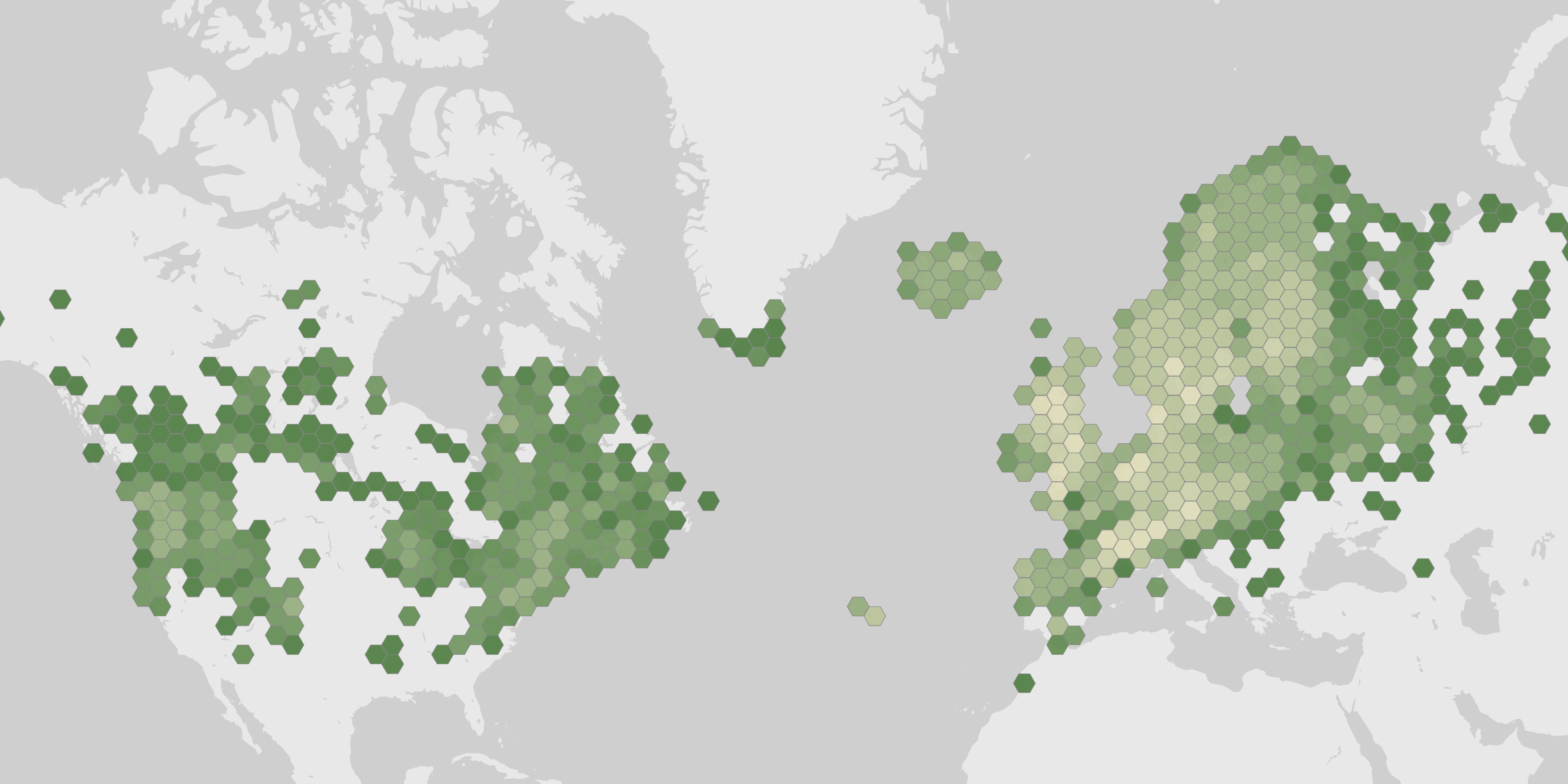
The marsh violet has a broad native range spanning Europe, North America, a small part of northern Africa, and western Asia, where it reaches into Western Siberia. In Europe it occurs in almost every country but is absent from southern Russia, Crimea, European Turkey, Albania, Sicily, Sardinia, Svalbard, and the Balearic Islands, and it has gone locally extinct in Hungary. It also grows in the Azores.
In North America its range covers Greenland and most of Canada, excluding the Yukon, Nova Scotia, New Brunswick, and Prince Edward Island. In the western United States it occurs in mountainous parts of Washington, Oregon, northern coastal California, Idaho, Montana, and Wyoming, with additional populations in Nevada, Utah, and reports without precise locations from Arizona, Colorado, and South Dakota. Northeastern states including New York, Vermont, New Hampshire, and Maine also hold native populations.
The species grows in marshes, fens, swamps, wet forests, and along stream banks, from sea level up to 1,800 meters in elevation. Observation records through the year show activity building sharply from spring into a strong peak across the summer months before tapering off by autumn, consistent with seasonal growth and flowering rather than year-round presence.
Growth and Form
Viola palustris is a perennial, persisting from year to year rather than completing its life cycle in a single season. It spreads vegetatively during the growing season through pale stolons that root at intervals and produce leaves at their nodes, allowing a single plant to expand into a loose colony.
Beneath the surface, slender fleshy rhizomes serve as modified underground stems, likely helping the plant persist through unfavorable conditions and resprout in subsequent seasons.
Ecology and Relationships
The marsh violet serves as a larval foodplant for several fritillary butterflies. The small pearl-bordered fritillary (Boloria selene) favors it in particular, while the pearl-bordered fritillary (Boloria euphrosyne) also uses it, though that species prefers the common dog-violet. The dark green fritillary (Speyeria aglaja) uses it as a host plant as well.
A range of insects feed on the plant more broadly, including grasshoppers and bush-crickets such as Chorthippus brunneus, Decticus albifrons, and Pholidoptera griseoaptera, alongside weevils and moth larvae. Sheep (Ovis aries) have also been recorded feeding on it.
Flower visitors recorded on the species include bees such as Bombus terrestris and Andrena cineraria, butterflies like the orange tip (Anthocharis cardamines) and peacock (Aglais io), and bee-flies such as Bombylius major, though a visit alone does not confirm pollination. The plant is also a known host for the pathogenic fungi Hendersonia violae and Puccinia fergussonii.
Uses and Human Relationships
Violets as a group carry a long history of symbolic meaning rather than documented practical use for this particular species. In Greek and Roman mythology, violets were linked to love, devotion, and figures such as Aphrodite, with one legend describing violets arising after a nymph fleeing Apollo was transformed by Artemis out of modesty.
These associations attach to violets broadly rather than to any use of the marsh violet itself, and no specific cultural or material use of Viola palustris is recorded.
Fun Facts
- Beyond the theme of modesty, violets were tied in ancient Greek tradition to faithfulness and enduring affection, with the flowers reportedly used in love potions believed to foster loyalty between partners.
Photos
Photographs from via iNaturalist, licensed under CC0 1.0., by Kalvin Chan via iNaturalist, licensed under CC BY 4.0., by John Lyden via iNaturalist, licensed under CC BY 4.0., by Scott Shanks via iNaturalist, licensed under CC BY 4.0., and by Ewan Shilland via iNaturalist, licensed under CC BY 4.0., credited on each photo.
Ecology and classification
Habitat
Growth habit
- Herb
Classification
- Phylum
- Tracheophyta
- Class
- Magnoliopsida
- Order
- Malpighiales
- Family
- Violaceae
- Genus
- Viola
- Species
- Viola palustris
Sources
- GBIF Species names and classification
- iNaturalist Photos
- Wikidata Common names and conservation status
- Wikipedia Summary extract
- Plants of the World Online Native range, life form and climate (WCVP)
- GloBI What it eats, what eats it, parasites and pollinators
- trophiCH