Volvariella bombycina carries the nickname "ghost mushroom" in some areas, a name born from a case of mistaken folklore rather than any danger of its own. Known as the silky volvariella, tree silksheath, or silver-silk straw mushroom, it is a species of fungus in the family Pluteaceae, within the order Agaricales.
It grows on dead hardwoods across a wide but uncommon distribution spanning Europe, Asia, the Americas, the Caribbean, and Australia. Its combination of a silky white cap, pink gills, and a shaggy sack-like volva makes it one of the more visually distinctive wood-dwelling mushrooms a forager might encounter.
Fruiting Body and Identification
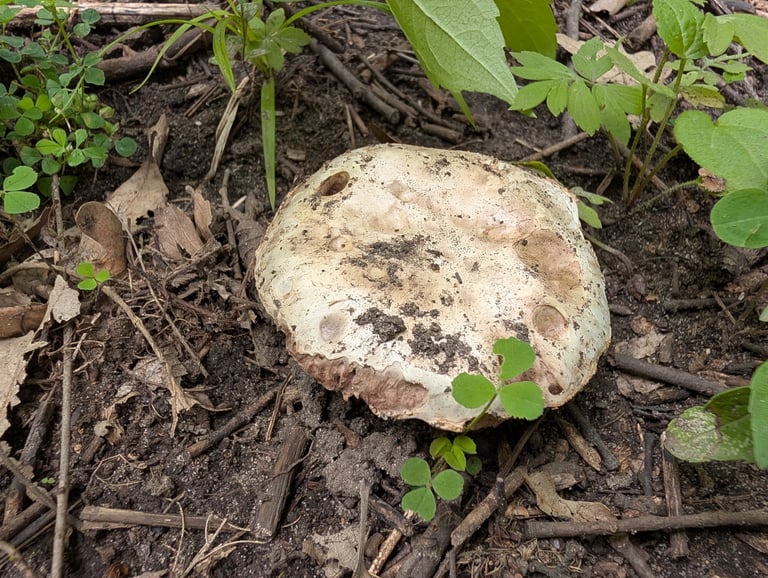
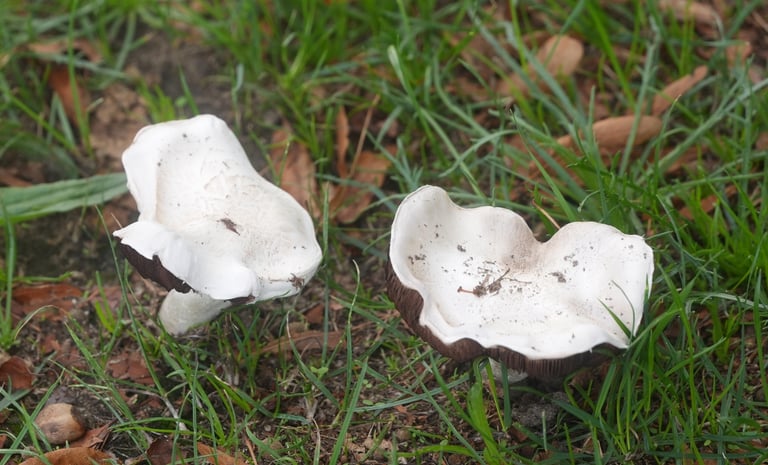
The most reliable identifying combination is a silky white cap paired with pink gills, a pink spore print, and growth on wood, together with a prominent saclike volva at the base of the stem. The cap starts oval, becomes bell-shaped to convex, and sometimes flattens with age, reaching 5 to 20 centimeters wide. It is white to yellowish, paler at the margin, dry, and covered in silky radiating threads.
The flesh is thin, soft, and white, with an odor resembling raw potatoes. Gills are crowded and free from the stem, starting white before turning pinkish as the spores mature. The stem measures 6 to 20 centimeters long and 1 to 3 centimeters thick, typically tapering upward or thickened at the base, white, smooth, and often slightly curved.
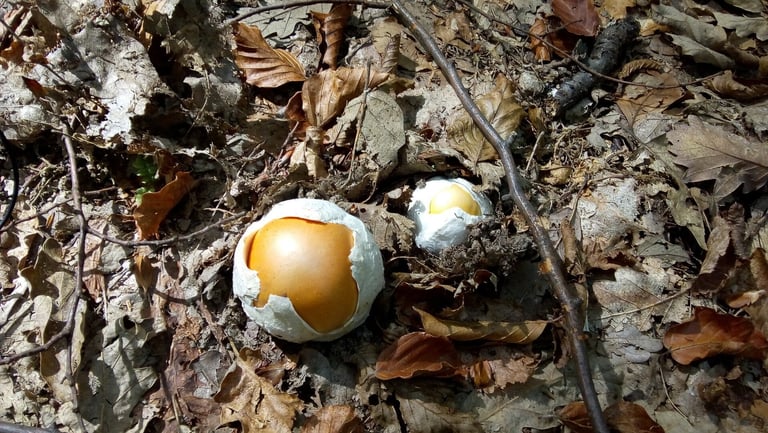
The universal veil is membranous, often cracked into blocks or scaly, forming a long saclike volva wrapped around the stem base, white to yellowish or dingy brown and often lobed. The spore print ranges from pinkish to salmon, with elliptical spores measuring 6.5 to 10 by 4.5 to 6.5 micrometers.
Distribution and Habitat
Volvariella bombycina is a saprobic species, meaning it feeds on dead wood, and it fruits singly or in small groups on trunks and decayed stumps of dead hardwoods. Favored hosts include sugar maple, red maple, silver maple, magnolia, mango, beech, oak, and elm, and it is often found emerging from clefts and knotholes of dead or living tree trunks. It has been noted to return to the same fruiting location for several years, and on rare occasions it has been reported on coniferous wood despite its general preference for hardwoods.
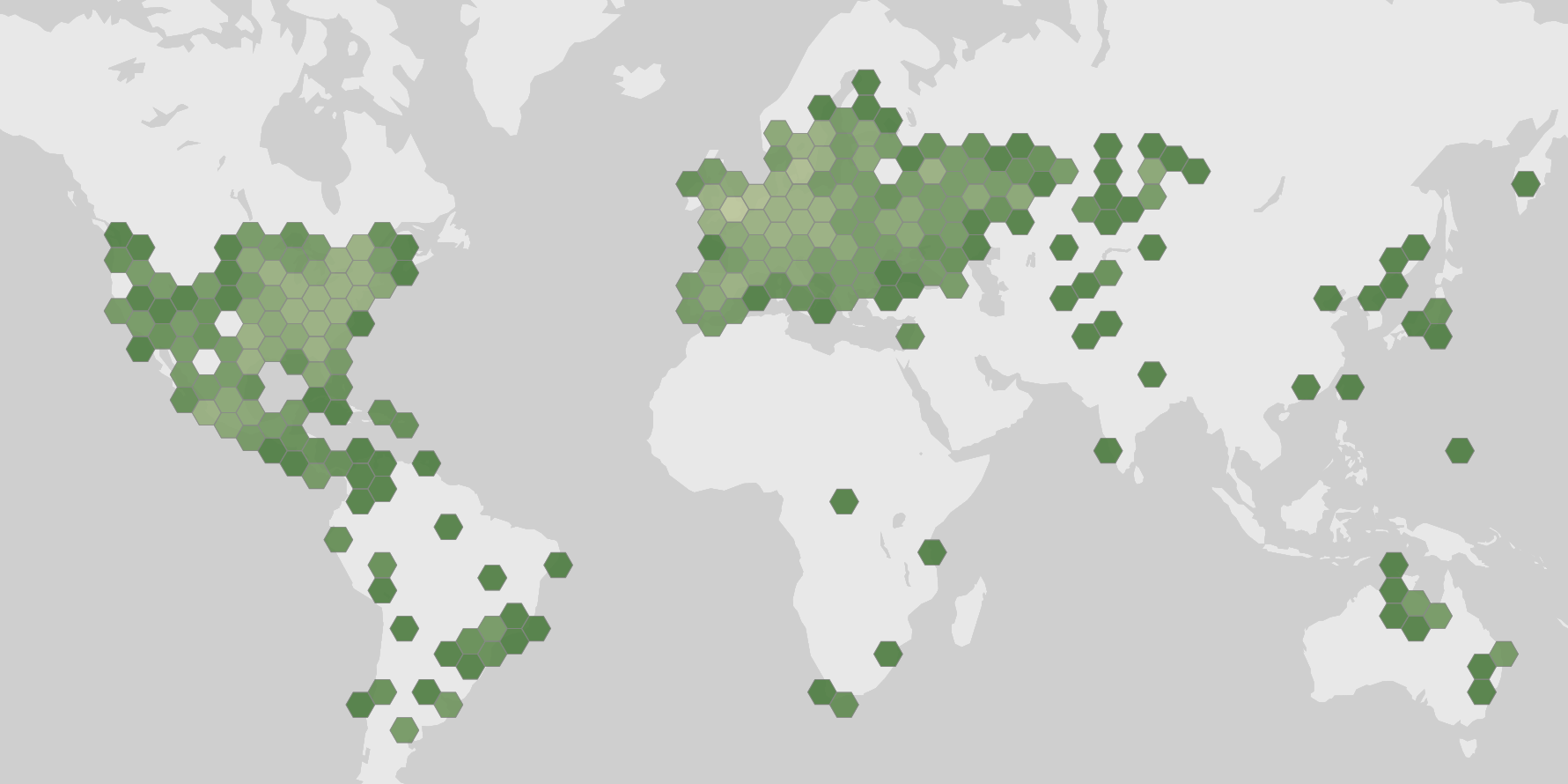
Described as uncommon but widely distributed, it occurs across Europe, parts of Asia including Iran, China, India, Korea, and Pakistan, North and South America, Cuba in the Caribbean, and Australia. It gained protected status in Hungary in 2005, making it illegal to pick there. Two recognized varieties have more restricted ranges: var. microspora is known from Venezuela, and var. palmicola occurs in the Democratic Republic of the Congo.
Observation records show a strong seasonal concentration, with counts rising sharply through the summer months and peaking before declining into autumn, suggesting the species fruits mainly in warmer months in the regions where it has been recorded, though such records reflect where it has been noticed rather than its full range or abundance.
Uses and Cultural History
The fruit bodies of Volvariella bombycina are edible and generally considered of good quality, described by various sources as excellent, tasty, with a modest and pleasant flavor, and worth eating when found in sufficient quantity.
The species is tied to a notable piece of folklore recorded by Alexander H. Smith. After a family in Ann Arbor was fatally poisoned by an Amanita species, this mushroom fruited the following year on a maple tree at the same home. A story spread that spores from the deadly Amanita had escaped, taken root in the tree, and produced these new fruiting bodies. As a result, neighbors held the mushroom in great awe and began calling it the "ghost mushroom," and no one would consider eating specimens found there despite its actual edibility.
Separately, ethnobotanical work among the Wixaritari and mestizo communities has documented that both groups prefer mushrooms, including Volvariella bombycina, over other foods such as meat, reflecting a cultural exchange and shared knowledge of the fungus's phenology and ecology.
Fun Facts
- Its species name, bombycina, derives from a word for "silkworm," referencing the silky, cocoon-like fibrils covering the cap.
- Several bioactive compounds have been isolated from its fruit bodies and mycelium, including a novel compound called isodeoxyhelicobasidin, identified from culture broth in 2009, which inhibits a human enzyme called elastase.
- The species produces compounds with antioxidative activity and has been studied for secondary metabolites that inhibit melanin production.
- Its fruit bodies can be readily grown in laboratory culture.
Photos
Photographs from via iNaturalist, licensed under CC0 1.0., by Bryan Rennick via iNaturalist, licensed under CC BY 4.0., by lisebsb via iNaturalist, licensed under CC BY 4.0., by David Wilkins via iNaturalist, licensed under CC BY 4.0., by Umut Nuri Erdoğan via iNaturalist, licensed under CC BY 4.0., by iwonaadamska via iNaturalist, licensed under CC BY 4.0., by Ondřej Křivan via iNaturalist, licensed under CC BY 4.0., by Gerry van Tonder via iNaturalist, licensed under CC BY 4.0., by Atsushi Nakajima via iNaturalist, licensed under CC BY 4.0., by Matthew Sawyer via iNaturalist, licensed under CC BY 4.0., and by Rodrigo Osvaldo Borbon Vázquez via iNaturalist, licensed under CC BY 4.0., credited on each photo.
Ecology and classification
Habitat
Classification
- Phylum
- Basidiomycota
- Class
- Agaricomycetes
- Order
- Agaricales
- Family
- Pluteaceae
- Genus
- Volvariella
- Species
- Volvariella bombycina
Sources
- GBIF Species names and classification
- iNaturalist Photos
- Wikidata Common names and conservation status
- Wikipedia Summary extract