A bird that wags its tail almost without pause gave both its species and its whole genus their common name.
The white wagtail belongs to the family Motacillidae, which also includes pipits and longclaws. It breeds across most of Europe and Asia and into parts of North Africa, with a scarce breeding presence in western Alaska. Its conservation status is Least Concern.
The species has between 9 and 11 subspecies. In Britain and Ireland, the black-backed form known as the pied wagtail is the most common. The species can live up to , and its wide range and adaptability make it a useful bird to study.
Identification and Appearance
The long tail, which the bird wags almost constantly, is the most useful field mark. Adults measure 16.5 to 19 cm (6.5 to 7.5 in) in length, and East Asian subspecies reach up to 21 cm (8.3 in).
The nominate subspecies has pale grey upperparts. The British and Irish pied wagtail, Motacilla alba yarrellii, has a black back in males and dark grey upperparts in females and juveniles, but is otherwise similar. Some subspecies differ in the colour of the wings, back and head.
Many subspecies look alike, and up to six may winter in India or Southeast Asia, where they are hard to tell apart. Breeding M. a. yarrellii look much like the nominate race apart from the black back. Males and some other forms change colour in the pre-basic moult, and black-throated birds develop white chins in winter.
Some black-backed birds turn grey-backed in winter, so plumage alone can be misleading outside the breeding season.
Distribution and Habitat
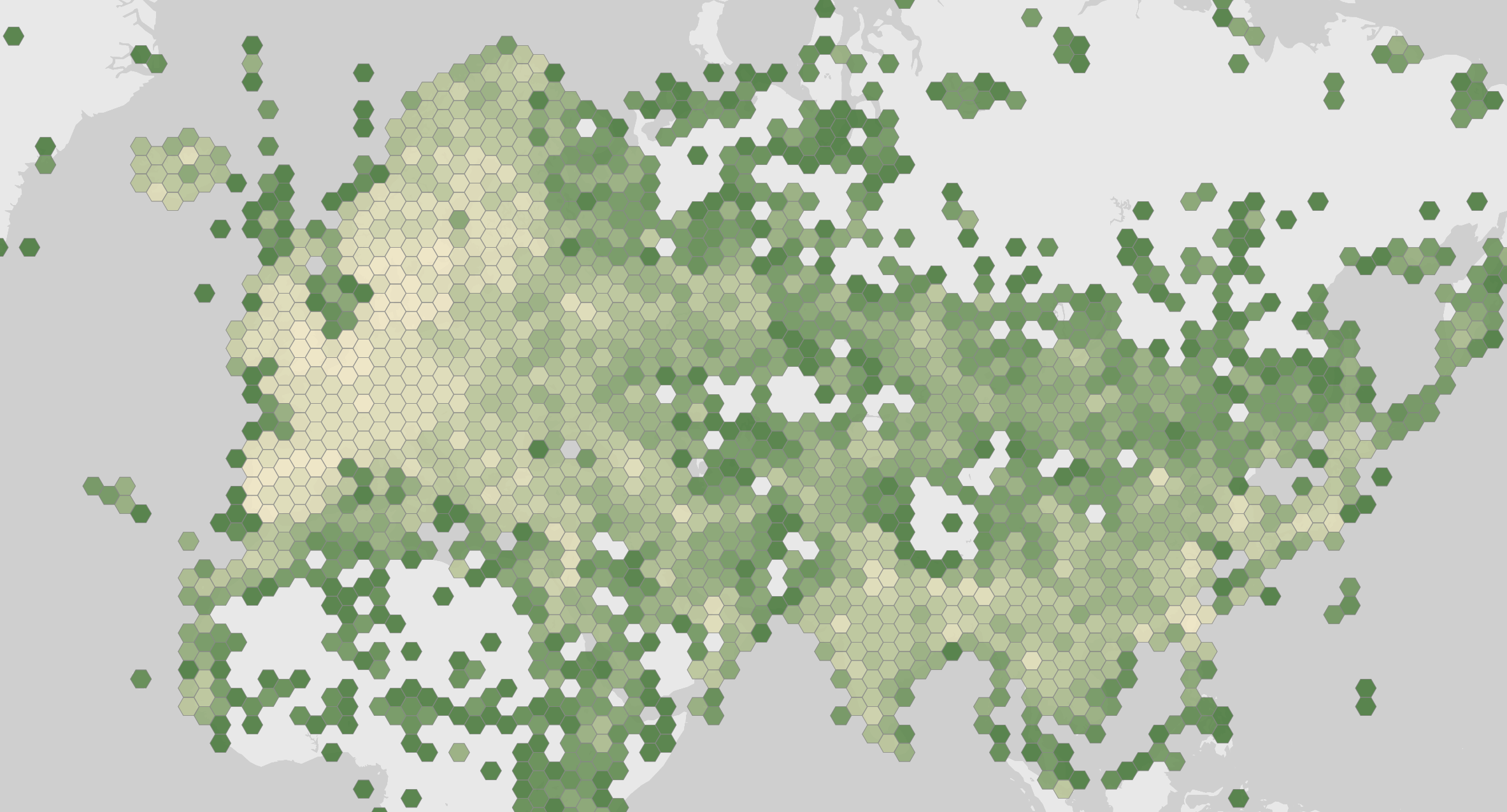
The white wagtail has an extensive range of about . It breeds throughout Eurasia up to latitudes of 75°N, but it is absent from the Arctic where the July isotherm falls below 4 °C. Small populations also breed in the mountains of Morocco and in western Alaska.
The species occupies a wide range of habitats but is absent from deserts. It has adapted well to human-modified land, nesting in walls, bridges and buildings as well as on natural banks beside rivers and ditches.
Resident birds remain in the milder parts of the range, such as western Europe and the Mediterranean. Northern European breeders winter around the Mediterranean and in tropical and subtropical Africa. Asian birds move to the Middle East, India and Southeast Asia, and birds from the North American population winter in tropical Asia.
Observation records peak in April, which suggests the birds are most visible in spring.
Behavior and Lifestyle
The most conspicuous habit of the white wagtail is its near-constant tail wagging. Scientists have not settled why it does this. One idea is that the movement flushes prey, and another is that it signals submissiveness to other wagtails. A 2004 study proposed instead that the wagging signals vigilance to potential predators.
The species is terrestrial and spends much of its time on the ground. Most populations are migratory, while birds in the mildest parts of the range stay year-round.
During the breeding season, males defend territories, and the species is monogamous. Pairs keep to their own space while raising young.
Recordings
flight call · France · Philippe Grange · Public domain
Diet and Nutrition
The white wagtail is an insectivore, and its diet changes little with place. Terrestrial and aquatic insects and other small invertebrates make up most of what it eats. Prey includes beetles, dragonflies, small snails, spiders, worms, crustaceans and maggots found in carcasses, but flies are the most important item.
Aquatic insects are a major food source. Mayflies, stoneflies and caddisflies, along with moth and midge larvae and adults, are main prey groups. Small fish fry also appear in the diet.
In the parts of its range where it does not migrate, the white wagtail keeps feeding on insects through winter. Most other insect-eating birds in temperate climates migrate or switch to plant food at that time.
Nesting and Breeding
White wagtails are monogamous and defend breeding territories. The breeding season runs from April to August for most birds, starting later further north.
Both sexes build the nest. The male starts the work and the female finishes it. In second broods of the subspecies personata, the female builds the nest alone while the male is still feeding the young. The nest is a rough cup of twigs, grass, leaves and other plant matter, lined with soft materials including animal hair.
The nest sits in a crevice or hole, traditionally in a bank beside a river or ditch, but the species also nests in walls, bridges and buildings. It nests with other animals where it can, such as in beaver dams and inside golden eagle nests. One nest was found in the skull of a walrus.
A clutch has three to eight eggs, usually four to six. The cream-coloured eggs are often tinted faint bluish-green or turquoise and heavily spotted with reddish brown, measuring about 21 mm by 15 mm. Both parents incubate, but the female sits longer and incubates at night. The eggs hatch after 12 days, sometimes as late as 16 days. Both parents feed the chicks, which fledge after 12 to 15 days and are fed for another week afterward.
The white wagtail is a host of the common cuckoo. It usually deserts a nest that has been parasitised. Moksnes et al. proposed that this happens because the wagtail is too small to push the intruding egg out and too short-billed to puncture it.
Population and Ecological Role
The population is estimated at 130 to 230 million birds. Population trends have not been quantified, but the European population appears stable.
The white wagtail is prey for carnivorous mammals, snakes and lizards, crows, harriers, falcons and owls. It is also a predator of insects, which makes it part of the food web linking insect populations with the animals that feed on it.
Conservation and Threats
The IUCN Red List rates the white wagtail as Least Concern. Its range covers more than 10 million square kilometres, and the population is large, so it falls well short of the decline thresholds that would trigger a higher rating. Population trends have not been quantified, but the species is not believed to come close to the thresholds for declines of more than 30% in ten years or three generations.
The species has adapted well to human changes to the environment. It nests in human-made structures and forages in open areas that people have created. In some cities, notably Dublin, large flocks gather in winter to roost.
Some white wagtails are caught for sport and then placed in collections. They are also kept as cagebirds and eaten as food. Climate change may be affecting the timing of their migration.
Cultural Significance
The white wagtail has appeared on postage stamps from many countries, including Bahrain, Belarus, Belgium, Finland, Georgia, Hong Kong, Hungary, Iceland, Iran, Ireland, Israel, Jersey, Kuwait, Latvia, Norway, Poland, the United Kingdom and Vietnam.
The white wagtail is the national bird of Latvia and is often mentioned in Latvian folk songs. It also appears in the logo of the Latvian Ornithological Society.
The pied wagtail has occasionally been called 'water wagtail', and in Ireland 'willie wagtail'. The Australian species Rhipidura leucophrys carries the same common name.
Photos
Photographs from by ikelman via iNaturalist, licensed under CC BY 4.0., via iNaturalist, licensed under CC0 1.0., by Jiro Iguchi via iNaturalist, licensed under CC BY 4.0., by Mateusz Bronikowski via iNaturalist, licensed under CC BY 4.0., by Addshore via iNaturalist, licensed under CC BY 4.0., by Шухободская Ольга Владимировна via iNaturalist, licensed under CC BY 4.0., by John Ashburner via iNaturalist, licensed under CC BY 4.0., by Richard Littauer via iNaturalist, licensed under CC BY 4.0., by andygpos via iNaturalist, licensed under CC BY 4.0., by kitbeard via iNaturalist, licensed under CC BY 4.0., by Tatiana Strus via iNaturalist, licensed under CC BY 4.0., and by Liem Malarney via iNaturalist, licensed under CC BY 4.0., credited on each photo.
Ecology and classification
Classification
- Phylum
- Chordata
- Class
- Aves
- Order
- Passeriformes
- Family
- Motacillidae
- Genus
- Motacilla
- Species
- Motacilla alba
Sources
- GBIF Species names and classification
- iNaturalist Photos
- Wikidata Common names and conservation status
- Wikipedia Summary extract
- Xeno-canto Audio recordings
- AnAge Longevity
- AVONET Bird mass, habitat, migration, diet and range size
- GloBI What it eats, what eats it, parasites and pollinators
- trophiCH
- Wardeh et al. 2015 (EID2)
- SquamataBase
- TETRA-EU