The willet's name is onomatopoeic, echoing its own loud, piercing "pill-will-willet" territorial song. This large, robust shorebird belongs to the sandpiper family Scolopacidae and is the biggest member of the genus Tringa, the group known as "shanks."
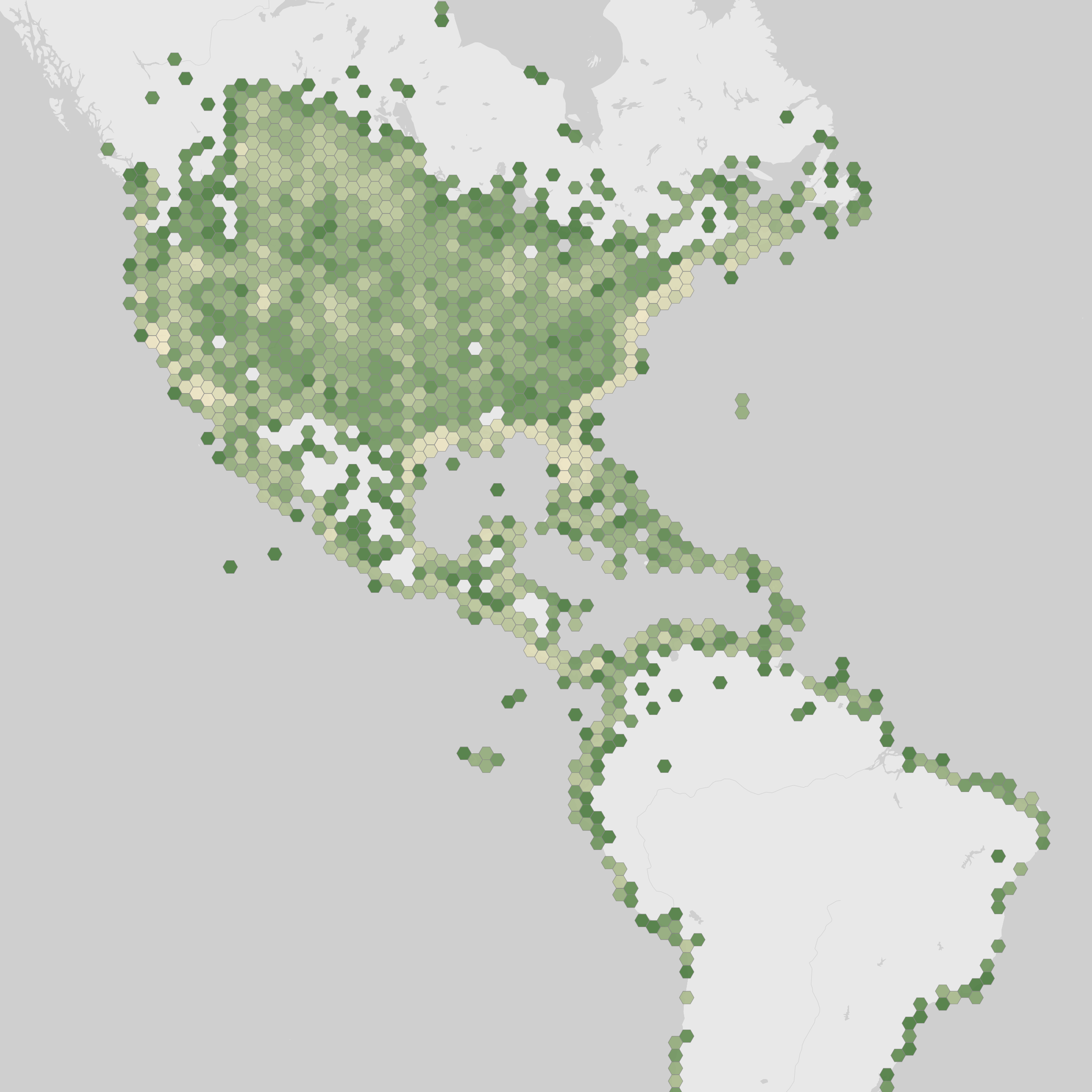
The species breeds across North America and the West Indies, wintering from southern North America through Central America, the West Indies, and South America. Its conservation status is currently Least Concern, though its widespread range and distinctive calls make it a rewarding bird to learn to recognize, both by sight and by ear.
Identification and Appearance
The willet's black underwing coverts and broad white wing band, visible in flight, are its most useful field marks, giving it a godwit-like silhouette with black primaries and primary coverts contrasting sharply against white secondaries. On the ground, look for gray legs and a shortish, heavy, straight bill.
The species measures 31 to 41 centimeters in length and weighs between 200 and 330 grams. Its structure resembles the common redshank but it is larger than the greater yellowlegs, standing as the largest species in the Tringa genus. The sexes look similar, though females run slightly larger.
Plumage is gray above with a white rump and white underparts. A narrow whitish eye ring and a white area above the lores give the bird a "spectacled" look. In breeding plumage, brown barring appears on the upperparts, while non-breeding birds show much plainer gray tones.
Distribution and Habitat
The willet occupies an estimated range of about 2,510,000 square kilometers across North America, the West Indies, Central America, and South America, favoring open coastal and wetland settings. Two subspecies use strikingly different breeding habitats: the eastern willet nests in coastal saltmarshes, while the western willet breeds inland in freshwater prairie marshes, sloughs, potholes, and other wetlands.
In winter, both subspecies converge on coastal environments, using rocky and sandy shores, mudflats, and coastal marshes. This shift from inland freshwater habitats in the west to shared coastal wintering grounds highlights the flexibility of the species' habitat use across its life cycle.
Behavior and Lifestyle
Willets are territorial on both breeding and wintering grounds, yet they also form loose breeding colonies or wintering groups rather than living in strict isolation. The species is migratory, moving between its breeding range and its wintering grounds in southern regions.
Display behavior includes holding the wings stiffly downcurved in flight, while on the ground displays emphasize the bold underwing pattern. Willets are normally vigilant birds; those positioned closer to the landward edge of a saltmarsh tend to be the first to sound alarm calls, a pattern reminiscent of the common redshank in Europe. Despite this wariness as a group, some individual willets can be approachable.
Communication
The willet's signature "pill-will-willet" territorial song gives the species its name, and it varies between subspecies: higher pitched and faster in eastern willets than in western birds. Breeding birds also give a repeated, staccato "kleep" call in response to predators.
Non-breeding birds use a high, anxious "kip-kip-viek" alarm call along with a "kreei" call. A distinctive "klay-dir" call is used when one willet crosses another's territory, and this same call also serves as a contact call during migration.
Recordings
call · Canada · Doug Hynes · CC BY-SA
Hunting and Diet
Willets hunt by walking steadily and pecking prey from the substrate, though they also probe mud and silt with a sensitive bill and actively stalk larger prey in shallow water, wading up to their bellies to pursue fish and aquatic insects. This sensitivity in the bill allows them to hunt just as effectively at night as during the day.
On the coasts, a favored prey is small fiddler crabs, along with mole crabs, worms, and clams. Western willets take water scavenger beetles, diving beetles, snout beetles, spiders, and fish during the breeding season, shifting in winter to shore crabs, brachyuran crabs, clams, nereid worms, mussels, and whelks. Eastern willets feed primarily on marine coastal prey, including several species of fiddler crabs, other crabs, mole crabs, and amphipods.
Willets occasionally eat plant material as well, and often use rocks, trees, or fence posts as perches between foraging bouts.
Nesting and Breeding
Courtship begins when the male leads the female through the territory, creating trial nest scrapes for her to evaluate until she selects a site. The nest itself is a shallow depression, about 15 centimeters across and 5 centimeters deep, scraped out with the feet and breast. Eastern willets place nests in saltmarsh or sand dunes, while western willets nest among grass near water; in grassy sites, the female may pull grass stalks over the nest for camouflage, and fine grass or small pebbles may line it.
Pairs may form long-term monogamous bonds, returning to the same territory in successive seasons. The male defends this territory from other willets through a ritualized walk along the boundary with neighbors, which often escalates into fights.
Both sexes incubate the eggs over 22 to 29 days, with the male tending to take the night shift. The female typically departs the territory before the precocial young fledge, leaving the male to care for them alone for the final two weeks or so before they fledge.
Conservation and Threats
The willet holds a status of Least Concern, though it remains a species at risk of becoming threatened without continued conservation attention, having shown an apparent decline since the 1960s despite still being common across parts of its range.
The western subspecies faces the conversion of native grasslands and drainage of wetlands for agriculture, while its wintering habitat has suffered local degradation from coastal development in California. Willets are also vulnerable to collisions with power lines run through their wetland breeding areas.
The Migratory Bird Treaty Act of 1918 protected willets from intensive hunting for food, allowing populations to rebound to today's levels. An estimated 250,000 willets exist in North America, with about 150,000 counted along the western flyway and 90,000 in the east; since western willets winter in eastern regions too, the true number of eastern willets is likely well below 90,000.
Fun Facts
- The willet was originally placed in the genus Scolopax when first described, later moved to its own genus Catoptrophorus in 1827, before being reclassified into Tringa in 2006.
- Its closest relative is the lesser yellowlegs, a much smaller bird, though both species share a similar fine, dense neck pattern in breeding plumage.
Photos
Photographs from via iNaturalist, licensed under CC0 1.0., by Cricket Raspet via iNaturalist, licensed under CC BY 4.0., by Rachel Lee Harper via iNaturalist, licensed under CC BY 4.0., by TonyT via iNaturalist, licensed under CC BY 4.0., by arquivi via iNaturalist, licensed under CC BY 4.0., by Judy Dobles via iNaturalist, licensed under CC BY 4.0., by Katrina Smith via iNaturalist, licensed under CC BY 4.0., by Javier Hernandez via iNaturalist, licensed under CC BY 4.0., by Eric Austin via iNaturalist, licensed under CC BY 4.0., by Brook via iNaturalist, licensed under CC BY 4.0., by Nic Charlton via iNaturalist, licensed under CC BY 4.0., by Meghan Waldon via iNaturalist, licensed under CC BY 4.0., by Jessica Williams via iNaturalist, licensed under CC BY 4.0., and by louisiv826 via iNaturalist, licensed under CC BY 4.0., credited on each photo.
Ecology and classification
Classification
- Phylum
- Chordata
- Class
- Aves
- Order
- Charadriiformes
- Family
- Scolopacidae
- Genus
- Tringa
- Species
- Tringa semipalmata
Sources
- GBIF Species names and classification
- iNaturalist Photos
- Wikidata Common names and conservation status
- Wikipedia Summary extract
- Xeno-canto Audio recordings
- AnAge Longevity
- AVONET Bird mass, habitat, migration, diet and range size
- GloBI What it eats, what eats it, parasites and pollinators
- HWML Parasite Collection