Fewer than a hundred adult trees are known to survive in the wild, all confined to a single remote gorge system that botanists had never explored before 1994. Wollemia nobilis is a coniferous tree in the family Araucariaceae, one of only three living genera in that ancient lineage alongside Araucaria and Agathis. It was found growing in narrow, steep-sided sandstone gorges within Wollemi National Park, roughly 150 km northwest of Sydney, New South Wales, in a pocket of temperate rainforest wilderness so isolated that the species had gone unnoticed by science.
The species is listed as Critically Endangered, its entire wild population restricted to that single hidden valley. What makes it worth reading about is not just its rarity but the story since 1994: an international propagation effort has turned a near-vanished relic into a tree now grown in gardens on several continents, even as the wild grove remains under constant threat.
Identification and Appearance
The single most useful field mark is the bark: dark brown, deeply knobbly, and often compared to the breakfast cereal Coco Pops. This texture, combined with a habit of coppicing readily, gives most specimens a distinctive multi-trunked or clumped appearance, sometimes made up of as many as 100 stems of differing sizes growing from old coppice growth.
Mature trees reach 25 to 40 meters in height. Branching is unusual: most side branches never branch again, instead terminating in a cone, male or female, for up to about 12 years before new branches sprout from dormant buds on the main trunk. Over time, some side branches turn erect and develop into secondary trunks bearing their own sets of side branches, which is how the wild trees end up with so many stems.
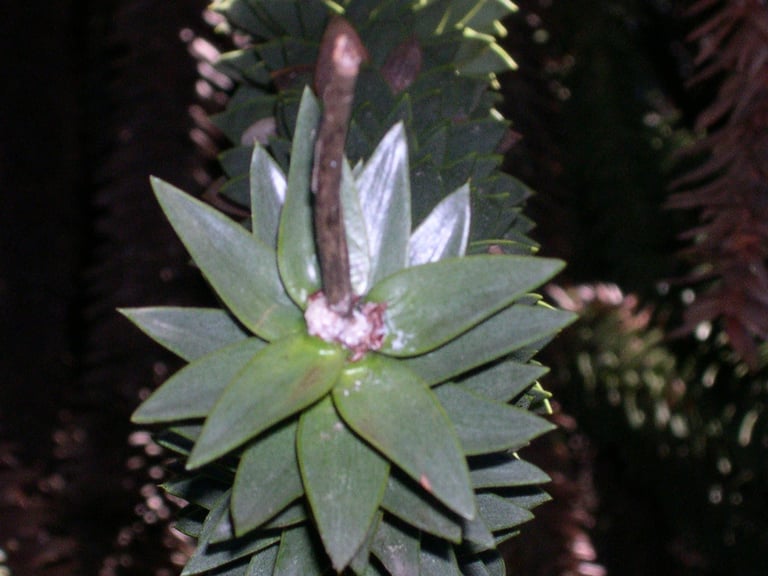
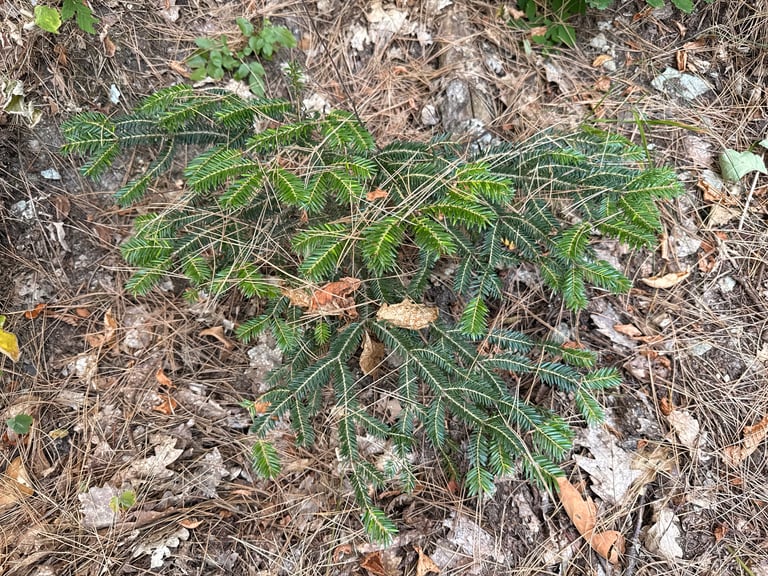
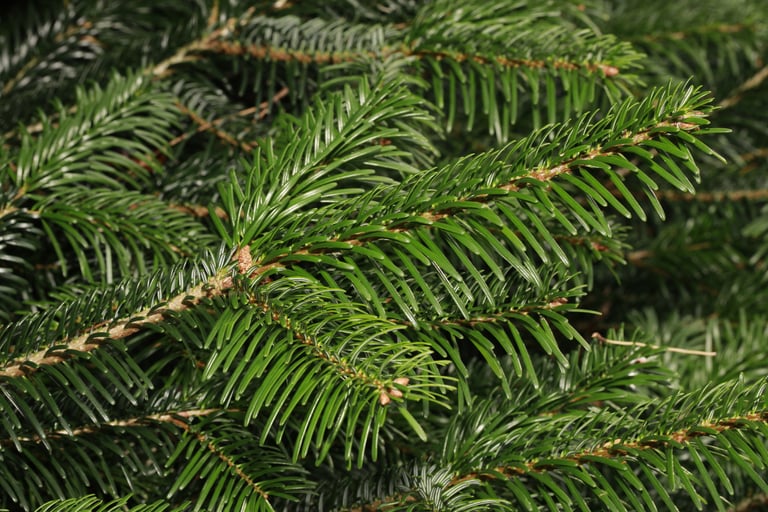
The leaves are flat and linear, 3 to 8 cm long and 2 to 5 mm wide, arranged spirally on the shoot but twisted at the base so they appear in two or four flattened ranks. Young leaves emerge bright lime-green and mature to a more yellowish-green, giving the crown a two-toned look.
Seed cones are green, 6 to 12 cm long and 5 to 10 cm across, maturing about 18 to 20 months after wind pollination before disintegrating to release small, papery, winged seeds built for wind dispersal. Male pollen cones are slender and reddish-brown, 5 to 11 cm long and 1 to 2 cm wide, and sit lower on the tree than the seed cones. Cone production can begin young: trees planted at Kew in 1997 produced their first cones by 2008, at only 10 to 11 years old.
Distribution and Habitat
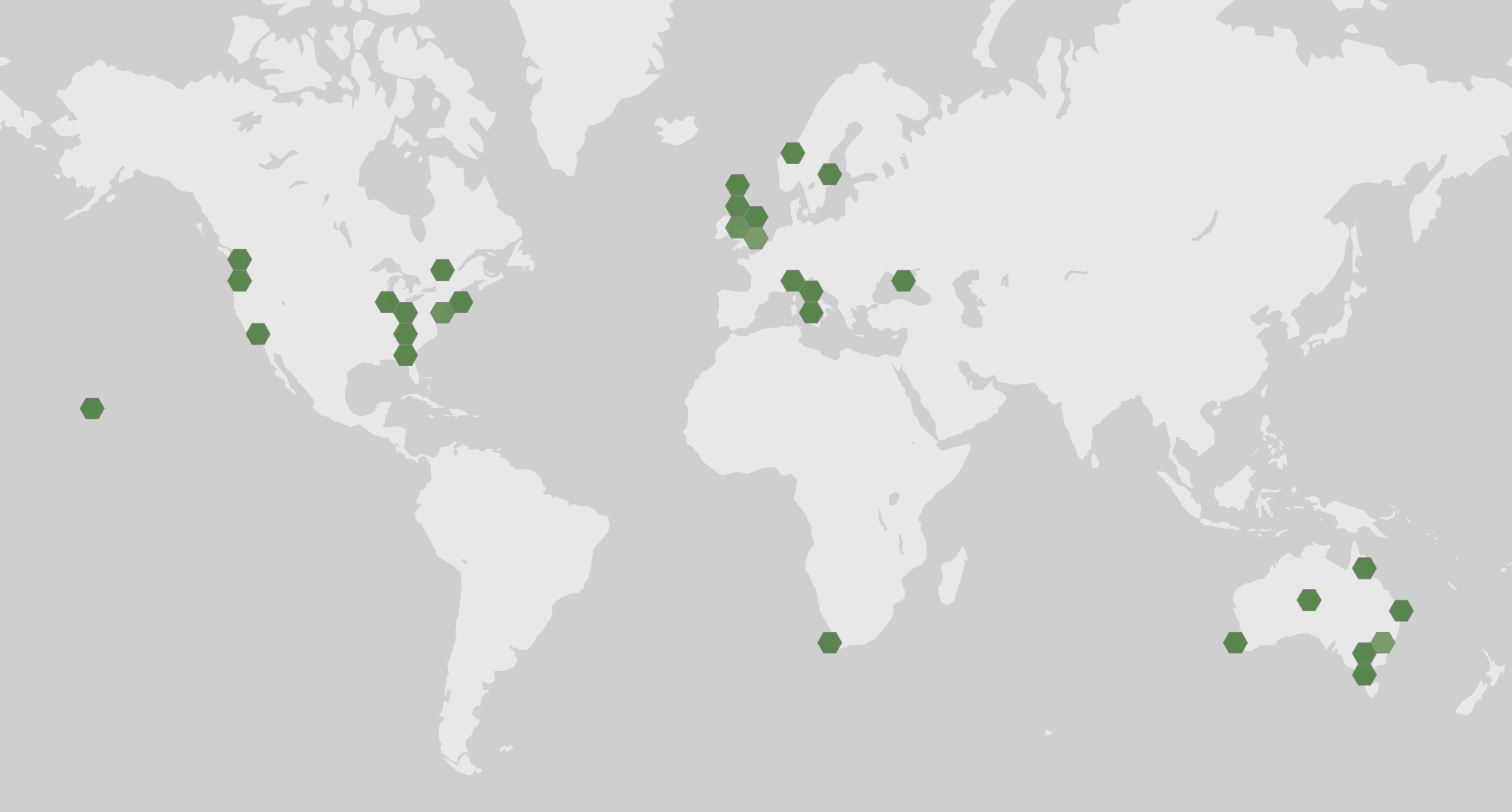
The species is known from a single wild location in the sandstone gorges of Wollemi National Park, New South Wales, growing within temperate rainforest wilderness. Because the location remains undisclosed to protect the trees, most modern records of the species come not from the wild grove but from cultivated specimens planted in gardens worldwide.
Monthly observation counts, which reflect presence records rather than abundance or the species' full range, show a pronounced spike in November, with 103 observations compared to fewer than 40 in any other month. This pattern likely reflects seasonal observer activity, such as flowering-season garden visits or citizen-science reporting, rather than any true seasonal shift in the tree itself, and it should not be read as a measure of how many trees exist.
Growth and Form
Growth is fairly fast under good conditions. A cultivated specimen planted in 2009 in Finistère, France, reached 8.1 meters in height by 2023, when it was only 14 years old, suggesting the species can put on substantial height within its first couple of decades away from its native gorge.
Uses and Human Relationships
Since a propagation program made cuttings available to botanical gardens, first in Australia in 2006 and then worldwide, the Wollemi pine has become valued as an ornamental tree, suited to open ground as well as tubs and planters. In Australia, potted specimens are even marketed as living Christmas trees.
The species has proven more cold-tolerant than its narrow, humid native range would suggest, withstanding temperatures between -5 and 45 degrees Celsius, with reports from Japan and the United States of survival down to -12 degrees Celsius. A grove planted at Inverewe Garden in Scotland, thought to be the northernmost successful planting, survived -7 degrees Celsius in January 2010, and the tree tolerates both full sun and full shade. Its main vulnerability is the pathogenic water mould Phytophthora cinnamomi, which may limit any future use as a timber species.
The Royal Botanic Gardens in Sydney has published methods for growing Wollemi pines from seed harvested by helicopter from the wild trees, including sorting for viable seed, refrigerating sown pots for two weeks, and germinating in warm, low-light conditions over several months. In general cultivation the species is easy to grow and low-maintenance, adapting to a wide range of climates and thriving in pots on patios or indoors, since it tolerates air conditioning, provided it has well-drained soil and protection from frost.
Conservation and Threats
Wollemia nobilis is classified as Critically Endangered, a status reflecting a wild population confined to a single gorge system. The most serious documented threat is the pathogenic water mould Phytophthora cinnamomi, detected among wild trees in November 2005; park rangers believe it was introduced by unauthorized visitors, which is why the exact location remains undisclosed to the public.
Fire has also threatened the grove directly. During the 2019-2020 Australian bushfire season, specialist firefighters from the National Parks and Wildlife Service, supported by the Rural Fire Service, saved the trees by installing an irrigation system and dropping fire retardant.
Conservation efforts have centered on propagation rather than only on-site protection. Rooted branch cuttings were safeguarded in botanic gardens worldwide from 2005, and a decade later commercial growers were authorized to propagate surplus cuttings for sale, an experiment intended to test whether making the species commercially available would reduce illegal collecting from the wild. A 2023 survey of more than 1,500 growers in 31 countries found the species does well in temperate climates with year-round rainfall and well-drained loamy soils, leading researchers to conclude that establishing Wollemi pines in many parts of the world could help conserve the species against climate change and other threats.
Fun Facts
- The genus was known to science only from fossils before living trees were found in 1994, earning Wollemia nobilis its reputation as a 'living fossil.'
- The genus name comes from Wollemi National Park, an Aboriginal word meaning "look around you," while the species epithet nobilis honors David Noble, the park ranger who discovered the tree.
- It is considered one of the rarest tree species in the world, being the only living member of its genus and confined in the wild to a single remote gorge system.
- The exact location of the wild grove has never been made public, a secrecy measure meant to keep it safe from both disease and unauthorized visitors.
Photos
Photographs from via iNaturalist, licensed under CC0 1.0., by Em Lamond via iNaturalist, licensed under CC BY 4.0., by Wendy Herniman via iNaturalist, licensed under CC BY 4.0., by Rosie Steinberg via iNaturalist, licensed under CC BY 4.0., by Clive Freedman via iNaturalist, licensed under CC BY 4.0., by Sandra Stewart via iNaturalist, licensed under CC BY 4.0., and by maxmarengo via iNaturalist, licensed under CC BY 4.0., credited on each photo.
Ecology and classification
Habitat
Growth habit
- Tree
Classification
- Phylum
- Tracheophyta
- Class
- Pinopsida
- Order
- Pinales
- Family
- Araucariaceae
- Genus
- Wollemia
- Species
- Wollemia nobilis
Sources
- GBIF Species names and classification
- iNaturalist Photos
- Wikidata Common names and conservation status
- Wikipedia Summary extract