In the 1940s, doctors diagnosed human pregnancy by injecting a woman's urine into a female Xenopus laevis: if she began laying eggs within hours, the test came back positive. That odd bit of medical history explains why this unassuming aquatic frog now lives on every continent except Antarctica.
Native to the ponds and rivers of south-eastern Sub-Saharan Africa, the African clawed frog is a fully aquatic member of the family Pipidae, rated Least Concern by the IUCN. Its short black foot-claws give the genus Xenopus its name, meaning "strange foot," while laevis refers to its smooth skin. Few amphibians have shaped human science, medicine, and even global ecosystems as much as this one, and its story continues well beyond the laboratory bench.
Identification and Appearance
The clearest field mark is the trio of short black claws on the hind feet, unusual among frogs and the source of the species' common name. Adults are compact and flattened, with individuals weighing around 64 grams, small eyes positioned on top of the head, and no visible eardrums or tongue.
The back is smooth and slippery, mottled in shades of olive-gray or brown, sometimes broken by yellowish blotches, while the underside is creamy white with a faint yellow tinge. Skin is shed every season, and the frog promptly eats its own molt.
Males and females are easy to tell apart. Males are smaller and slimmer, developing black nuptial patches on their hands and forearms that help them grip females during mating. Females are larger and more rotund, with a more pronounced cloaca and hip-like bulges above the rear legs where eggs are held internally.
Albino color morphs are common, especially among frogs bred for laboratory or pet use, and the species is sometimes confused in the pet trade with the much smaller African dwarf frog.
Distribution and Habitat
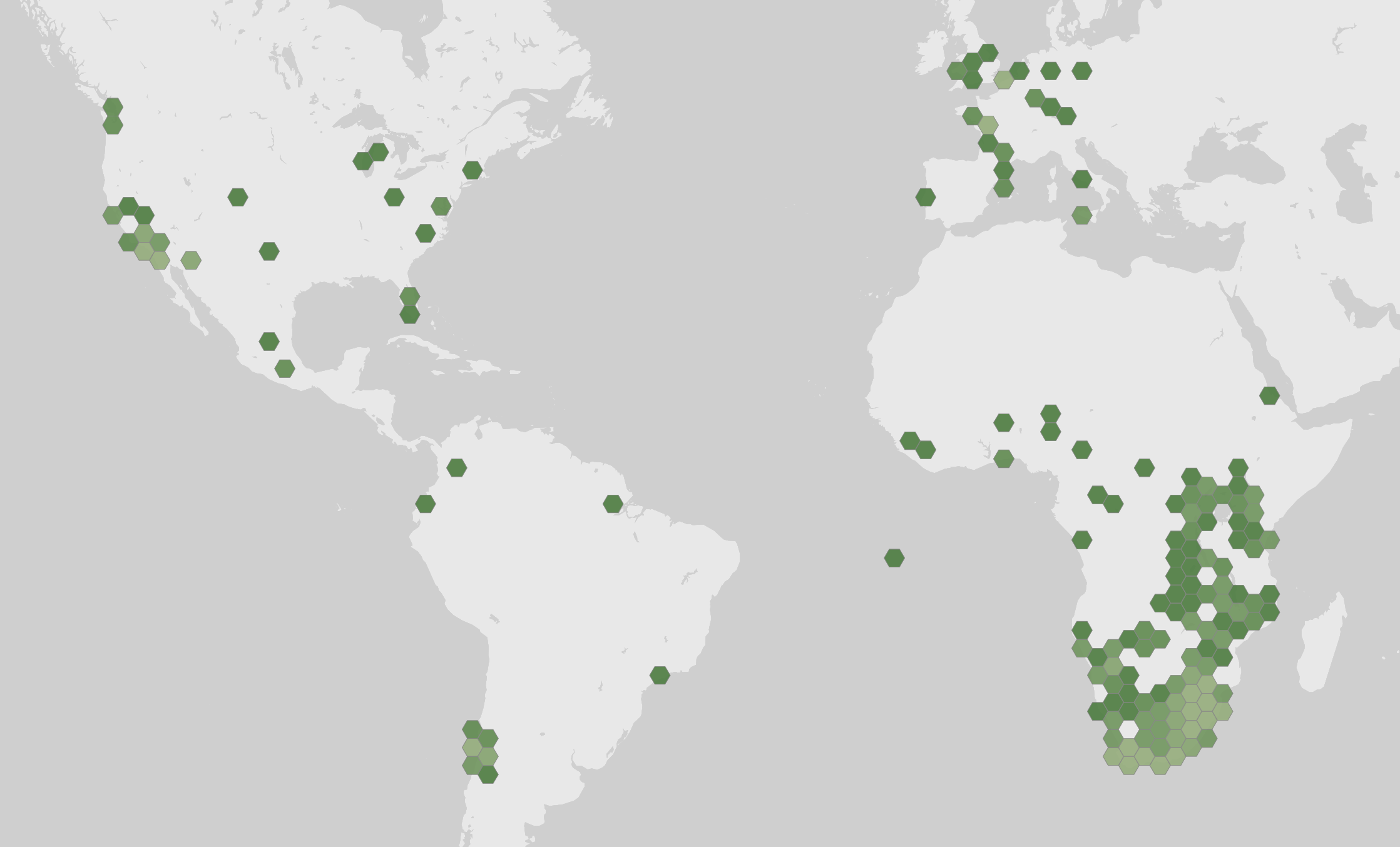
The African clawed frog is native to south-eastern Sub-Saharan Africa, where it inhabits warm, stagnant grassland ponds and slow streams across arid and semi-arid regions. These waters are typically free of tall aquatic plants and often coated in green algae, conditions the species tolerates well.
It can survive a wide range of water pH levels, though dissolved metal ions are toxic to it, and it thrives in water temperatures between roughly 15.5 and 26.7 degrees Celsius (60 to 80 degrees Fahrenheit). The frog is almost entirely aquatic, leaving the water only when forced to migrate between drying ponds.
Monthly observation counts show activity building through the year, from lows around 510 to 620 sightings in the winter months to a peak near 1,570 in May and a secondary high of about 1,480 in August. These figures reflect presence records rather than true abundance or a complete range, but the pattern hints at greater surface activity, and therefore detectability, during the wetter, warmer months.
Behavior and Lifestyle
For much of the time, this frog is strikingly inactive, sitting motionless on the pond bottom or floating at the surface with only its nostrils and eyes exposed. Bursts of activity are reserved mainly for feeding and reproduction, both of which occur predominantly at night.
When ponds dry up in the dry season, the frog burrows into the mud and leaves an air tunnel, becoming dormant for as long as a year until conditions improve. If a pond dries during the rainy season instead, it may travel overland to find another body of water; feral populations in South Wales have been recorded moving up to 2 kilometers between sites, aided by powerful hind legs.
The species swims with ease in every direction but can only crawl on land, and it breathes primarily through well-developed lungs rather than through its skin. Notably cannibalistic, adults will eat their own species' larvae, giving them indirect access to the plankton-based nutrition the filter-feeding tadpoles have accumulated, a trait that helps the frogs persist in habitats with little other food.
Scavenging and Diet
African clawed frogs locate food less by sight than by touch and smell, relying on extremely sensitive fingers, a keen sense of smell, and a lateral line system, the vibration-detecting organ more typical of fish, to find prey and scraps in murky water.
Once something is detected, the frog behaves as an opportunistic scavenger, consuming living, dying, or already-dead arthropods along with worms, aquatic crustaceans, and general organic waste. It has a voracious appetite and will strike at almost anything passing within reach.
Lacking a tongue, it cannot flick out to catch prey the way most frogs do; instead it uses a hyobranchial pump to suck food directly into its mouth, while the black claws on its hind feet help tear apart larger items. Tadpoles feed entirely differently, filtering plankton from the water until metamorphosis changes their diet completely.
Reproduction and Life Cycle
Breeding can occur at any time of year but peaks in spring, with a single female capable of mating up to four times annually after reaching sexual maturity at 10 to 12 months old. Courtship begins with males calling at night, producing alternating long and short trills through rapid contractions of their laryngeal muscles despite lacking a vocal sac.
Females respond vocally too, an unusual trait among frogs: a rapping sound signals acceptance, while slow ticking signals rejection. Successful pairs enter amplexus at the pelvis rather than the more typical front-limb grip, aided by the black mating pads males grow on their forearms.
Over a 3- to 4-hour mating event, the female releases hundreds of sticky eggs, fertilized externally, which she attaches one or more at a time to plants or other anchors in the water. The eggs hatch into filter-feeding tadpoles, which metamorphose into froglets by absorbing their tails over 4 to 5 days, completing the full transformation from egg to small frog in about 6 to 8 weeks.
Conservation and Threats
The IUCN lists Xenopus laevis as Least Concern, reflecting a wild African population that faces no major decline in its native range. The species' more pressing conservation story lies elsewhere: because it was mass-produced for human pregnancy testing in the 1940s, large numbers were released once more modern tests replaced the frog-based method, and it has since established itself as an invasive species in water bodies around the world.
Its hardiness, tolerance for varied water chemistry, and voracious, cannibalistic diet make it a capable colonizer of ponds and streams far outside Africa, where it can compete with or prey on native amphibians and invertebrates.
Cultural Significance
For decades, Xenopus laevis has been a workhorse of biomedical research, prized because females lay eggs prolifically and their embryos are transparent, letting scientists watch vertebrate development unfold in real time. That biology once had a very practical human application: injecting a woman's urine into a female frog served as a pregnancy test, with egg-laying confirming a positive result.
The species also holds a landmark place in genetics as the first vertebrate ever cloned in a laboratory setting. Its skin produces a family of natural antibiotics called magainins, which show antifungal, antiparasitic, and antiviral activity and have been tested in antibiotic creams as effective, side-effect-free alternatives to oral antibiotics.
Beyond the lab, easy care and breeding have made the frog a familiar presence in the pet trade, including popular albino morphs, further extending its reach into human hands far from its African home.
Fun Facts
- Doctors once diagnosed human pregnancy by injecting a woman's urine into a female clawed frog and watching for egg-laying.
- Xenopus laevis was the first vertebrate ever cloned in a laboratory.
- Its skin produces natural antibiotics called magainins, tested as creams that work as well as oral antibiotics without the side effects.
- The frog sheds its skin every season, and then eats the shed skin.
- It has no tongue, so it sucks food into its mouth with a hyobranchial pump and shoves in larger pieces by hand.
- During droughts it can burrow into mud and stay dormant for up to a year.
- Feral individuals have been tracked moving up to 2 kilometers overland between ponds.
Photos
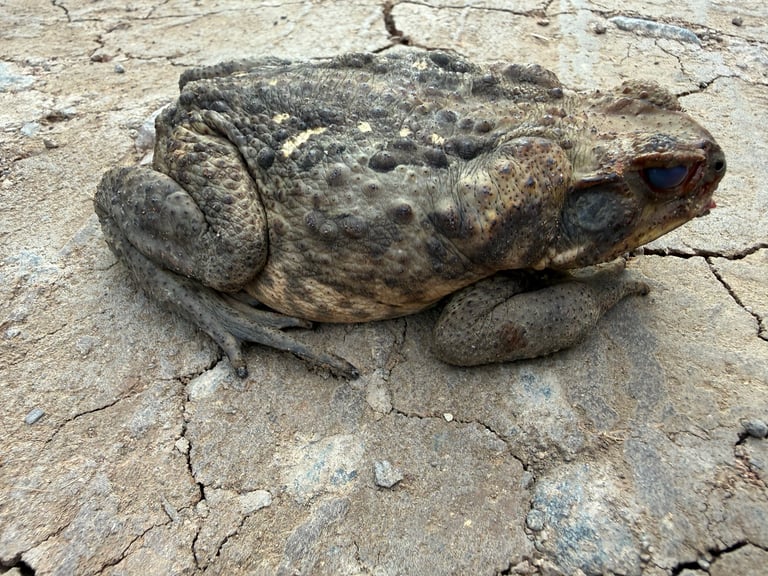
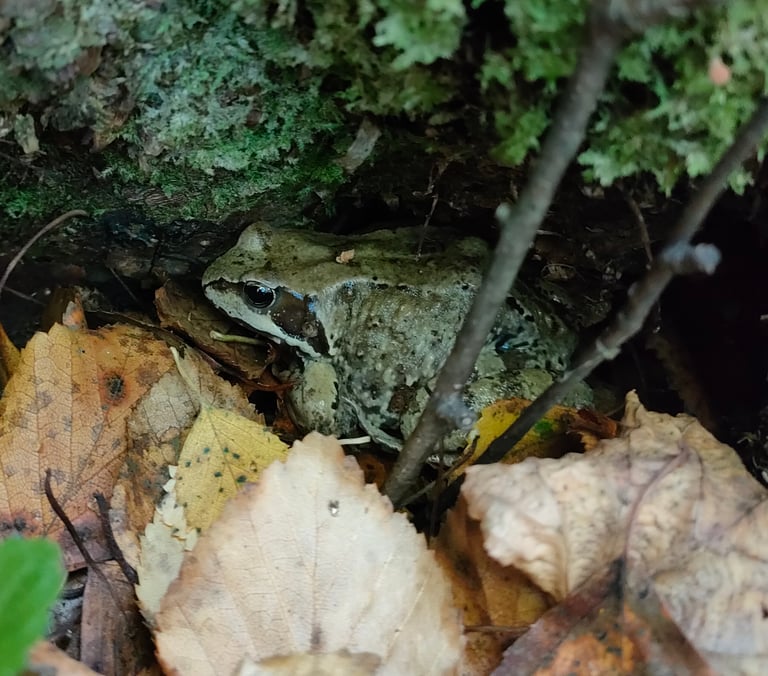
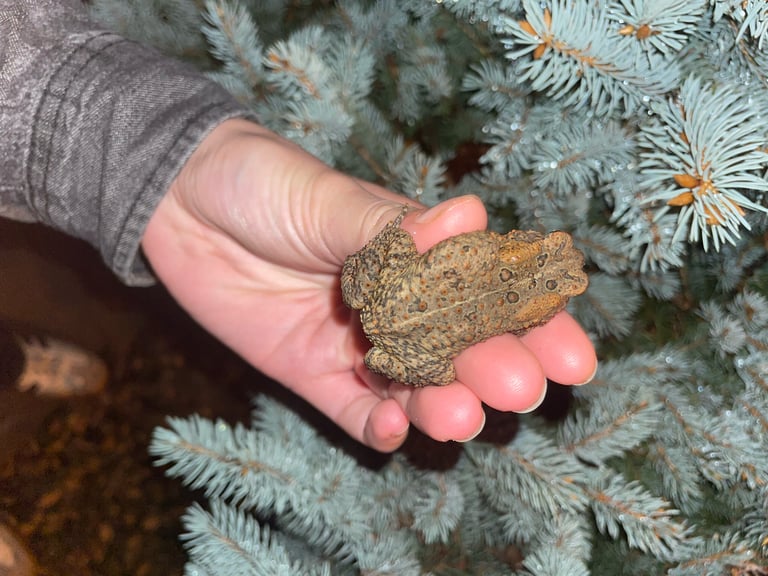
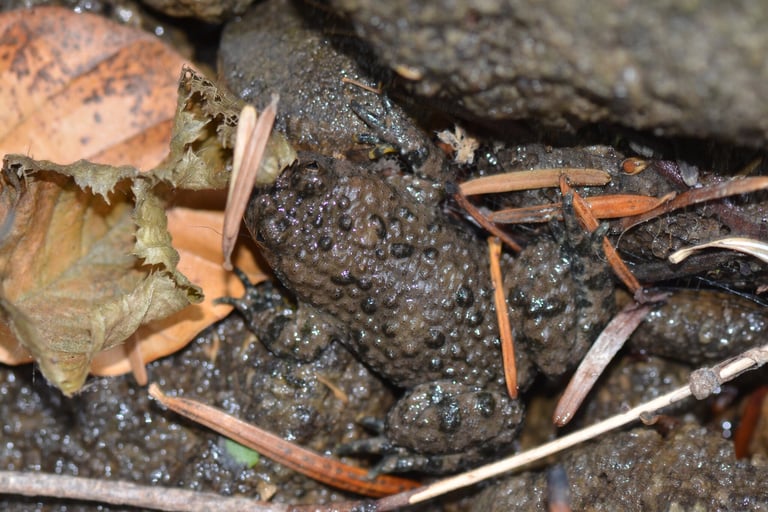
Photographs from via iNaturalist, licensed under CC0 1.0., by Ryan van Huyssteen via iNaturalist, licensed under CC BY 4.0., by Mark Clarke via iNaturalist, licensed under CC BY 4.0., by Dave Richardson via iNaturalist, licensed under CC BY 4.0., by Matthew Inabinett via iNaturalist, licensed under CC BY 4.0., by Jared Zachary Herman via iNaturalist, licensed under CC BY 4.0., by Franco Arenas via iNaturalist, licensed under CC BY 4.0., by le0p0ld_d via iNaturalist, licensed under CC BY 4.0., by zebedeugalinha via iNaturalist, licensed under CC BY 4.0., and by Christina via iNaturalist, licensed under CC BY 4.0., credited on each photo.
Ecology and classification
Classification
- Phylum
- Chordata
- Class
- Amphibia
- Order
- Anura
- Family
- Pipidae
- Genus
- Xenopus
- Species
- Xenopus laevis
Sources
- GBIF Species names and classification
- iNaturalist Photos
- Wikidata Common names and conservation status
- Wikipedia Summary extract
- Encyclopedia of Life Habitat, diet and behavior traits
- Animal Diversity Web Animal habitat, behavior and diet
- AnAge Longevity