
Plantnimals
Ceratotrocha Rodewaldi
Ceratotrocha rodewaldi

Scientific Classification & Quick Facts
Known For
Full profile in progress — check back soon.
Ceratotrocha rodewaldi is a microscopic rotifer belonging to the phylum Rotifera, a group of aquatic animals so small that most species require magnification to observe. Named within the family Philodinidae and order Bdelloidea, this species represents one of Earth’s most abundant yet least-known animal groups. Rotifers are found in virtually every freshwater ecosystem on the planet, yet their tiny size and cryptic lifestyles keep them largely invisible to casual naturalists.
Ceratotrocha rodewaldi has been documented in only one country to date, making it a geographically restricted species with an unknown conservation status. Its precise distribution, habitat preferences, and ecological role remain poorly studied, reflecting the broader knowledge gap that surrounds most rotifer species. Understanding this organism requires the tools and patience of microscopy, but the reward is insight into one of nature’s most successful and resilient animal lineages.
Identification and Appearance
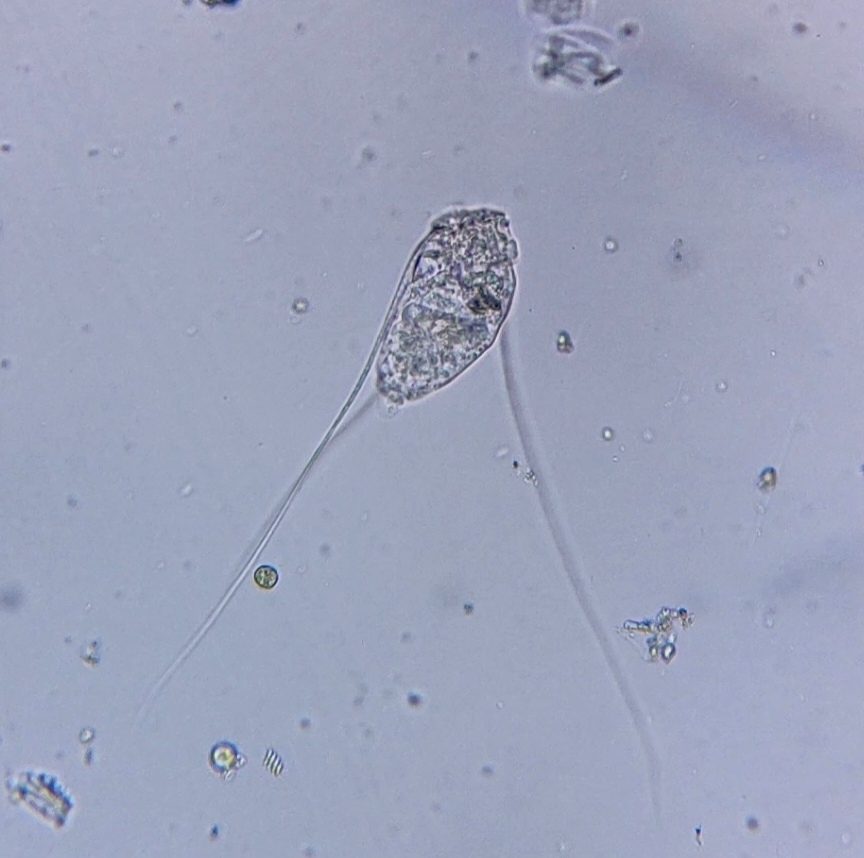
Ceratotrocha rodewaldi is a rotifer species within the genus Ceratotrocha. As a microscopic organism, this species requires magnification to observe its morphological features in detail. Rotifers are characterized by their transparent or translucent bodies and the presence of a corona—a ciliated wheel-like structure at the anterior end that facilitates movement and food capture in aquatic environments.
The specific identity and diagnostic features of C. rodewaldi are established through microscopic anatomy, particularly the arrangement and structure of internal organs, the morphology of the mastax (the rotifer feeding apparatus), and the configuration of the foot and toes. Like other members of the genus Ceratotrocha, this species bears two conspicuous horn-like projections or processes that give the genus its name. These structures, combined with the overall body plan, distinguish it from congeners and other rotifer taxa.
Precise measurements and detailed morphological descriptions for this species would be determined through taxonomic literature and type specimen examination. The species name honors its original describer or the individual for whom it was named, following standard binomial nomenclature conventions.
Distribution and Habitat
Ceratotrocha rodewaldi has a limited known distribution, with records documented in Austria. The species appears to be restricted to Central Europe based on current data.
Specific information regarding elevation preferences, detailed habitat requirements, and seasonal occurrence patterns for this species is not well documented in available records. Further field surveys and research are needed to establish a comprehensive understanding of this species’ ecological range and habitat preferences.
Biology and Behavior
Behavior
Ceratotrocha rodewaldi is a microscopic rotifer, and like other members of its genus, it inhabits freshwater and brackish environments. As a benthic organism, it moves across substrates and through water column microhabitats in search of food and suitable conditions. The species exhibits the typical rotifer lifestyle of exploiting small-scale ecological niches within sediments and biofilms, where it encounters countless microorganisms and organic particles.
Rotifers in this genus are known for their ability to tolerate variable environmental conditions, including fluctuations in salinity and oxygen availability. Ceratotrocha rodewaldi likely shares this adaptive capacity, allowing it to persist in environments where many other organisms cannot. The species’ small size and rapid movement through water make it well-suited to the ephemeral habitats it occupies.
Diet
Ceratotrocha rodewaldi, like most rotifers, is a filter feeder and detritivore. It consumes bacteria, algae, and organic detritus suspended in water or found within biofilms and sediments. The rotifer’s corona—a ring of cilia at the anterior end—creates water currents that draw food particles into its mouth, allowing it to capture particles typically ranging from 0.5 to 10 micrometers in size.
This feeding strategy makes the species an important component of microbial food webs in freshwater ecosystems. By consuming bacteria and algal cells, rotifers like C. rodewaldi help recycle nutrients and control microbial populations, playing a role disproportionate to their biomass in aquatic systems.
Reproduction
Ceratotrocha rodewaldi reproduces through both sexual and asexual mechanisms, a reproductive flexibility typical of rotifers. Under favorable conditions, females produce clones through parthenogenesis, allowing rapid population growth when resources are abundant. When environmental conditions deteriorate or populations become crowded, the species may switch to sexual reproduction, producing diapausing eggs that can survive harsh conditions and germinate when circumstances improve.
The rotifer’s life cycle is rapid—generations turn over in days rather than weeks—making it an ideal organism for population studies and evolutionary experiments. Females typically produce small numbers of offspring per reproductive event, but the cumulative effect of multiple generations over short time periods results in substantial population increases when conditions permit.
Conservation and Threats
Ceratotrocha rodewaldi has not been formally assessed by the IUCN Red List, and no official conservation status has been assigned to this species. This absence of assessment reflects a broader pattern in taxonomy: many microscopic and lesser-known organisms remain outside formal conservation evaluation frameworks, making their true conservation needs difficult to determine at a global scale.
Population trends and current population size estimates for C. rodewaldi are not documented in available sources. Without baseline data on abundance, distribution, or historical occurrence, assessing whether populations are stable, increasing, or declining is not possible. This lack of monitoring represents a significant gap in understanding the species’ conservation outlook.
Threats and Conservation Efforts
No specific threats have been formally documented for C. rodewaldi. However, like many microscopic organisms, this species may be vulnerable to broad environmental changes including habitat degradation, water pollution, and shifts in local climatic conditions. The species’ small size and likely dependence on specialized microhabitats make it potentially susceptible to disturbance from human activity, though direct evidence of threat is absent.
No dedicated conservation programmes or legal protections are recorded for this species. Given the absence of IUCN assessment and the lack of threat documentation, conservation action has not yet been prioritized at national or international levels.
Cultural Significance
Ceratotrocha rodewaldi holds significant cultural meaning in local folklore and mythology, particularly within Arabian communities where the species appears in traditional storytelling. This cultural resonance reflects a broader pattern across human societies, where animals have been woven into mythological narratives as messengers of the divine or as embodiments of human qualities. Such symbolic associations have shaped how communities perceive and relate to wildlife.
The folklore surrounding this species carries practical conservation implications. Research published in the Journal of Ethnobiology and Ethnomedicine demonstrates that human values and folklore directly influence the effectiveness of conservation efforts. Understanding the mythological and cultural significance of Ceratotrocha rodewaldi allows conservationists to integrate greater cultural sensitivity into protection programs that reflect and address the values of people living in close proximity to the animal. As researchers note, folklore provides insight into people’s relationship with their environment, revealing complex and sometimes contradictory attitudes toward wildlife that cannot be overlooked in designing successful conservation strategies.
By recognizing the symbolic meanings and stories associated with this species, ornithologists and conservation practitioners can better understand the cultural and societal factors that influence human behavior toward it. This deeper comprehension enables more effective wildlife management that honors local traditions while advancing species protection goals.
Fun Facts
- Ceratotrocha rodewaldi belongs to the phylum Rotifera, a group of microscopic animals so small that thousands could fit on the head of a pin. Despite their tiny size, rotifers possess a complete digestive system with a mouth, stomach, and anus—a complexity rarely seen in organisms of similar dimensions.
- The genus Ceratotrocha is characterised by distinctive horn-like structures on the anterior end of the body, which gives the group its name and likely serves sensory or feeding functions. These projections are among the most recognisable features of rotifers in this genus.
- Rotifers in the genus Ceratotrocha are exclusively freshwater dwellers, inhabiting small water bodies such as moss, lichen, and damp soil substrates where moisture is abundant. They are often found in biofilms and detritus, where they feed on bacteria, algae, and organic matter.
- C. rodewaldi reproduces through a process called parthenogenesis, in which females produce offspring without the need for males—an efficient strategy for rapid population growth in stable freshwater environments. This reproductive flexibility allows populations to expand quickly when conditions are favourable.
- Like other rotifers, C. rodewaldi can enter a state of cryptobiosis when exposed to harsh conditions such as drought or extreme temperatures. In this dormant state, the animal’s metabolism effectively shuts down, and it can survive for years until water returns, then revive and resume normal activity.
- Rotifers are thought to be among the most ancient animals on Earth, with fossil evidence suggesting their lineage extends back hundreds of millions of years largely unchanged in basic body plan. This remarkable stability makes them living windows into deep evolutionary history.
- The corona—a ring of cilia surrounding the mouth of C. rodewaldi—creates a characteristic whirlpool effect in water that draws food particles into its buccal cavity. This feeding mechanism is so distinctive that early microscopists called rotifers “wheel animals” for the appearance of spinning crowns.
Related Species
Was this profile helpful?