
Clitellata · Crassiclitellata
Common Earthworm
Lumbricus terrestris
Also known as: Angleworm, Canadian Crawler, Dew Worm, Earthworm, European Common Earthworm
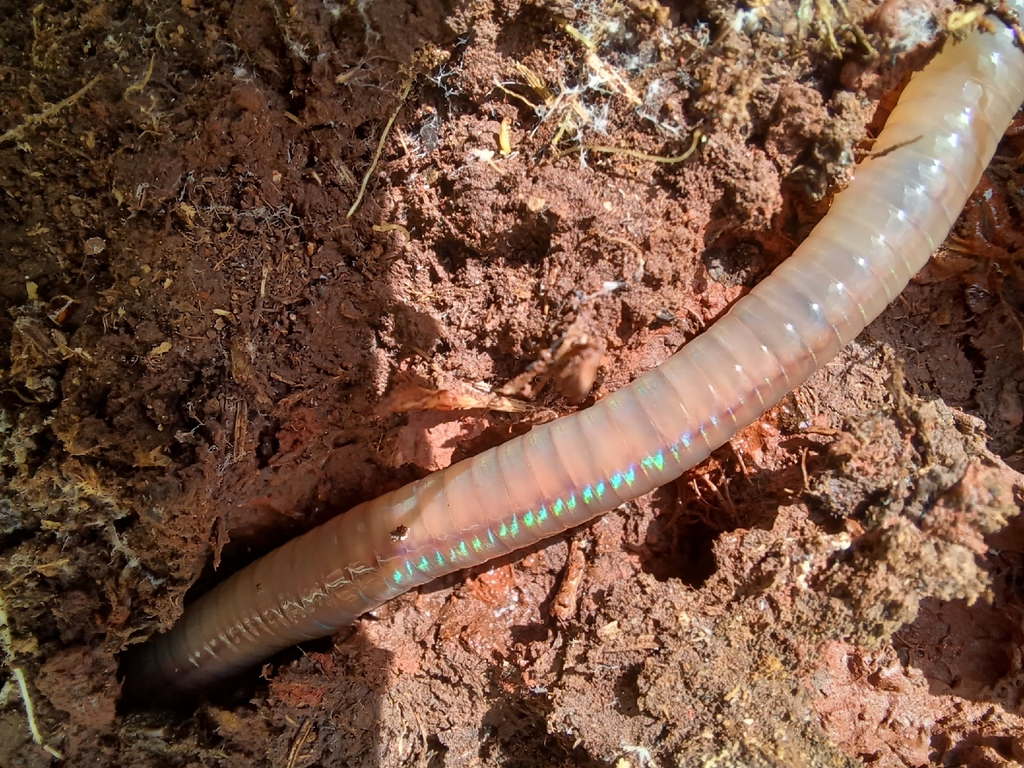
© no rights reserved · iNaturalist · CC0 1.0
Scientific Classification & Quick Facts
Classification
Known For
Detailed measurements for this species are still being verified.
Beneath the soil of gardens, forests, and meadows across the temperate world lives one of nature’s most industrious engineers: the common earthworm. Lumbricus terrestris, a member of the family Lumbricidae, is a cylindrical annelid that spends its life burrowing through earth, ingesting soil and organic matter, and in doing so, fundamentally reshaping the landscape beneath our feet. Found across at least 18 countries worldwide, this species has become a keystone organism in countless ecosystems, yet remains largely invisible to those who walk above its tunnels.
With a conservation status currently listed as unknown, Lumbricus terrestris inhabits a curious position in our understanding of global biodiversity. Its humble appearance and nocturnal habits have meant that while gardeners and soil scientists have long recognized its ecological importance, the species itself remains understudied compared to more charismatic fauna. Yet this earthworm’s capacity to transform soil structure, enhance nutrient cycling, and support the health of plant communities makes it one of the most consequential organisms to understand in the context of agricultural and environmental management.
Identification and Appearance
Lumbricus terrestris is a relatively large earthworm with a distinctive pinkish to reddish-brown coloration. Adults typically measure between 110 and 200 millimetres in length, with a diameter of 7 to 10 millimetres. The body is cylindrical in cross-section, though the posterior (rear) section is notably broad and flattened, giving the worm an asymmetrical appearance when viewed from certain angles. The head end displays dark brown to reddish-brown pigmentation, while lateral and dorsal coloration gradually fades towards the rear of the body.
The worm’s segmented body comprises approximately 120 to 170 segments, typically clustering around 135 to 150 segments in most specimens. Each segment is equipped with setae—tiny, hair-like projections—that function as anchoring points against surrounding soil. These setae, combined with muscular contractions, enable the worm to move through soil and across surfaces. The animal relies on a hydrostatic skeleton, meaning it maintains body rigidity and movement through fluid pressure within its segments rather than through internal bones or cartilage. Movement is achieved through coordinated longitudinal and circular muscle contractions that produce the characteristic peristaltic motion of earthworms.
No sexual dimorphism distinguishes males from females in this species; both sexes share the same size range, coloration, and body structure. Individual variation in color intensity and segment count occurs naturally among populations, but these differences do not correlate with sex or age in observable ways.
Distribution and Habitat
Lumbricus terrestris is widely distributed across temperate regions of the Northern Hemisphere, with records from 18 countries spanning North America, Europe, and parts of Asia. The United States hosts the highest concentration of documented observations (166 records), followed by Germany (46), Canada (33), and the United Kingdom (12). Additional populations occur in Poland, Austria, Russia, France, Sweden, and Italy, reflecting the species’ broad tolerance for cool to temperate climates.
This species occurs across a range of soil-based habitats including gardens, agricultural fields, grasslands, and woodlands where soil moisture and organic matter are adequate. L. terrestris prefers well-drained, fertile soils rich in decaying plant material, though it thrives in disturbed environments such as cultivated fields and parks. The absence of specific elevation records indicates the species is not restricted to particular altitudinal ranges, appearing in lowland and moderate upland zones wherever suitable substrate exists.
Seasonal activity peaks sharply in spring, particularly in April, when 124 observations were recorded compared to 36 in January and 35 in February. This pattern reflects the species’ emergence after winter dormancy, as soil temperatures rise and moisture levels favor surface activity. The absence of records from May onward in the available dataset likely reflects reduced sampling effort or observer interest during warmer months rather than actual disappearance of the population.
Biology and Behavior
Behavior
Lumbricus terrestris is primarily nocturnal, emerging from its burrow at night to feed on the soil surface. During the day, the worm retreats into a semi-permanent burrow that can extend 1–2 metres deep, where it remains protected from predators and excessive drying. The burrow itself is lined with a mucous secretion that helps stabilize the tunnel walls and facilitates movement through the soil.
These earthworms are solitary creatures and show minimal social interaction beyond reproduction. They are highly sensitive to vibrations and moisture levels in the soil; excessive rain or ground disturbance can trigger mass emergence as they seek higher ground. This behavior, combined with their burrowing activity, makes them crucial ecosystem engineers—their tunnels aerate the soil and improve water infiltration, benefiting plant growth and microbial communities.
Diet
Lumbricus terrestris is a detritivore that feeds primarily on decomposing organic matter, including dead leaves, plant roots, and soil humus. The worm ingests soil and organic debris through its mouth, drawing material into its pharynx. Food passes through the esophagus into a muscular crop for temporary storage, then into the gizzard, where powerful muscular contractions grind particles into smaller fragments for digestion.
Earthworms lack teeth and jaws; instead, they rely on their grinding gizzard and powerful digestive enzymes to break down plant material and organic compounds. This processing improves nutrient availability in the soil and accelerates decomposition, returning essential elements like nitrogen and phosphorus to the ecosystem. Their continuous feeding and burrowing activity mixes organic matter throughout the soil profile.
Reproduction
Lumbricus terrestris is hermaphroditic, possessing both male and female reproductive organs. However, these worms require a mating partner to exchange sperm. Two individuals align side by side, and each transfers packets of sperm (spermatophores) to the other through direct contact. This exchange typically occurs in spring and autumn, though mating can happen year-round in temperate climates with adequate soil moisture.
After mating, each worm secretes a cocoon—a hardened, lemon-shaped capsule containing eggs and nutrient-rich albumen. A single worm may produce one cocoon every 7–10 days during the breeding season. The cocoon is deposited in the soil and takes 2–4 weeks to hatch, depending on temperature and moisture. Each cocoon typically contains 1–6 juvenile worms, though 1–2 is most common. Juveniles emerge fully formed and begin feeding immediately; they reach sexual maturity in 60–90 days. Parental care is absent; the cocoon itself provides all protection and nutrition for developing offspring.
Conservation and Threats
Lumbricus terrestris, the Common Earthworm, has not been formally assessed by the IUCN Red List. This absence of assessment reflects the species’ widespread distribution and lack of identifiable conservation concerns at a global scale. The earthworm maintains a stable population trend across its range, indicating that current environmental pressures have not caused measurable decline.
Threats
Although no critical threats have been formally documented, L. terrestris faces indirect pressures from agricultural and urban practices. Intensive soil disturbance through deep ploughing reduces earthworm populations in farmed areas, and the application of broad-spectrum pesticides and fungicides can harm soil invertebrates. Soil acidification from atmospheric pollution and habitat loss through urbanization also degrade suitable earthworm habitat. These stressors typically affect populations locally rather than threatening the species globally.
Conservation Efforts
The Common Earthworm benefits from its role in soil health and ecosystem function, which has increased awareness of earthworm conservation in agricultural and restoration contexts. No species-specific legal protections exist, but the earthworm is protected indirectly through soil conservation regulations and organic farming standards that restrict harmful pesticides. In many regions, sustainable land management practices that prioritize soil structure naturally favour earthworm populations.
Cultural Significance
Lumbricus terrestris, known by the common names nightcrawler and dew worm, occupies a straightforward but essential place in human understanding of soil ecology and biodiversity. The species serves primarily as a taxonomic reference point for soil scientists and ecologists rather than as a subject of mythology or symbolic cultural significance. Its scientific naming and classification through systems like the Integrated Taxonomic Information System reflect how humans organize and communicate knowledge about Earth’s organisms—a foundational practice that enables researchers worldwide to study and discuss this species using a standardized language.
The practical importance of understanding Lumbricus terrestris extends beyond folklore into the realm of scientific organization itself. Classification of organisms like this earthworm reveals evolutionary relationships between species, aids in identifying organisms of conservation concern, and provides a common framework for communication across scientific disciplines. As a deep-burrowing anecic species that surfaces to feed, L. terrestris has become a model organism for studying soil health, nutrient cycling, and the effects of environmental disturbances such as large wildfires on soil ecosystems. This technical significance—rather than cultural mythology—defines the species’ role in human knowledge systems.
Fun Facts
Lumbricus terrestris is far more than a simple garden helper—it is a global traveller with an outsized ecological impact. Native to Western Europe, this large reddish worm has become one of the most widespread invertebrates on Earth, reshaping soil ecosystems wherever it goes.
- The common earthworm can grow up to 30 centimetres long and can live for several years in soil, making it one of the largest native European worm species. Its reddish colouration helps it absorb oxygen through its permeable skin.
- What began as a Western European native has become a truly global invader—Lumbricus terrestris now inhabits introduced areas across North America, Australia, New Zealand, and other temperate regions, often arriving accidentally in soil, plants, or agricultural equipment.
- In many introduced ecosystems, this worm is considered a significant pest because it actively outcompetes native earthworm species for food and space, fundamentally altering soil composition and nutrient cycling in forests where native species evolved.
- Earthworms are hermaphrodites, meaning each individual produces both eggs and sperm, yet they still need to mate with another worm to reproduce—a behaviour that allows rapid population expansion in new territories.
- When soil dries out or oxygen becomes scarce, Lumbricus terrestris retreats deep into vertical burrows that can extend 2 metres or more into the ground, creating permanent pathways that aerate soil and influence water infiltration.
- These worms are strictly nocturnal foragers, emerging at night to drag dead leaves and organic matter into their burrows where they consume and process decaying material, a process critical to soil fertility in their native habitats.
- Despite being beneficial in agricultural soils, the invasion of Lumbricus terrestris into native forest floors has disrupted the relationship between decomposition rates and plant regeneration, causing measurable declines in native forest health in regions like North America.
Photo Gallery
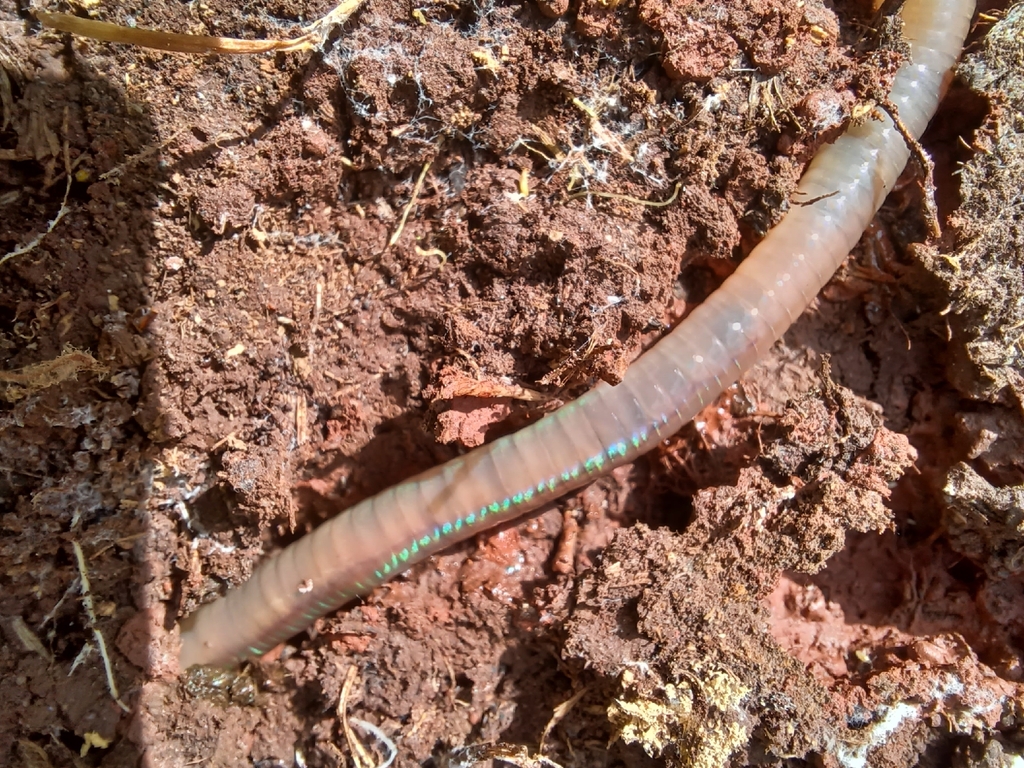
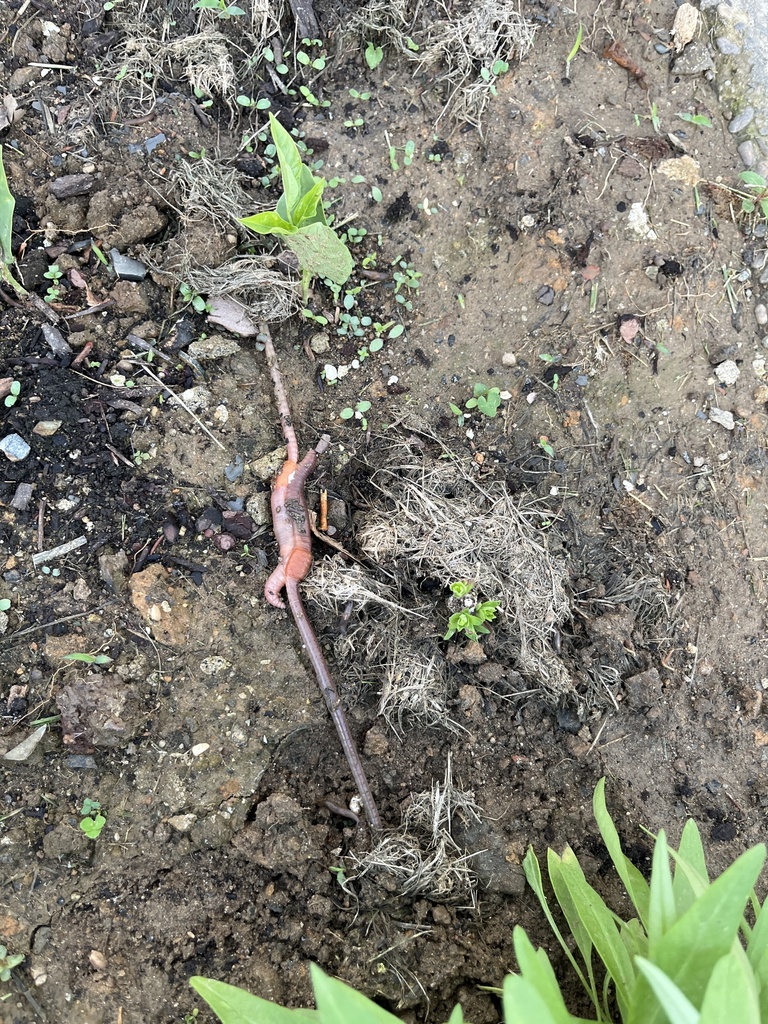
no rights reserved · CC0 1.0
Related Species


Was this profile helpful?