
Magnoliopsida · Ranunculales
Common Poppy
Papaver rhoeas
Also known as: Corn Poppy, Field Poppy, Flanders Poppy
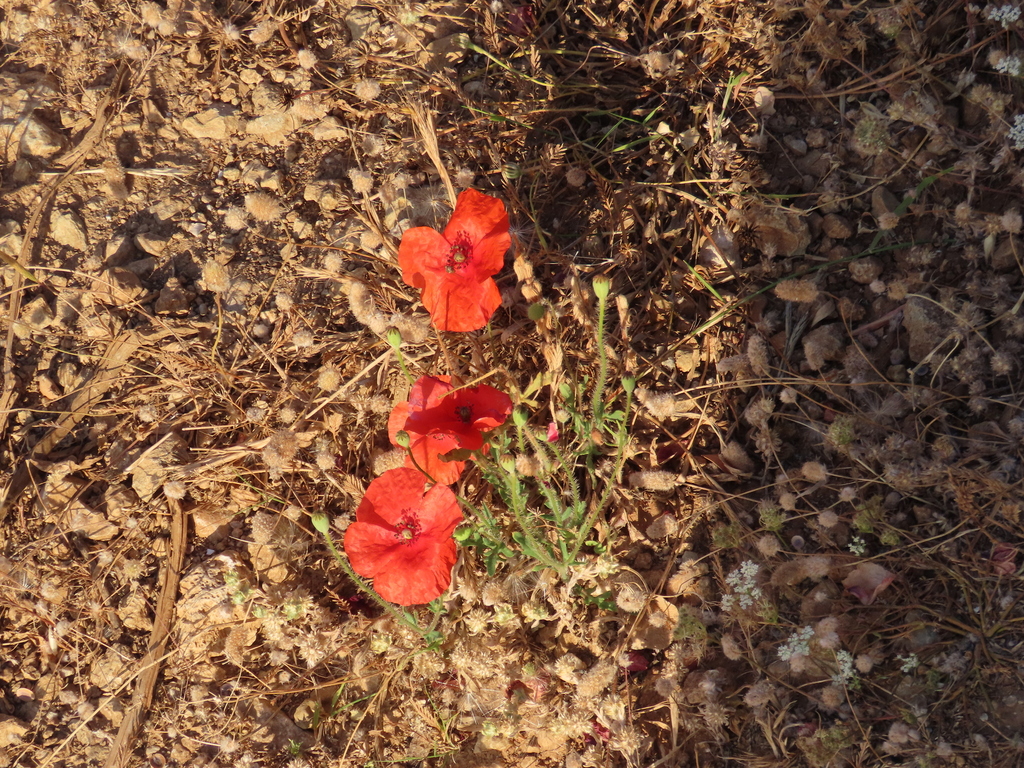
© Stephen Moores · iNaturalist · CC BY-NC 4.0
Scientific Classification & Quick Facts
Classification
Known For
Detailed measurements for this species are still being verified.
Papaver rhoeas, the common poppy, is a bright-flowered annual that has captivated human attention for millennia. Its papery scarlet petals and dark-centred blooms emerge in grain fields, wastelands, and disturbed ground across temperate regions worldwide. Found in at least 22 countries across multiple continents, this member of the Papaveraceae family has become a symbol of remembrance and a fixture of European folklore—yet its true origins remain debated among botanists. Its ability to persist and thrive in human-altered landscapes makes it one of the most recognizable wildflowers in the Northern Hemisphere.
Conservation status records for Papaver rhoeas remain unknown, yet its widespread presence and reproductive vigour suggest no immediate threat. This species thrives precisely where many others fail: in the rough margins of human activity, on roadsides, in fallow fields, and among cereal crops. Its ecological flexibility and cultural significance have made it far more than a simple wildflower—it is a living record of human land use across centuries, and a reminder of how certain plants adapt to coexist with human civilization rather than resist it.
Identification and Appearance
Papaver rhoeas, the Common Poppy, is a variable annual herb that typically grows to about 70 centimetres in height. The plant is erect and produces long-lived seeds that form a persistent soil seed bank, germinating readily when soil is disturbed. Single flowers are borne on unbranched stems and are distinctly large and showy, measuring 5–10 centimetres across.
Flower and Colour
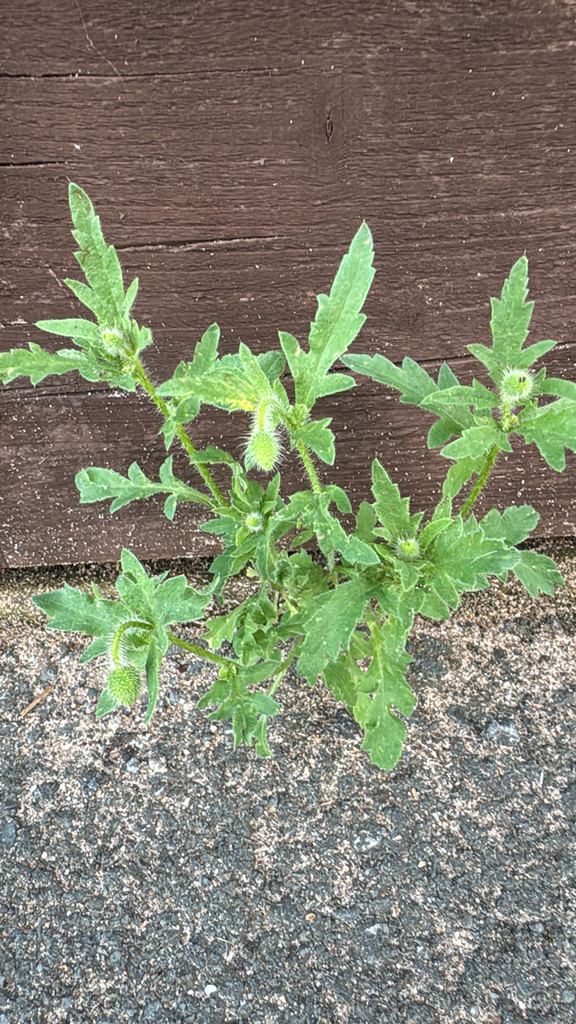
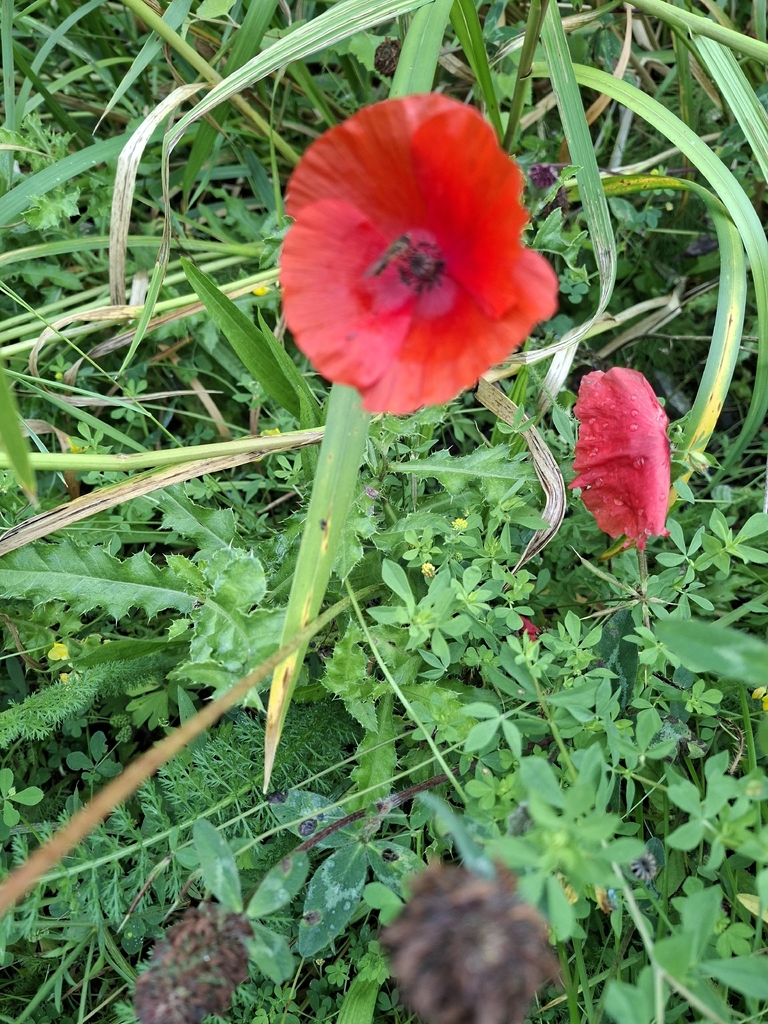
The flowers are the defining feature of this species, displaying prominent crinkled petals in bright scarlet red, though pink, purple, or white colour variants occur. The petals are thin, papery, and loosely arranged, giving the blooms a delicate yet bold appearance. At the flower’s centre lies a dark purple or black staminal disk, which contrasts sharply with the vibrant petal colour. The buds are covered in bristly hairs and hang downward before opening.
Fruiting Stage
After flowering, the flower develops into a distinctive smooth, hairless capsule that is roughly spherical or slightly flattened. These seed capsules become a characteristic feature of the plant in late summer and autumn. In the Northern Hemisphere, the species typically flowers from May through October in temperate regions such as the UK, though additional blooms may appear in early autumn if conditions are warm enough.
Distribution and Habitat
Papaver rhoeas occurs across a wide geographic range spanning Europe, North Africa, and introduced populations in the Americas and Oceania. GBIF records document the species in 22 countries, with the strongest concentrations in southern and western Europe. Spain leads with 71 records, followed by the Netherlands (49), Portugal (32), and Greece (27). Significant populations also occur in France, Italy, the United States, and North Africa, particularly Morocco. New Zealand and Cyprus round out the documented range, reflecting both native distribution and human-mediated introductions.
The species exhibits a pronounced seasonal pattern, with the overwhelming majority of observations concentrated between January and March. March represents the peak month with 249 records, while February shows 34 records and January 17. The absence of documented observations from April through December in this dataset reflects the species’ winter-growing and spring-flowering phenology in Mediterranean and temperate regions. This timing aligns with P. rhoeas‘ life history as a winter annual, germinating in autumn and flowering before summer heat arrives.
Common Poppy thrives in disturbed ground, agricultural margins, and ruderal habitats across its range. The species occurs from lowland areas to moderate elevations, though specific elevation limits are not documented in current records. Its broad ecological tolerance and rapid colonization of disturbed sites—particularly cereal crop fields and cultivated land—has enabled its establishment in regions far from its native Mediterranean range, making it a globally widespread introduced species in temperate zones.
Growth and Cultivation
Growth
Papaver rhoeas is a slender annual herb that typically reaches 25 to 60 centimetres in height, though plants in optimal conditions may grow taller. The plant develops a single main stem with sparse branching, giving it an upright, graceful form. Leaves are deeply lobed and blue-green in colour, with a soft, slightly hairy texture that catches light delicately. The root system is shallow and fibrous, making the plant relatively short-lived but quick to establish from seed.
Flowering
Common Poppy produces its signature bright red (occasionally pink or white) flowers in late spring through summer. Each bloom is four-petalled, silky, and typically 7 to 10 centimetres across, with prominent black stamens at the centre. Flowers open in full sunlight and close at dusk, often dropping their petals within a day—this ephemeral quality is characteristic of the species. Following pollination, the plant develops smooth, hairless seed capsules roughly the size of a large pea, which mature to a pale tan and disperse hundreds of tiny black seeds when the weather is dry.
Cultivation
Common Poppy thrives in well-drained soil and prefers full sun exposure for abundant flowering. The plant is not fussy about soil type but tolerates poor, sandy, and chalky soils readily. It germinates best from direct sowing in autumn or early spring, as the seeds require a period of cold to break dormancy. Once established, it is drought-tolerant and requires minimal watering except during sustained dry spells.
The species is hardy across temperate regions and self-seeds readily, often establishing naturalized populations in disturbed ground, field margins, and cultivated areas. Deadheading spent flowers will prolong blooming if seed production is not desired. Common Poppy is typically grown as a seasonal annual and does not require fertilization—indeed, rich soil may promote excessive foliage at the expense of flowers.
Conservation and Threats
Papaver rhoeas, the Common Poppy, has not been formally assessed by the IUCN Red List. This absence of formal assessment reflects the species’ widespread distribution and general lack of conservation concern across much of its range. The poppy remains abundant in many regions where it occurs, though its status varies locally depending on agricultural practices and land management.
Threats
The primary threat to Common Poppy populations stems from intensive agricultural practices. Herbicide application in cereal crops has historically reduced poppy abundance in cultivated fields across Europe and beyond. Modern selective herbicides targeting broad-leaved weeds have been particularly effective at suppressing poppies from grain fields, where they once appeared as common arable weeds. This shift has contributed to localised declines in some agricultural regions, though the species persists readily in other habitats.
Secondary pressures include habitat conversion, particularly the loss of rough grasslands, field margins, and disturbed ground where poppies naturally establish. Urban development and the intensification of land use in traditionally agricultural regions have further reduced available habitat, though the species’ ability to colonise newly disturbed sites offers some resilience. Climate change and associated shifts in rainfall patterns may affect germination and flowering phenology in sensitive regions, though widespread impacts remain poorly documented.
Conservation Efforts and Legal Protections
Common Poppy benefits indirectly from agri-environment schemes and conservation programmes across Europe that prioritise wildflower-rich field margins and reduced-input grasslands. Several European countries have implemented measures to protect traditional arable flora, including the poppy, through subsidised habitat management and organic farming incentives. In the United Kingdom and other regions, the species is not subject to formal legal protection but is valued in conservation contexts as a component of native wildflower communities.
Cultural Significance
Remembrance and Commemoration
The common poppy holds profound significance as a symbol of remembrance, particularly in English-speaking countries. During World War I, the flower bloomed abundantly across the disturbed ground of the Western Front, growing between trench lines and no man’s land. This striking image inspired Canadian Lieutenant Colonel John McCrae’s poem In Flanders Fields, one of the most widely quoted English-language poems from the war. By the 20th century, wearing a poppy at and before Remembrance Day became an established custom across western countries. The tradition has extended to other commemorative occasions, including Anzac Day appeals in Australia and New Zealand, where artificial poppies are distributed to mark the anniversary.
National and Artistic Recognition
Beyond its military associations, the common poppy holds status as a county flower in the United Kingdom. Following a 2002 poll by the wild plant conservation charity Plantlife, Papaver rhoeas was voted the county flower of both Essex and Norfolk. The flower has also captured the imagination of artists; Claude Monet’s Summer Field of Coquelicots (1875) celebrates the visual beauty of poppy-filled meadows in paint. In Chinese culture, the species carries a distinct identity, known as yumeiren (虞美人), meaning “Yu the Beauty,” after Consort Yu, the concubine of the warlord Xiang Yu, linking the flower to classical historical narrative and romance.
Fun Facts
The common poppy is a plant of remarkable versatility and cultural reach. Despite being an annual that lives for just one season, it has colonized nearly every temperate region on Earth and accumulated at least seven distinct common names—from corn poppy in grain fields to the iconic Flanders poppy of war memorials. Below are some surprising facts about this widespread and resilient species.
- Papaver rhoeas is native to only North Africa and temperate Eurasia, yet it has successfully established itself on every continent except Antarctica. This exceptional global spread demonstrates the plant’s extraordinary ability to adapt to diverse climates and soil conditions far beyond its original range.
- Despite becoming naturalized across the world, the common poppy remains a true annual herbaceous plant—it germinates, flowers, sets seed, and dies all within a single growing season. This rapid life cycle is a key factor in its success as a colonizer of disturbed agricultural soils.
- The species carries at least seven distinct common names (common poppy, corn poppy, corn rose, field poppy, Flanders poppy, red poppy, and Odai) depending on region and language. This linguistic diversity reflects both its widespread distribution and deep cultural significance across Europe, Asia, and beyond.
- Common poppies thrive in grain fields and disturbed ground partly because their seeds remain viable in soil for decades, germinating readily when the soil is turned over during ploughing. This dormancy-and-flush strategy makes them classic companion plants of human agriculture.
- The bright red petals of Papaver rhoeas contain carotenoid pigments that are sensitive to light and temperature; in overcast or cool conditions, the flowers may remain partially closed or appear duller than in full sun.
- Unlike opium poppies (Papaver somniferum), the common poppy produces no significant alkaloids and has never been cultivated for drug production. Its role in human culture is instead tied to folklore, art, and memorial symbolism, especially after World War I.
Ecology
Habitats
Growing Conditions
Edibility
Photo Gallery
Stephen Moores · CC BY-NC 4.0
Related Species
Was this profile helpful?