
Gnetopsida · Gnetales
Melinjo
Gnetum gnemon
Least ConcernAlso known as: Belinjau, Paddy Oats, Spanish joint-fir, buko
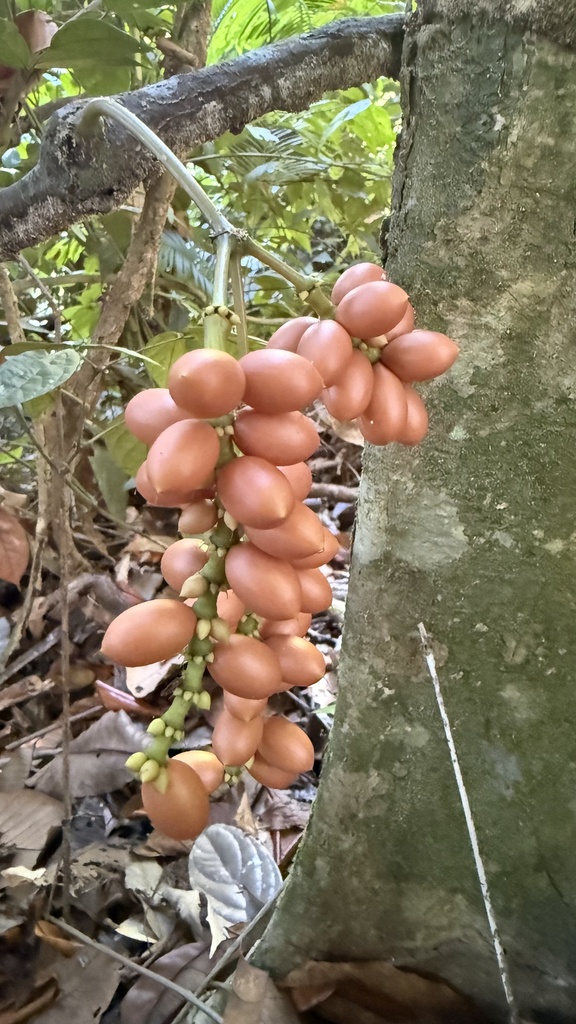
© Brendan McIntyre · iNaturalist · CC BY 4.0
Scientific Classification & Quick Facts
Classification
Known For
Detailed measurements for this species are still being verified.
Gnetum gnemon, commonly known as melinjo, is a tropical tree that occupies a singular place in the plant kingdom. Native to the rainforests and cultivated landscapes of Southeast Asia, this species belongs to the ancient order Gnetales—a lineage so evolutionarily distinct that it stands alone among seed-bearing plants, sharing characteristics with both conifers and flowering plants. Melinjo is distributed across 16 countries, primarily throughout Indonesia, Papua New Guinea, and neighbouring regions, where it has been cultivated for centuries.
Listed as Least Concern by the IUCN, melinjo remains widespread and stable across its range. Yet its ecological and cultural significance extends far beyond its conservation status. The tree produces distinctive winged seeds and tender leaves that are harvested as vegetables, while its fruits are processed into crispy snacks popular throughout Southeast Asia. Understanding melinjo requires recognizing it not merely as a wild species, but as a crop and cultural keystone that bridges traditional agroforestry with modern food systems.
Identification and Appearance
Overall Form
Gnetum gnemon is a small to medium-sized tree, distinctive among its genus members since most other Gnetum species are climbing lianas. Mature trees typically reach 15–22 metres in height with trunk diameters up to 40 centimetres. The plant grows as a single-stemmed tree in its primary form, though shrubby varieties exist that produce a more compact, multi-branched habit.
Foliage and Reproductive Structures
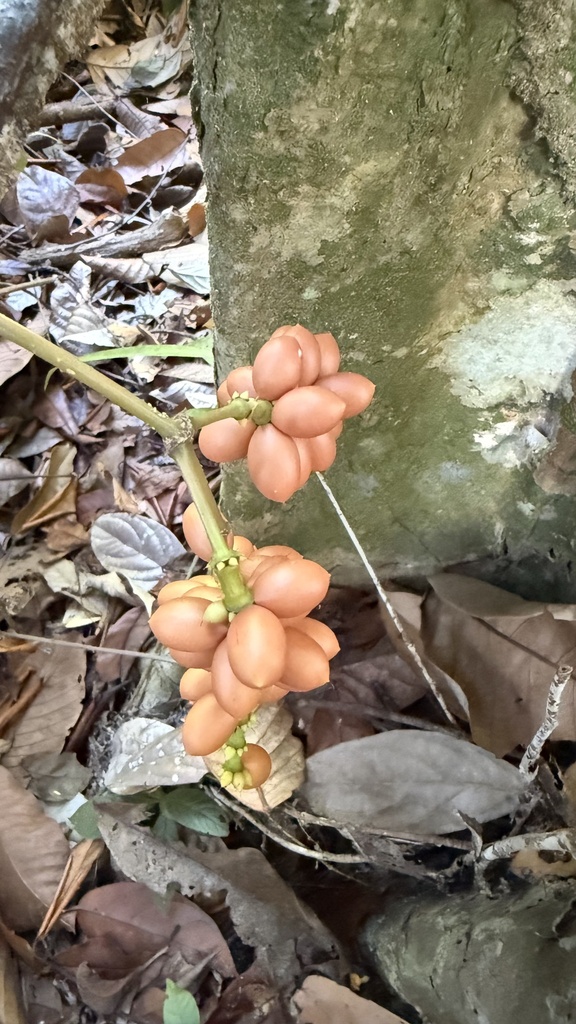
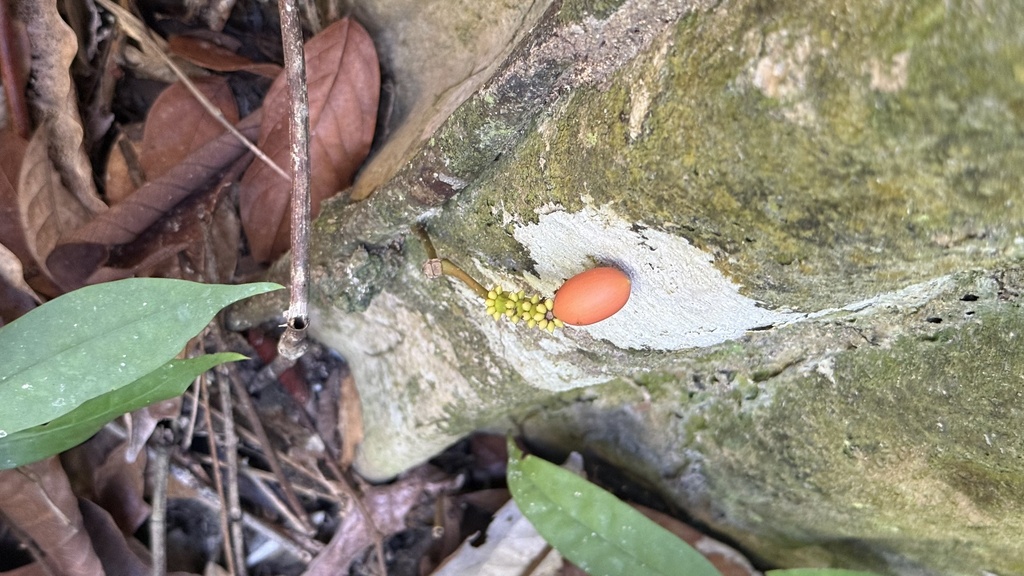
The species bears broad, prominent leaves that give it a decidedly angiosperm-like appearance—a striking example of convergent evolution. This resemblance extends to its reproductive organs. Male strobili are flower-like in structure, while female strobili develop into fruit-like structures that would deceive the casual observer into mistaking Gnetum gnemon for a true flowering plant. This morphological similarity to angiosperms is so pronounced that the species can easily be confused with conventional trees lacking botanical expertise to examine the reproductive anatomy.
Distribution and Habitat
Gnetum gnemon, commonly known as melinjo, is distributed across Southeast Asia and the South Pacific, with its primary range centered in Indonesia. GBIF records show Indonesia accounts for the overwhelming majority of documented occurrences (142 records), making it the species’ core distribution hub. The tree also occurs across 15 additional countries and territories, including Singapore (34 records), the Solomon Islands (32 records), Thailand (18 records), Papua New Guinea (12 records), Malaysia (10 records), Vanuatu (10 records), Australia (9 records), the Philippines (6 records), and smaller populations in the United States and other regions.
Melinjo tolerates a broad elevation range, from sea level to 1,939 metres, though it shows a strong preference for lowland and tropical zones. The average recorded elevation of 383 metres reflects the species’ predominance in coastal and foothill forests rather than montane regions. This ecological flexibility allows it to thrive across diverse tropical habitats throughout its range, from humid lowland forests to disturbed and cultivated areas where it is frequently grown as a managed crop for its edible leaves and seeds.
Seasonal observation patterns reveal a pronounced peak in October, when GBIF records reach 51 occurrences—more than double the activity in most other months. This pattern likely reflects flowering and fruiting phenology, with October marking a peak in reproductive activity or heightened visibility of the species in the field. Recording activity remains consistent through the rest of the year, with sustained presence from May to November and lower observations in winter months (December to April), suggesting continuous presence across the species’ range but with distinct seasonal intensity.
Growth and Cultivation
Growth
Gnetum gnemon, commonly known as melinjo, is a small to medium-sized tree native to Southeast Asia. It typically grows as an evergreen woody plant with a compact, upright form. The foliage is dense and dark green, providing year-round coverage in tropical and subtropical environments. Melinjo develops a strong central trunk with lateral branching, making it well-suited to both wild and cultivated settings.
The tree reaches modest mature dimensions, remaining manageable for home gardens and agroforestry systems. Growth is steady under suitable conditions, though specific growth rate data is limited. Young plants establish relatively quickly in warm climates, and the tree begins producing economically useful leaves and fruits within a few years of planting.
Flowering and Fruiting
Melinjo flowers and fruits year-round in its native tropical range, with peak production often occurring during the warmer months. The plant produces small, inconspicuous flowers that are typically wind-pollinated. Both male and female flowers appear on the same tree, making individual plants capable of setting seed without requiring cross-pollination.
The fruits develop into small, elongated drupes that ripen to a red or orange hue. These fruits are produced prolifically on healthy, established trees. Beyond fruit production, melinjo is extensively harvested for its tender young leaves and shoots, which are harvested continuously in cultivation to stimulate new growth and maximize leaf yield.
Cultivation
Melinjo thrives in tropical and warm subtropical climates where year-round warmth supports continuous growth. The species prefers well-draining soil but is fairly adaptable to various soil types, from sandy to clayey substrates, and tolerates a wide pH range. It performs best in full sun to partial shade, though established trees can tolerate some degree of shade without significant loss of productivity.
Water management is straightforward: melinjo requires regular moisture during establishment and initial growth phases, but mature trees show considerable resilience to dry periods. In regions with pronounced dry seasons, supplemental irrigation during extended drought improves leaf yield and fruit production. The tree responds well to modest fertilization and benefits from occasional pruning to encourage bushy growth and increase harvestable leaf production. Cultivation is generally low-maintenance once the plant is established, making melinjo a practical choice for small-scale agroforestry and domestic use across Southeast Asia.
Conservation and Threats
Gnetum gnemon, commonly known as melinjo, holds a Least Concern status on the IUCN Red List. This classification reflects that the species faces no immediate threat of extinction at a global scale. The population trend is increasing, a positive indicator suggesting that current conditions favour the species’ persistence and expansion across its range.
Threats
No systematic threats have been formally documented for melinjo at present. The species’ widespread cultivation across Southeast Asia and its economic importance as a food and medicinal plant have likely insulated it from severe pressure. Unlike many wild-harvested species, melinjo benefits from active human management through agroforestry systems, home gardens, and small-scale plantation cultivation, which maintains and even expands its population.
Conservation Efforts
Formal conservation programmes for melinjo are minimal, given its stable status and increasing population trend. However, the species is protected implicitly through its integration into traditional agroforestry and agricultural systems across Indonesia, Malaysia, and other Southeast Asian regions. Local communities maintain melinjo trees as a multi-purpose resource, ensuring seed dispersal and genetic diversity within cultivated landscapes.
Cultural Significance
The cultural notes for Gnetum gnemon (Melinjo) are not currently documented in available sources. This represents a significant gap in the ethnobotanical record, particularly given the species’ widespread use across Southeast Asia and its importance in regional cuisines and traditional practices.
Melinjo occupies an important ecological and economic niche in its native range, yet detailed documentation of its symbolic meaning, traditional medicine applications, folklore associations, or artistic representation remains sparse in accessible literature. Future ethnobotanical research and community-based documentation efforts could help preserve and share the cultural knowledge systems that surround this plant.
Fun Facts
Gnetum gnemon belongs to one of the most peculiar plant groups on Earth: the gymnosperms. Yet unlike most of its cone-bearing relatives, this species defies our expectations at every turn, earning it a collection of contradictory common names across its vast range.
- It is a gymnosperm with broad leaves. Most gymnosperms have needle-like or scale-like leaves, yet Gnetum gnemon displays broad, flat foliage indistinguishable from flowering plants, making it appear far more advanced than its ancient lineage suggests.
- Its common names betray its botanical identity. Across its range, it is called “joint fir,” “two leaf,” or simply “tulip”—names borrowed from conifers and flowering plants—despite belonging to neither group.
- It spans over 5,000 kilometres of the Indo-Pacific. Native to Mizoram and Assam in northeastern India, Gnetum gnemon extends its range westward across diverse habitats to the islands of the western Pacific, reflecting its remarkable adaptability to different climates.
- It has a different name in nearly every culture that knows it. The species is called melinjo or belinjo in Indonesia, bago or lumbay in the Philippines, hanthu in the Karbi language of India, and by yet more names in other Southeast Asian regions—a testament to its cultural and culinary importance.
- Gnetum is an evolutionary relic with modern fruit-like seeds. The genus Gnetum belongs to an ancient gymnosperm clade that independently evolved fleshy, colourful seed cones that resemble fruits, a feature that emerged separately from flowering plants and may have evolved to attract seed dispersers.
- It is both wild and cultivated across Southeast Asia. While Gnetum gnemon grows naturally throughout its native range, it is also widely planted in gardens and agricultural systems for its edible leaves and seeds, blurring the line between wild and domesticated species.
Ecology
Growing Conditions
Edibility
Conservation Status
LC (Least Concern) · NT · VU · EN · CR · EW · EX
Photo Gallery
Brendan McIntyre · CC BY 4.0
Related Species
Was this profile helpful?