
Tremellomycetes · Tremellales
Witches Butter
Tremella mesenterica
Also known as: Witches' Butter, Yellow Brain, Yellow Brain-fungus, witch's butter
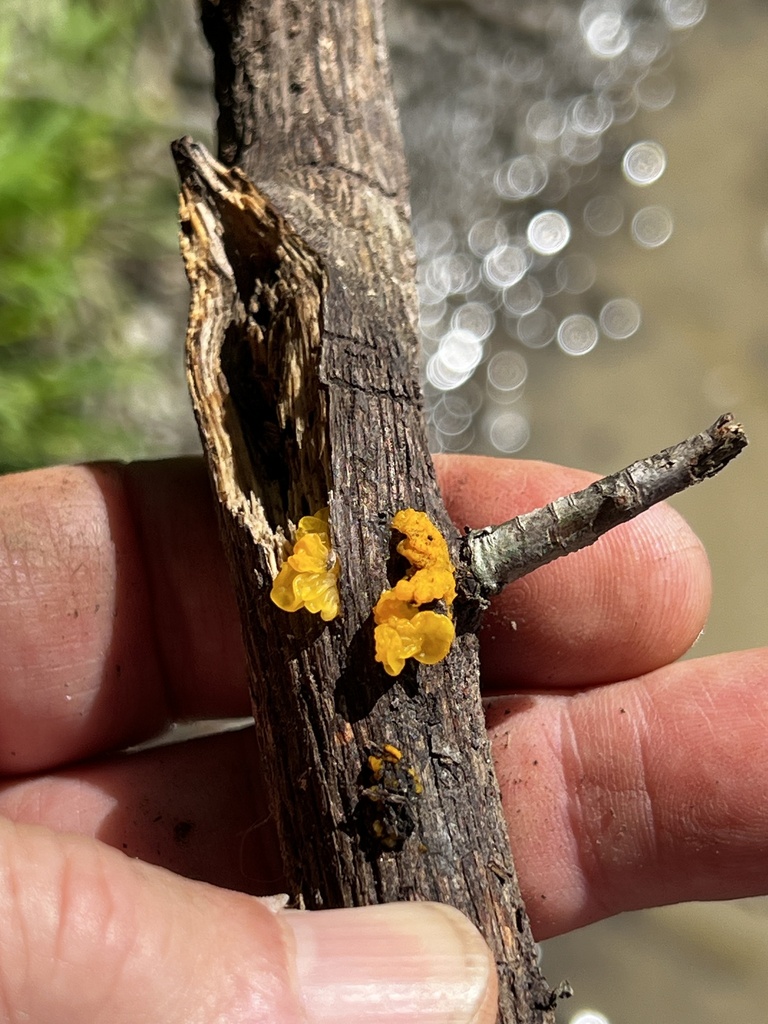
© Mark Richman · iNaturalist · CC BY 4.0
Scientific Classification & Quick Facts
Classification
Known For
Detailed measurements for this species are still being verified.
On damp wood and fallen branches across temperate forests, a gelatinous, brain-like mass appears after rain—bright orange or yellow, quivering in the slightest breeze. This is Tremella mesenterica, commonly known as Witches Butter, a jelly fungus that has captured human imagination for centuries. Its folkloric name conjures medieval superstition; its appearance suggests something otherworldly. Yet beneath the theatrical exterior lies a fungus of genuine ecological intrigue: a non-parasitic jelly fungus that occupies a unique ecological niche across 23 countries worldwide.
Unlike many jelly fungi that parasitize wood-decay organisms, Tremella mesenterica is saprobic, feeding on dead wood and the fungal threads already present on decomposing logs. This ecological independence, combined with its striking gelatinous form and remarkable water-cycling ability, makes it one of the most distinctive and widely distributed fungi of temperate regions. Its conservation status remains undocumented, reflecting both its commonness in suitable habitats and the ongoing gaps in mycological monitoring worldwide.
Identification and Appearance
Tremella mesenterica is an unmistakable gelatinous fungus that forms irregular, lobed fruit bodies on dead wood. The fruiting body measures up to 7.5 centimetres across and 2.5 to 5 centimetres high, with a rounded to variously lobed or distinctly brain-like appearance. When wet, the fungus is gel-like yet surprisingly tough; when dry, it hardens into a brittle mass. This dramatic change in texture between wet and dry states makes it easy to recognize in the field.
Colour and Surface Features
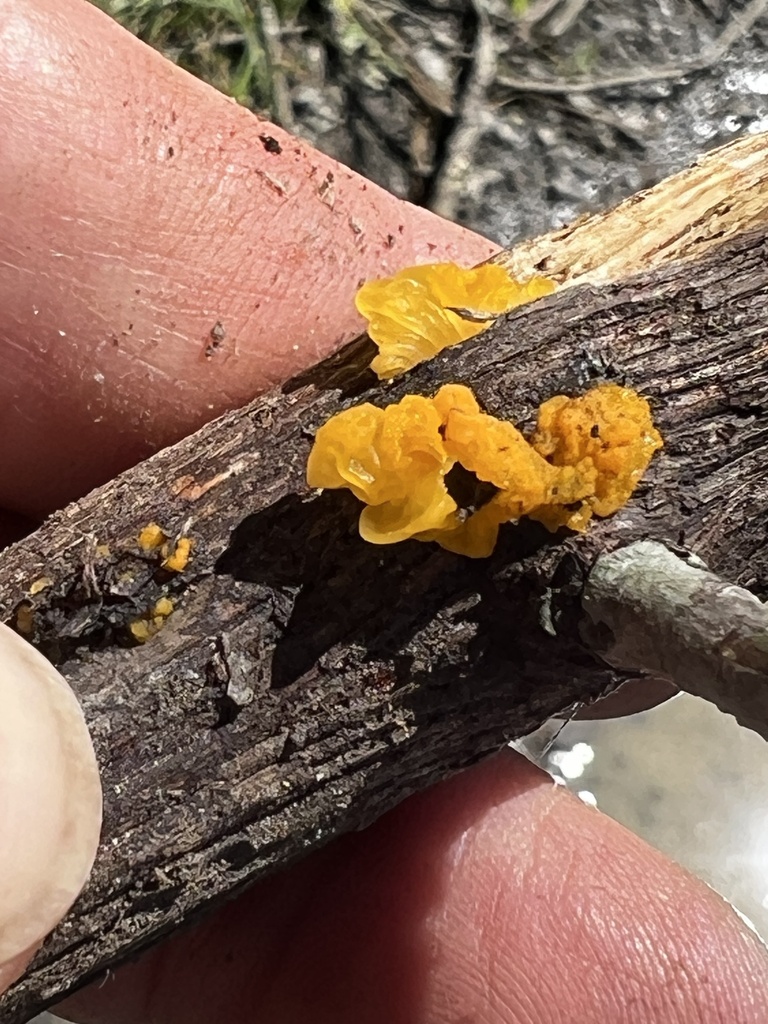
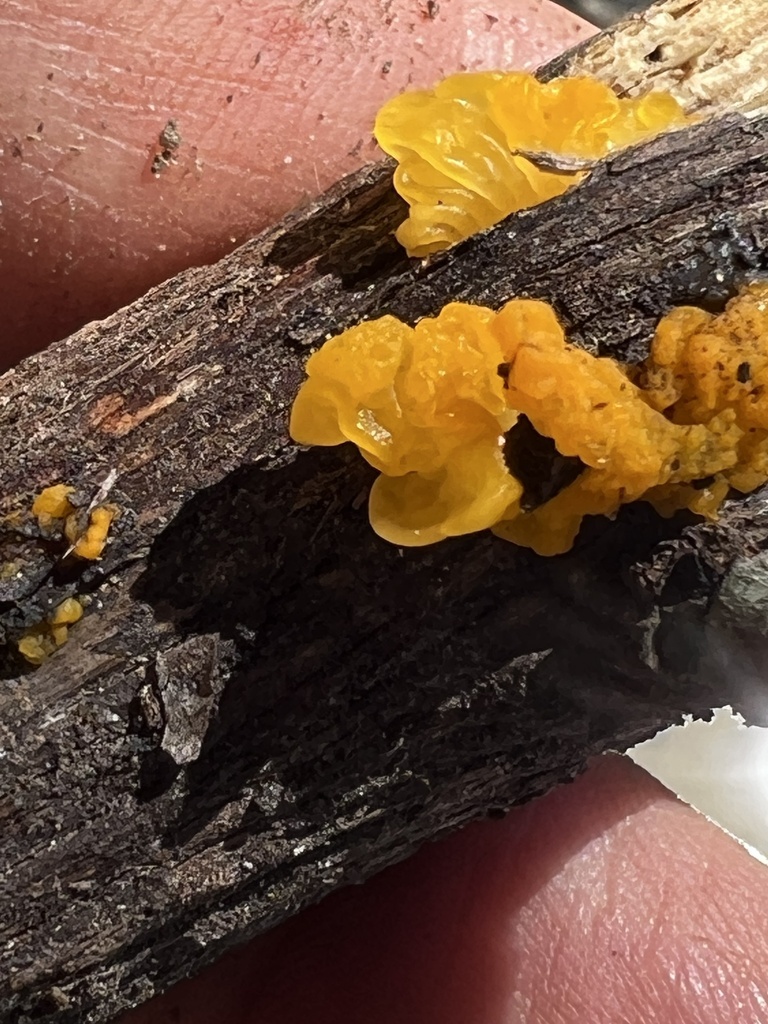
The most striking characteristic of Witches Butter is its colour. Fresh fruiting bodies display deep yellow or bright yellow-orange hues, though they fade to pale yellow over time. Rarely, unpigmented specimens appear white or nearly colourless. Upon drying, the gelatinous lobes transition to dark reddish or orange tones. The surface is typically smooth, with translucent lobes that often develop a distinctly wrinkled or brain-like texture. The spores, when viewed in mass, appear whitish or pale yellow.
The fungus emerges directly through the bark of dead branches, often appearing suddenly after rain when moisture rehydrates the dried tissue. This habit of breaking through bark, combined with its vivid colour and gelatinous texture, makes Tremella mesenterica one of the most visually distinctive fungi in temperate woodlands.
Distribution and Habitat
Tremella mesenterica has been recorded across 23 countries on multiple continents, with a pronounced concentration in temperate regions of the Northern Hemisphere. GBIF records show the United Kingdom leads in documented observations with 139 records, followed by the United States with 47 records and Germany with 41 records. Additional significant populations appear in Russia, the Netherlands, Italy, and Canada, each with between 8 and 11 records. The species also occurs in Latvia, France, and New Zealand, indicating a genuinely cosmopolitan distribution despite uneven sampling effort across regions.
The species appears indifferent to elevation, with no minimum or maximum recorded thresholds in available data. Its occurrence across lowland and upland sites in Britain and continental Europe suggests tolerance for a wide altitudinal range. The fungus grows on dead or moribund woody substrates—particularly decaying hardwoods and conifers—wherever sufficient moisture and shade persist.
Tremella mesenterica is a gelatinous jelly fungus that fruits almost exclusively during the cold months of winter, with recorded activity concentrated sharply in January. This temporal restriction may reflect the fungus’s dependence on specific moisture regimes and low temperatures that favor its development. Northern temperate woodlands, hedgerows, and gardens with abundant fallen branches provide optimal conditions for its appearance.
Ecology and Lifecycle
Lifecycle
Tremella mesenterica begins its life as thin mycelial threads that colonize decaying wood, particularly logs and branches where it parasitizes other fungi—most notably species of Annulohypoxylon and Hypoxylon. The mycelium grows invisibly within the host substrate until environmental conditions trigger fruiting. When moisture levels rise and temperatures moderate (typically in spring and autumn), the fungus produces its distinctive gelatinous fruiting bodies. These yellow, brain-like masses can expand considerably when wet, absorbing water and swelling to several centimetres across, though they shrink and harden into translucent crusts during dry periods.
Spore dispersal occurs when the gelatinous fruiting body breaks down, releasing microscopic spores into the air. The jelly-like consistency of the fruit body plays a crucial role in this process—rain, wind, and contact with insects and animals help dislodge and scatter spores to new wood substrates. Once spores land on suitable decaying wood already colonized by host fungi, germination occurs and the mycelial stage begins anew.
Ecological Role
Tremella mesenterica occupies a specialized niche as a parasitic fungus that feeds on the fruiting bodies and mycelium of wood-decay fungi. Rather than breaking down cellulose directly, it exploits the decomposing work of other fungi, making it both a secondary decomposer and a competitor in the fungal community of dead wood. This parasitism helps regulate populations of its host fungi and prevents any single wood-decay species from dominating rotting logs entirely.
The presence of Witches Butter on decaying wood indicates active decomposition and a healthy fungal ecosystem. Its gelatinous fruiting bodies also provide moisture and nutrients for invertebrates, particularly small insects and mites that graze on fungal tissue. By cycling nutrients from dead wood back into the broader forest environment, Tremella mesenterica contributes to nutrient recycling in woodland ecosystems.
Uses
Witches Butter has no established culinary or medicinal value in Western cultures, though its striking appearance has made it a subject of folklore and superstition across Europe. Traditional beliefs held that the gelatinous fruiting bodies were evidence of witchcraft or supernatural activity, hence its evocative common name. In some Asian traditional medicine systems, related gelatinous fungi have been valued for their supposed immune-boosting properties, but Tremella mesenterica itself has not been widely studied for pharmaceutical applications.
The fungus remains primarily of interest to mycologists, naturalists, and foragers seeking to identify woodland fungi. Its bright yellow colour and unusual texture make it easily recognizable and a popular subject for nature photography and citizen science observations.
Conservation and Threats
Tremella mesenterica, commonly known as Witches Butter, has not been formally assessed by the IUCN Red List. This gelatinous fungus lacks a designated conservation status, reflecting both its widespread distribution across multiple continents and the general scarcity of formal conservation assessments for non-lichenized fungi. The absence of a formal status does not indicate abundance or stability—rather, it highlights a significant gap in mycological monitoring.
Threats
No specific threats have been formally documented for Tremella mesenterica. The species is saprotrophic, feeding on wood-decay fungi of the genus Tremella, and occurs on a variety of decaying hardwoods and softwoods in forests, parks, and gardens. This ecological flexibility, combined with its presence in diverse habitats across temperate and subtropical regions, suggests it is not dependent on rare or threatened host substrates. Large-scale habitat loss in temperate forests could theoretically affect populations, but the fungus’s tolerance for disturbed and urban environments makes it relatively resilient to land-use change.
Conservation Efforts
No formal conservation programmes or legal protections target Tremella mesenterica. The species benefits indirectly from broader woodland and forest conservation initiatives that maintain dead wood habitat—a critical microhabitat for saprotrophic fungi. In some regions, initiatives to retain fallen logs and standing deadwood in managed forests create favourable conditions for wood-decay fungi, including this gelatinous jelly fungus.
Population trends remain unknown due to the lack of systematic monitoring. Without baseline data on distribution, abundance, or temporal change, it is impossible to assess whether populations are stable, increasing, or declining across its range.
Cultural Significance
The common name “Witches Butter” reflects the fungus’s striking appearance and its place in European folklore. The bright yellow, gelatinous fruiting bodies resemble congealed fat or butter, and historical observers connected this visual quality to superstitious beliefs about witchcraft and supernatural substances. Rural communities across Europe incorporated the fungus into folk narratives, though documented cultural practices around the species remain sparse in modern sources.
Beyond its folkloric associations, Tremella mesenterica has limited documented roles in human culture compared to other fungi. The species does not feature prominently in cuisine, traditional medicine, or religious symbolism across known records. Its primary cultural presence remains tied to its common name and the visual language of folk belief rather than active use or symbolic meaning in contemporary or historical practice.
Fun Facts
- Despite being a gelatinous jelly fungus with no rigid skeleton, Witches Butter can grow up to 7.5 centimetres in diameter—a remarkable feat for an organism made almost entirely of water and gel. This size is achieved through its unique convoluted, lobed surface texture, which maximizes surface area and helps it capture moisture from the air.
- The fungus absorbs and retains moisture so effectively that it becomes slippery and greasy when damp, yet shrinks dramatically when dry. This ability to rapidly lose and regain water allows it to survive in fluctuating humidity levels across different seasons.
- Its distinctive orange-yellow color is highly unusual among fungi and may serve a dual purpose: attracting insects that help disperse spores and allowing the fungus to detect and respond to light levels in its environment. Most fungi are brown, grey, or white, making Witches Butter visually unmistakable.
- Tremella mesenterica is not a true mushroom but belongs to the family Tremellaceae, a group of gelatinous fungi that lack the gills or pores found in conventional mushrooms. Instead, it produces spores through specialized structures embedded within its jelly-like fruit body.
- The fungus is a facultative parasite that primarily feeds on dead wood, but it can also parasitize other fungi, particularly those in the genus Dacrymyces. This “fungus eating fungus” strategy allows it to access nutrients locked within the tissues of its microbial competitors.
- Witches Butter is edible and has been used in traditional Chinese medicine for centuries, where it is valued for its gelatinous texture and potential immune-supporting properties. It requires careful cleaning and preparation to remove debris from its convoluted surface.
Ecology
Edibility
Photo Gallery
Mark Richman · CC BY 4.0
Related Species
Was this profile helpful?