
Liliopsida · Liliales
Madonna Lily
Lilium candidum
Also known as: White Lily, white lily
© Roman · iNaturalist · CC BY 4.0
Scientific Classification & Quick Facts
Classification
Known For
Detailed measurements for this species are still being verified.
The Madonna Lily stands as one of the most historically significant flowering plants in Western culture, prized for its pure white trumpet blooms and intoxicating fragrance for over three millennia. Lilium candidum has graced gardens, adorned religious art, and featured in literary works across Europe and beyond—yet its wild origins remain somewhat mysterious. Found across at least 23 countries, the species displays a scattered distribution that reflects both natural habitat patterns and extensive human cultivation over centuries.
Unlike many ornamental lilies that have become endangered through overcollection, Madonna Lily currently carries an “Unknown” conservation status—a reflection of how widespread cultivation has somewhat decoupled the species from traditional extinction risk. Its resilience and adaptability across diverse growing regions, combined with its enduring cultural importance, make this lily a fascinating case study in how human favour can profoundly shape a plant’s survival and geographical presence in the modern world.
Identification and Appearance
Lilium candidum is a herbaceous bulbous perennial with a distinctive two-stage growth pattern. The plant produces underground bulbs at ground level and, unusually among lilies, develops a basal rosette of leaves during winter months. These basal leaves die back the following summer, allowing the floral stem to emerge in late spring.
Stem and Flowers
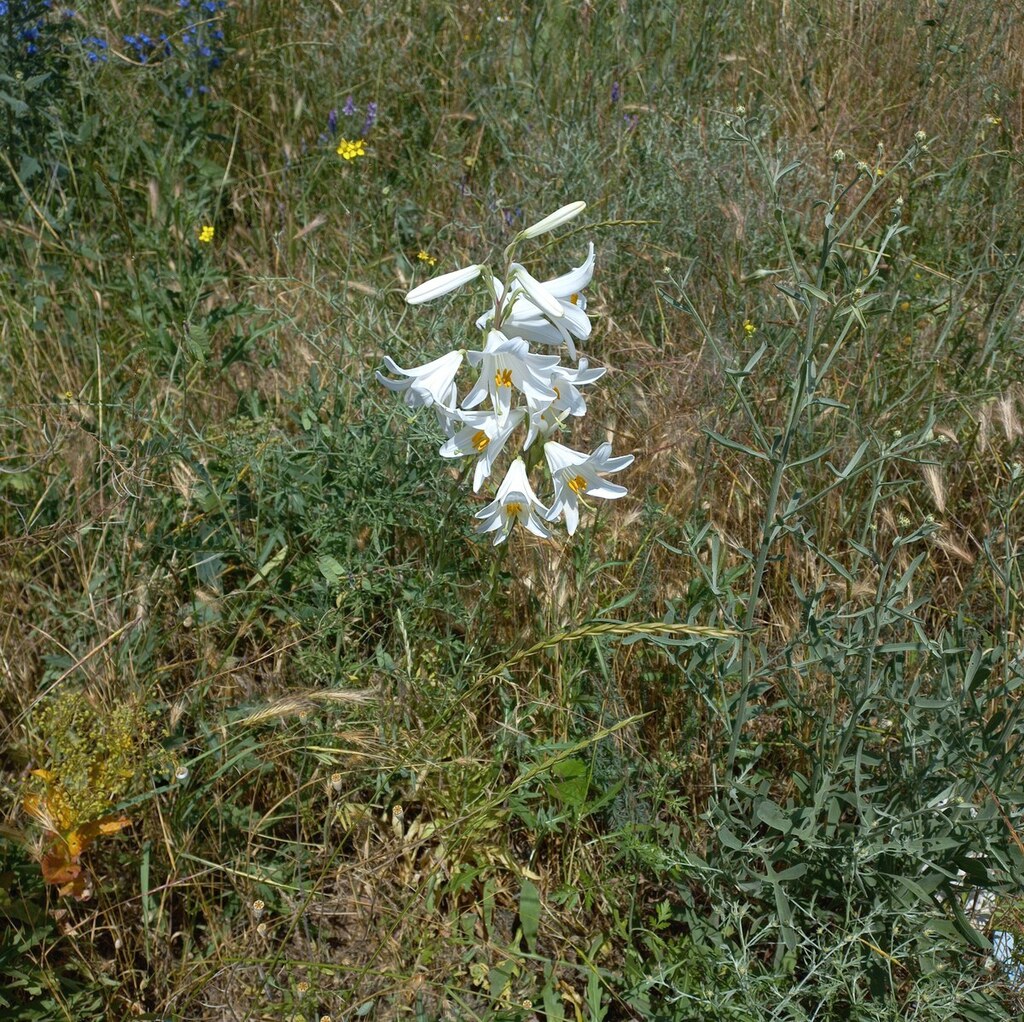
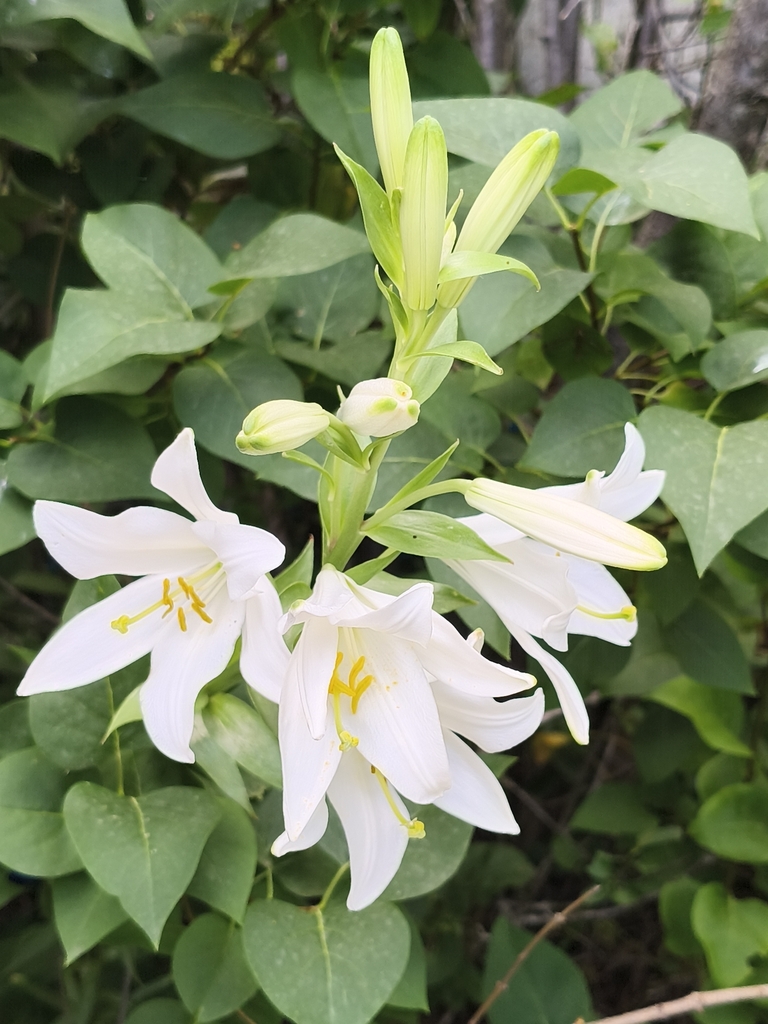
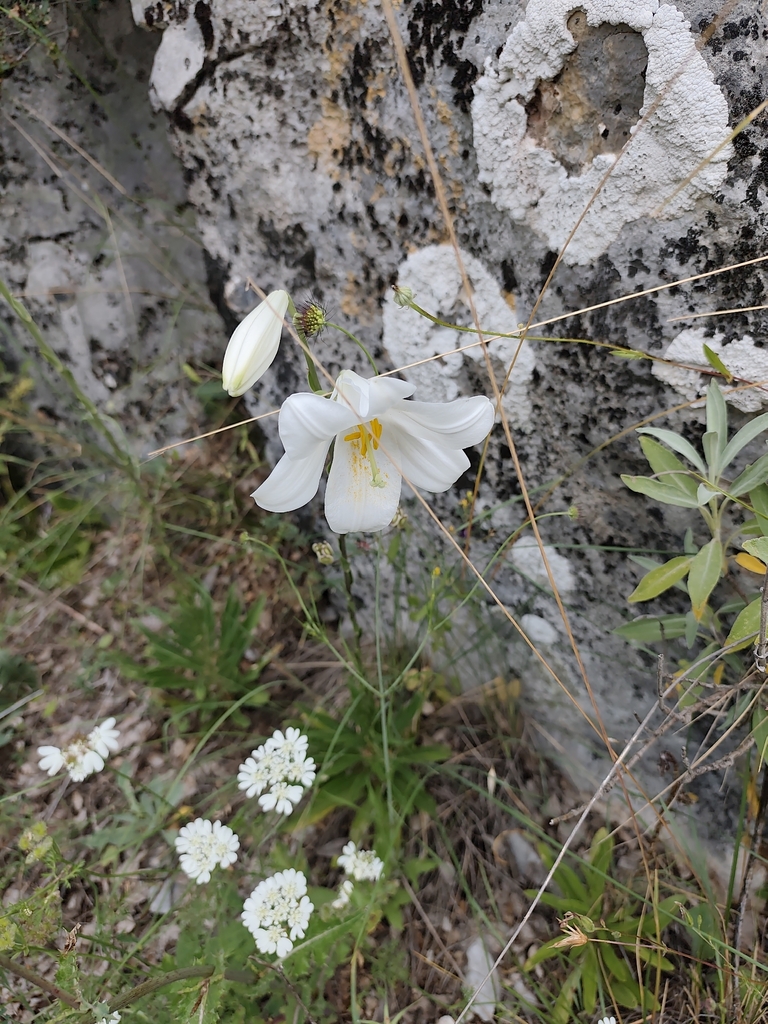
The leafy floral stem typically reaches 1.2 metres in height, though exceptional specimens may grow up to 2 metres tall. During summer, the stem bears several flowers that are the hallmark of this species: pure white tepals with yellow-tinted throats. The flowers are intensely and sweetly fragrant, releasing a characteristic scent that has made them popular in gardens and floral arrangements for centuries.
The flowers lack the prominent staminal filaments and dense stamen clusters seen in many other lily species, instead presenting a more delicate and elegant form. The entire plant demonstrates the classical lily structure while maintaining its own distinctive visual and temporal characteristics.
Distribution and Habitat
Lilium candidum, the Madonna Lily, is distributed across the Mediterranean region and parts of central Europe, with its presence documented across 23 countries. The species shows strong concentration in the eastern Mediterranean, with Israel recording the highest number of observations (87), followed by France (44), Italy (38), Spain (28), and Greece (26). Additional occurrences have been documented in Portugal, Croatia, Sweden, Turkey, and Austria, reflecting both its natural Mediterranean range and its long history of cultivation in European gardens.
The Madonna Lily occupies a wide elevational range, from 10.7 metres in lowland coastal areas to 950.77 metres in upland regions, with a mean elevation of 378 metres. This broad vertical distribution reflects the species’ tolerance of varied topographies across Mediterranean and temperate zones, from sea-level habitats to montane environments where conditions remain suitable for growth.
Seasonal activity peaks dramatically in May, when 159 observations are recorded across the distribution—more than three times higher than any other month. This pronounced peak aligns with the Madonna Lily’s flowering period. Secondary activity appears in March through June, representing the plant’s active growing and reproductive season, while observations drop to near zero from July through October, indicating dormancy during the hot Mediterranean summer and autumn months.
Growth and Cultivation
Growth
Lilium candidum, the Madonna Lily, is a herbaceous perennial that grows from a basal bulb, producing a distinctive rosette of lance-shaped leaves in autumn before the flowering stem emerges in spring. The plant reaches 1.2 to 1.5 metres tall at maturity, with a sturdy, unbranched stem that carries linear foliage arranged alternately. This species follows an unusual phenological pattern: the basal rosette develops in the growing season preceding flowering, allowing the plant to overwinter and gain vigor for its spring and early-summer display.
The bulbs are relatively small—around 2 to 3 centimetres in diameter—and consist of loosely arranged, non-tunicated scales that are white and lack a protective papery skin. This structural feature makes Madonna Lily bulbs more fragile and prone to drying than many other lilies, and they require careful handling and prompt planting to prevent damage during dormancy.
Flowering
Madonna Lilies flower in late spring to early summer, typically from May to June in the Northern Hemisphere, producing between 5 and 20 trumpet-shaped flowers arranged in a loose raceme on a single stem. The blooms are pure white, highly fragrant, and face upward or outward; each flower measures 7 to 10 centimetres long with six petals and prominent yellow stamens that shed pollen freely. The flowers are pollinated by insects, and successful pollination results in the development of three-chambered capsules containing numerous small, flat seeds that mature over several weeks.
After flowering, the seed capsules dry and split to release seed, allowing natural dispersal. The entire above-ground portion of the plant senesces and dies back after seed ripening, with the bulb entering dormancy in late summer and early autumn.
Cultivation
Madonna Lilies thrive in full sun to light shade and prefer well-drained soil of neutral to slightly alkaline pH—ideally between 6.5 and 7.5. The species is cold-hardy in temperate and cool regions and tolerates hard freezes, making it well-suited to gardens across much of Europe and northern North America. Bulbs should be planted in autumn (September to November) at a depth of 5 to 7 centimetres, with spacing of 15 to 20 centimetres between plants to allow air circulation and reduce fungal disease risk.
Watering should be moderate and consistent during the growing season, keeping soil moist but never waterlogged; reduce water in late summer as the plant enters dormancy. Madonna Lilies generally tolerate periods of drought once established but perform better with regular moisture during the spring growth phase. Fertilize with a balanced, slow-release fertilizer in spring as new growth emerges, and deadhead spent flowers to redirect energy toward bulb ripening rather than seed production—though seed-setting may be left undisturbed for naturalizing effects. Division of established clumps is rarely necessary but can be performed in summer or autumn if bulbs become crowded.
Conservation and Threats
Lilium candidum, the Madonna Lily, currently lacks an official IUCN Red List assessment. This absence of formal conservation status reflects the species’ widespread cultivation and stable global distribution as an ornamental plant, though it means the conservation needs of wild and naturalised populations may not receive systematic monitoring at the international level.
Population trends show the species is increasing, likely driven by continued horticultural interest and propagation. However, this overall growth masks potential vulnerability in specific wild populations, particularly in its Mediterranean native range where habitat loss and collection pressure may pose localised threats.
Threats
Lilium candidum faces two primary disease pressures. The species is susceptible to virus diseases common to lilies, including Lily Symptomless Virus and Lily X Virus, which reduce vigour and flowering quality in cultivated stocks. Botrytis fungus presents an equally significant threat, causing petal spotting, stem rot, and bulb decay—particularly in wet conditions or humid environments. Both pathogens can spread rapidly through dense plantings or via contaminated propagation material, making disease management critical for growers and conservation plantings.
Conservation Efforts
No specific international legal protections or named conservation programmes currently target Lilium candidum. Its status as a valued ornamental has inadvertently contributed to its preservation through wide cultivation, but formal wild population surveys and habitat protection in its native Mediterranean range remain limited. Regional initiatives in parts of southern Europe have begun documenting naturalised populations, though systematic conservation action is minimal.
Cultural Significance
Lilium candidum holds a prominent place in ancient Mediterranean art and ritual. The flower appears frequently in Minoan frescoes from Bronze Age Crete, where it was rendered with evident reverence and artistic sophistication. The most celebrated example is the Prince of the Lilies fresco found in the palace of Knossos, where the flower plays a central role in the composition. Additional depictions appear in the House of the Lilies at Amnisos, confirming the species’ cultural importance across multiple Minoan settlements.
Red lilies—likely derived from or related to the Madonna lily—feature in Minoan shrine contexts and seasonal frescoes, including the celebrated Spring Fresco at Akrotiri and a shrine scene in the Xesté 3 fresco. The symbolic reasoning behind the use of red lilies in ritual and sacred settings remains unclear, though their deliberate placement in shrines suggests religious or ceremonial significance. The consistent artistic representation of lilies across Minoan sites points to the flower’s deep cultural resonance in Bronze Age Aegean society, where it may have held both aesthetic and spiritual importance.
Fun Facts
Lilium candidum, the Madonna Lily, has captivated gardeners and symbolists for millennia. Native to the Balkans and Middle East, this elegant white flower now grows wild across the Mediterranean, Mexico, and the Canary Islands—a testament to its appeal across continents and centuries.
Curious Facts
- The Madonna Lily is so ancient that its true wild origin has become obscured by millennia of cultivation across the Mediterranean and Middle East.
- This species is extremely susceptible to virus diseases and Botrytis fungal infection, making it one of the more challenging lilies to grow in humid climates or crowded gardens.
- Growers combat viral problems by propagating from seed rather than bulblets—a labour-intensive technique that avoids inheriting pathogens from infected parent bulbs.
- The flower carries profound symbolic weight across Christianity, Judaism, Islam, and pre-Christian Mediterranean religions, where white lilies represent purity, virtue, and divine grace.
- Unlike most lilies, Madonna Lilies form their basal rosette of leaves in autumn, then remain dormant over winter before flowering in late spring—an unusual growth pattern that catches many gardeners off guard.
- Its naturalization across Mexico and the Canary Islands from its native Balkan and Middle Eastern range demonstrates how garden escapees become established in suitable climates thousands of kilometres away.
Ecology
Growing Conditions
Edibility
Photo Gallery
Roman · CC BY 4.0
Related Species
Was this profile helpful?