
Cephalopoda · Octopoda
Common Octopus
Octopus vulgaris
Also known as: European Common Octopus, Kolkrabbi, Mediterranean Octopus, Octopus, common Atlantic octopus
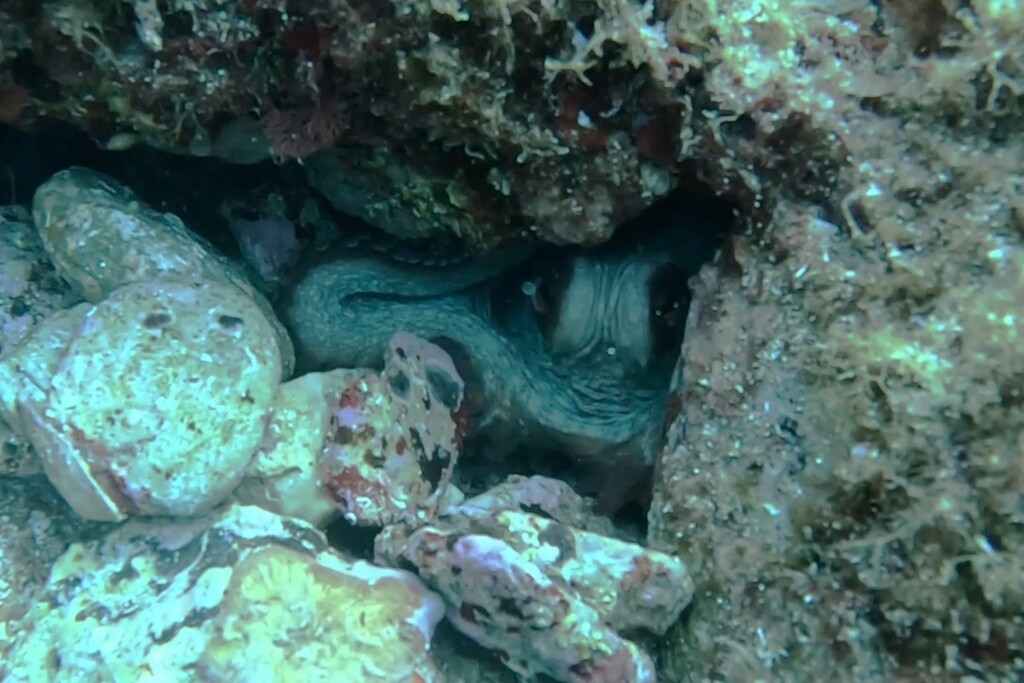
© guillaumecalcagni · iNaturalist · CC BY-NC 4.0
Scientific Classification & Quick Facts
Classification
At a Glance
The common octopus is a master of disguise and escape, capable of squeezing through impossibly narrow gaps, changing colour in milliseconds, and solving problems with a problem-solving intelligence that rivals many vertebrates. Found across coastal waters of the Atlantic Ocean, Mediterranean Sea, and beyond, Octopus vulgaris represents one of the ocean’s most successful and adaptable hunters. The species inhabits at least 14 countries’ coastal regions, thriving in rocky crevices and seagrass beds where it hunts crustaceans, fish, and other molluscs under cover of darkness.
Listed as Least Concern by the IUCN, the common octopus remains widespread and resilient, though it faces increasing pressure from overfishing in some regions. What sets this species apart is not merely its abundance but its remarkable cognitive flexibility: individuals use tools, learn through observation, and recognize individual humans—behaviours once thought exclusive to vertebrates. These attributes make Octopus vulgaris not just a common fixture of Mediterranean fisheries, but a window into the radical diversity of animal intelligence.
Identification and Appearance
Octopus vulgaris is a small to medium-sized cephalopod with a soft, muscular body that ranges from 4 to 5 grams in weight at maturity. The animal exhibits remarkable colour-changing ability, shifting rapidly between reddish-brown, grey, and pale tones depending on mood, activity, and environmental surroundings. Its most distinctive feature is the presence of eight flexible arms arrayed around the mouth, each lined with powerful suckers that enable precise manipulation of objects and secure grip on rocky substrates.
The body is compact and bulbous, with a large head region fused to the main body mass. The animal lacks a rigid skeleton entirely, allowing it to compress through remarkably tight crevices no wider than its hard beak—the only truly rigid structure in its anatomy. Small compound eyes positioned on the head provide excellent vision for hunting and navigation in dimly lit seafloor environments. Sexual dimorphism is present: males possess a specialized arm called the hectocotylus, which functions as a reproductive organ during mating, whereas females lack this adaptation and are typically slightly larger overall.
Lifespan in O. vulgaris is brief, averaging around 2 years in the wild. The animal’s entire lifecycle—from planktonic larva to solitary adult hunter—is compressed into this short window, making reproduction and rapid growth essential to survival. Individual variation in body tone and patterning is common, reflecting both genetic differences and the octopus’s extraordinary ability to customize its appearance to local habitat conditions.
Distribution and Habitat
Octopus vulgaris occurs across 14 countries, with a strong concentration in the northeastern Atlantic and western Mediterranean regions. GBIF records show Spain dominates sightings with 155 observations, followed by France (64) and South Africa (36). Portugal, Italy, Croatia, and Greece collectively account for a further 34 records, reflecting the species’ presence throughout the Mediterranean basin. Smaller populations are documented in Algeria, the United Kingdom, and Albania, indicating a broader but sporadic distribution across temperate and subtropical coastal waters.
The species inhabits shallow rocky and sandy substrates along continental shelves and coastal rocky reefs, typically remaining within a few metres of the seafloor. Octopus vulgaris occupies crevices, caves, and other shelter sites during daylight hours, emerging at night to hunt for prey such as crustaceans, molluscs, and small fish. Elevation data are not applicable to this fully aquatic marine species.
Seasonal Presence
Occurrence records follow a pronounced seasonal pattern, with peak activity in April (91 sightings) and a secondary surge from January to March (84, 47, and 56 observations respectively). The species shows virtually no recorded sightings between June and December in the GBIF dataset, suggesting either genuine withdrawal to deeper waters during warmer months or reduced observational effort during that period. This spring concentration may correspond with breeding activity or increased nearshore feeding before summer dispersal.
Biology
Behavior
Octopus vulgaris is a solitary, primarily nocturnal predator that spends daylight hours hidden in rocky crevices, seaweed beds, or burrows on the seafloor. Each individual defends a small territory and shows no social bonds with other octopuses except during brief mating encounters. The species is highly intelligent for an invertebrate, demonstrating problem-solving abilities, tool use, and rapid learning—traits that enable it to navigate complex reef environments and exploit new food sources.
The common octopus employs sophisticated hunting strategies. It stalks prey by crawling along the bottom or through crevices, relying on keen eyesight and chemoreceptors on its arms to locate food. When attacking, the octopus can rapidly change color and texture, enabling both camouflage and communication. Its eight flexible arms can squeeze through impossibly tight spaces to extract prey from hiding spots, and the arms themselves show semi-autonomous behavior, allowing the animal to forage with multiple limbs simultaneously while the central brain attends to other tasks.
Diet
The common octopus is a carnivore with broad dietary flexibility. Its primary prey includes crustaceans—crabs, lobsters, and shrimp—as well as mollusks such as clams, mussels, and other cephalopods. Fish, sea urchins, and worms are also consumed opportunistically. The octopus uses its strong beak to crack open hard shells and can inject venom to subdue larger or more dangerous prey. Feeding occurs mostly at night, when the octopus leaves its daytime refuge to hunt across the seafloor.
Reproduction
Common octopuses reach sexual maturity at roughly one year of age and breed throughout the year, though peaks often occur in spring and autumn depending on local water temperature. Males use a specialized arm (the hectocotylus) to transfer packets of sperm directly into the female’s mantle cavity. Fertilization is internal, and females subsequently lay thousands of tiny eggs, clustering them in protected crevices or shells within their den.
After spawning, the female remains with her clutch for the entire incubation period—approximately five to six weeks—guarding them vigilantly and aerating them with jets of water from her siphon. She does not feed during this time and dies shortly after the eggs hatch. The newly hatched paralarvae drift as plankton for several weeks before settling to the seafloor as miniature octopuses. The species has a lifespan of roughly two years in the wild, with females dying postnatally and males typically living slightly longer.
Conservation and Threats
Octopus vulgaris is classified as Least Concern (LC) on the IUCN Red List. This designation reflects the species’ wide geographic range across the Atlantic Ocean and Mediterranean Sea, as well as its ability to maintain populations across multiple management regions. However, the lack of a consistent global population trend means that local populations may face varying pressures despite the overall stable classification.
Threats
Fishing pressure represents the primary threat to Octopus vulgaris populations. The species is commercially valuable in Mediterranean and European fisheries, where it is harvested through pot fishing, trapping, and hand collection. Overexploitation in particular fishing grounds can deplete local populations faster than they recover, especially given the species’ relatively short lifespan and semelparous reproduction (dying after a single breeding event). Climate change poses an emerging threat, with ocean warming, acidification, and deoxygenation affecting larval survival, habitat suitability, and food availability in key regions.
Habitat degradation from bottom trawling and coastal development also impacts populations, destroying the rocky substrates and crevices that adults use for shelter and egg-laying sites. Pollution and marine pollution, including plastic and chemical contaminants, add further pressure to wild populations.
Conservation Efforts
Several regions employ fishery management measures to sustain Octopus vulgaris populations. The European Union has implemented landing controls and effort restrictions in some fisheries, while Mediterranean countries enforce seasonal closures and gear regulations. Marine protected areas in parts of the Mediterranean provide refugia where octopuses can reproduce without fishing pressure. However, enforcement varies significantly between regions, and international coordination remains limited despite the species’ migratory range.
Cultural Significance
The common octopus has profoundly shaped the imaginations of cultures across the globe, appearing in mythologies spanning from ancient Greece to the far reaches of the Pacific. In Mediterranean traditions, the creature inspired legendary sea monsters: the multiheaded Hydra and the paralyzing Medusa of Greek myth drew upon octopus imagery, while Minoan and Cretan artists incorporated the octopus as a central motif in their visual arts. Northern European folklore feared the kraken—a colossal octopus-like entity—while the Ainu people of Japan spoke of the Akkorokamui, another fearsome octopus monster. Even modern literature echoed these terrors: Victor Hugo’s Toilers of the Sea features a harrowing battle between man and octopus. Japanese shunga erotic art also drew upon the octopus’s alien form, using it to explore themes of sensuality and transgression.
Yet this picture of fear and monstrosity is incomplete. Many cultures—from South America to the Pacific Northwest and across Polynesia—revered the octopus as a divine protector and spiritual guide rather than a threat. This duality reflects the creature’s profound cultural complexity. Octopuses embody versatility, dexterity, selflessness, intelligence, awareness, regeneration, and infinity in symbolic traditions worldwide. Their presence in every ocean on Earth has made them subjects of wonder and meaning across virtually every maritime culture, each interpreting the octopus through the lens of their own values and anxieties.
Fun Facts
- The common octopus has nine brains: one central brain and a mini-brain in each of its eight arms. Each arm can solve problems and hunt independently, even if severed from the body, thanks to distributed neural control.
- Their blood is blue, not red, because it uses copper-based hemocyanin to carry oxygen instead of iron-based hemoglobin. This adaptation allows them to thrive in cold, low-oxygen ocean environments.
- Octopuses can change colour and texture in under a second by controlling pigment cells called chromatophores, plus reflective cells and papillae in their skin. Remarkably, they are colour-blind, so scientists still debate how they match backgrounds so precisely.
- They are escape artists of legendary ability—common octopuses have been documented unscrewing jar lids, dismantling aquarium equipment, and squeezing through gaps smaller than their hard beak, the only rigid part of their body.
- Male octopuses have a specialized arm called a hectocotylus that they use to transfer packets of sperm directly into females. After mating, males typically die within months, while females die shortly after their eggs hatch.
- The common octopus has been observed using tools, carrying coconut shells and clamshells to build portable shelters—behaviour once thought exclusive to mammals and birds.
- Their taste receptors are distributed across their arms, allowing them to taste whatever they touch. This chemotactile sense is so refined that an octopus can identify prey and toxic substances by contact alone.
Photo Gallery
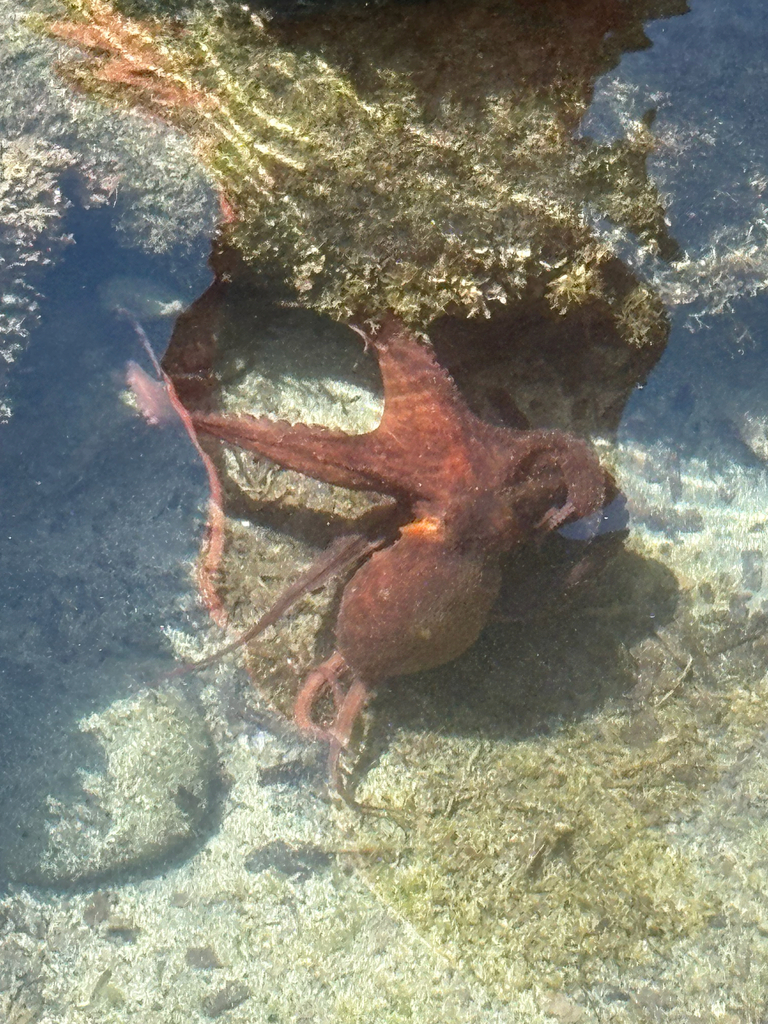
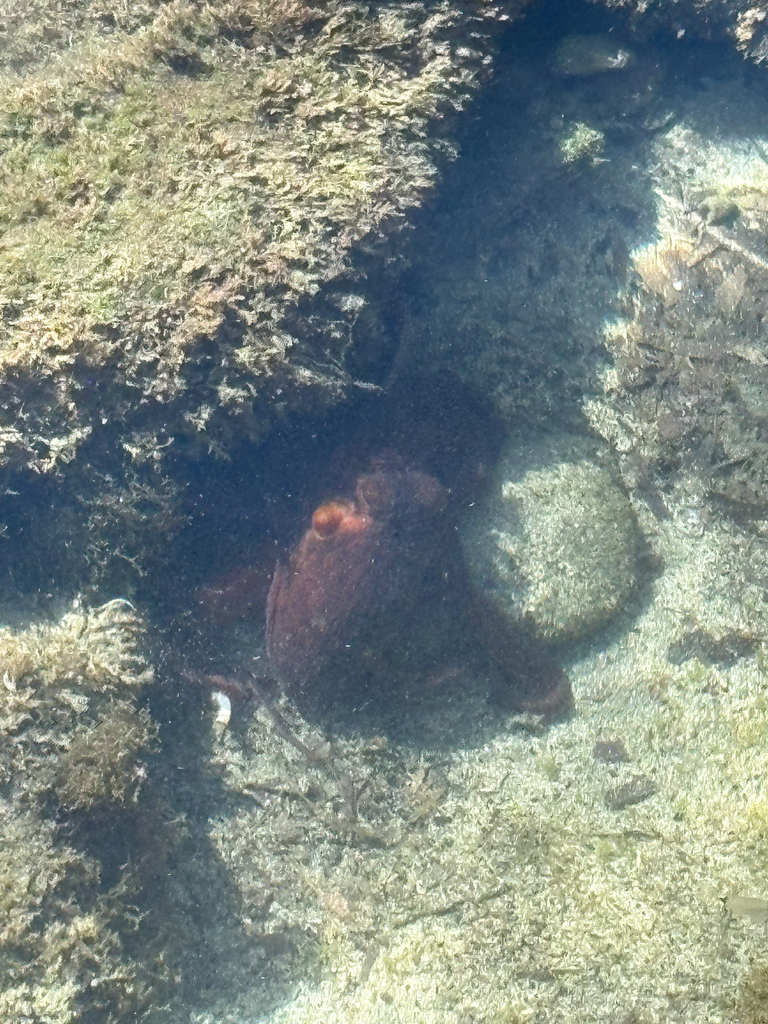
guillaumecalcagni · CC BY-NC 4.0
Related Species


Was this profile helpful?