
Amphibia · Anura
Cane Toad
Bufo marinus
Also known as: Giant Toad, Marine Toad
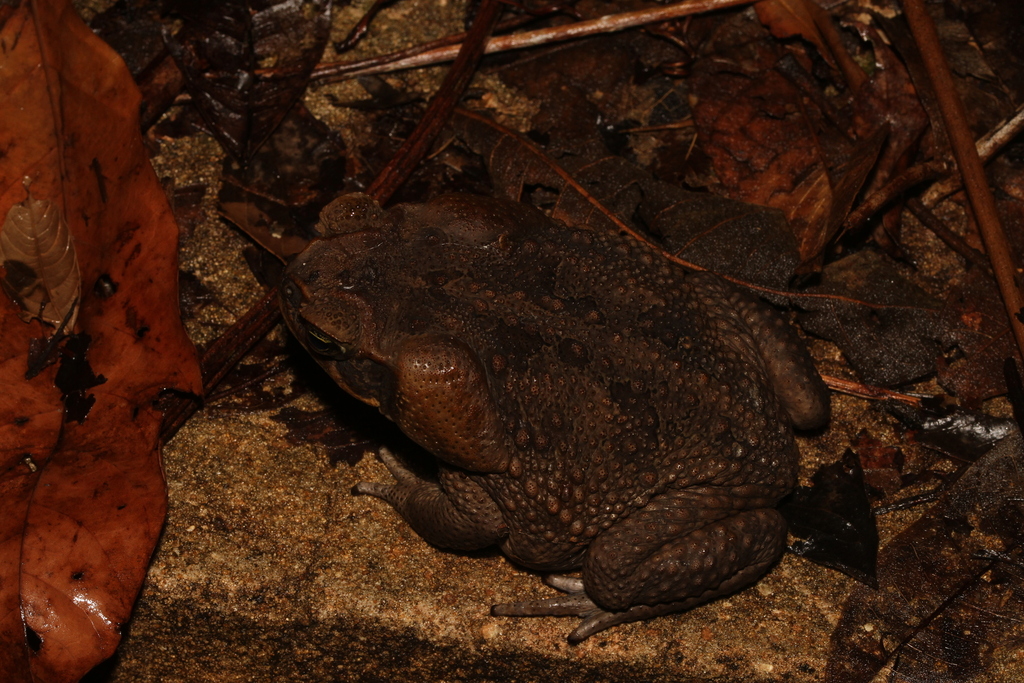
© Samuel GUIRAUDOU · iNaturalist · CC BY 4.0
Bufo marinus, the cane toad, is a large bulky amphibian that has become one of the world’s most successful—and controversial—invasive species. Native to Central and South America, this warty giant has colonised at least 17 countries across multiple continents, thriving in habitats ranging from tropical rainforests to urban gardens. Unlike most toads, which remain largely cryptic and local, the cane toad has an almost cosmopolitan distribution today, a testament less to its ecological virtue than to human intervention gone awry.
The cane toad’s current conservation status remains unknown to science, a reflection of its abundance in introduced ranges and uncertain trends in its native habitat. What makes this species especially notable is the stark contrast between its ecological role in its original range—where it is simply another predator of insects and small arthropods—and its catastrophic impact where it has been introduced. Its spread reveals how a single species, armed with toxins and reproductive vigour, can reshape entire ecosystems and challenge human assumptions about biological control.
Identification and Appearance
The cane toad is the largest species in the Bufonidae family. Females are significantly larger than males, reaching a typical length of 10–15 centimetres, with exceptional individuals growing up to 24 centimetres. Males remain smaller, though exact measurements for male maximum size are variable. Larger toads tend to inhabit areas with lower population density, where resource competition is reduced.
Sexual Dimorphism
Sexual dimorphism in the cane toad is pronounced and visible in body size, with females consistently outweighing and exceeding males in length. This size difference reflects reproductive investment and the demands of egg production in females.
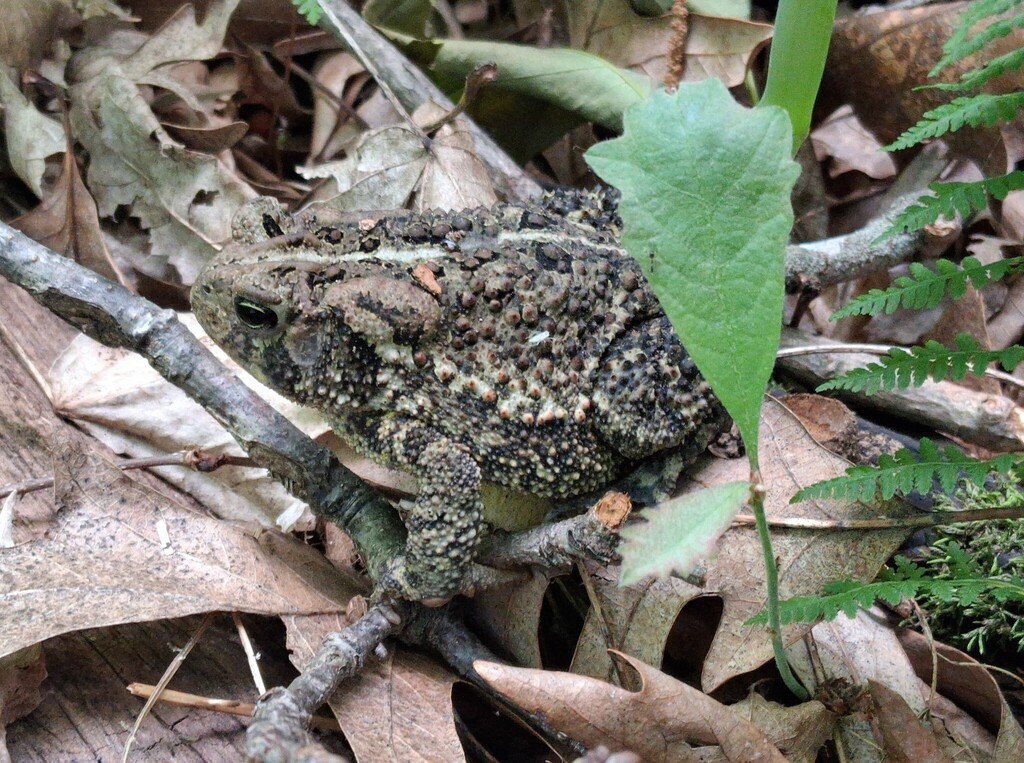
In the wild, cane toads live 10 to 15 years, though captive specimens have been recorded surviving considerably longer—one individual reportedly lived for 35 years. Their colouration and skin texture are characteristic of large bufonids, with warty, leathery skin typical of the genus. The most distinctive feature is a pair of prominent parotoid glands behind the eyes, which become more pronounced as the toad matures and grows larger.
Distribution and Habitat
Bufo marinus has established itself across a broad geographic range spanning 17 countries, with particularly strong populations in Papua New Guinea and Palau. The species shows presence in significant numbers throughout the Pacific and Caribbean regions, as well as in Central and South America. GBIF records indicate that Papua New Guinea hosts the highest concentration of observations (93 records), followed by Palau (80 records), Colombia (56 records), and Peru (24 records). Secondary populations occur in the United States, Guam, Suriname, Nicaragua, Guyana, and Honduras, demonstrating the toad’s remarkable ability to colonise diverse tropical and subtropical environments.
Elevationally, Bufo marinus occupies a range from 4 metres to 753 metres above sea level, with an average elevation of 227.5 metres. This wide vertical distribution reflects the species’ tolerance for lowland and foothill habitats across its introduced range. The toad thrives in warm, humid climates and readily colonises disturbed areas, agricultural zones, and human-modified landscapes alongside natural habitats.
Seasonal activity peaks during July, when observation records reach their highest monthly count of 50 occurrences. Activity remains elevated from June through August, indicating a pronounced summer breeding and activity peak. While observations occur year-round, the species shows lower detection rates during winter months (February and May each record only 11–12 observations), reflecting reduced toad activity and visibility during cooler periods. This seasonal pattern aligns with the breeding biology of tropical and subtropical toads, which concentrate reproductive efforts in warmer months.
Biology and Behavior
Behavior
Cane toads are primarily nocturnal, emerging from shelter at dusk to hunt and forage. During the day they remain hidden in burrows, under logs, leaf litter, and other damp refuges that protect them from desiccation and predators. They are largely solitary outside of the breeding season, though they may aggregate around concentrated food sources or suitable shelter sites. The species displays a marked preference for open grasslands and woodlands, and has adapted exceptionally well to human-modified landscapes such as gardens, agricultural areas, and drainage ditches where insects are abundant and shelter is readily available.
In their native subtropical forest habitats, cane toads are less abundant because dense vegetation limits their movement and foraging efficiency. However, they are remarkably tolerant of environmental stress. Laboratory experiments show their tadpoles can withstand salt concentrations up to 15% of seawater strength, and field observations have documented living tadpoles and toadlets in coastal salinities as high as 27.5‰ on Coiba Island, Panama—a remarkable osmoregulatory capacity for a toad species.
Diet
Cane toads are carnivorous and opportunistic feeders with an exceptionally broad prey spectrum. They consume insects, spiders, small reptiles, small mammals, and other invertebrates they encounter while foraging. Their large mouth and aggressive feeding behavior allow them to take relatively large prey items. Adult toads are particularly effective predators in open, disturbed habitats where invertebrate density is high and prey is easily spotted on the ground.
Reproduction
Cane toads breed in freshwater bodies including ponds, lakes, swamps, ditches, and any standing water with minimal current. After the female lays long strings of eggs embedded in gelatinous cords, the tadpoles develop rapidly in warm water, typically reaching metamorphosis within 3–12 weeks depending on temperature and food availability. The species produces large clutch sizes, laying thousands of eggs per breeding event, which contributes to their rapid population growth and successful invasion of new territories. Tadpoles are highly fecund and tolerate a range of water conditions, further enhancing recruitment success in diverse environments.
Conservation and Threats
Bufo marinus, the Cane Toad, does not currently hold an IUCN Red List conservation status, reflecting its widespread distribution and stable to increasing populations across its native and introduced ranges. This absence of formal threat classification indicates the species is not at immediate risk of extinction at a global scale. However, its status as one of the world’s most damaging invasive species creates a paradoxical conservation situation: while the species itself thrives, its presence poses severe ecological threats to native fauna in regions where it has been introduced.
The Cane Toad’s population is increasing globally, particularly in areas where it has become established outside its native Central and South American range. Its expansion across Australia, the Caribbean, and Pacific islands has been rapid and largely unchecked, driven by its exceptional reproductive capacity, broad diet, and lack of natural predators in introduced ecosystems. In its native range, the species faces no documented severe threats, and populations remain robust.
Threats
The primary threat to biodiversity is not the Cane Toad itself, but rather the ecological damage it inflicts on native species in invaded regions. Native predators that consume Cane Toads are poisoned by the potent alkaloid toxins in their skin, leading to population declines or deaths in snakes, lizards, crocodilians, and mammals. In Australia alone, predator populations have collapsed dramatically since the toad’s introduction in 1935. The species also competes aggressively for food resources with native insectivores and reduces habitat quality through its sheer abundance.
Conservation Efforts and Legal Protections
Many regions have implemented biosecurity measures to prevent further spread of Cane Toads, though eradication is now considered infeasible in most established populations. Australia has invested heavily in research into biological control methods, including the development of a Cane Toad-specific disease and the use of native predators that can safely tolerate the toxins. Public awareness campaigns encourage reporting of Cane Toad sightings to limit their range expansion. In some jurisdictions, the species is legally protected from introduction and movement, though it remains abundant in areas where it is already established.
Fun Facts
- The cane toad was reclassified from the genus Bufo to Rhinella in a major taxonomic revision, reflecting updated understanding of its evolutionary relationships within the toad family. This change highlights how scientific classification evolves as genetic and morphological data improve.
- Native to South and mainland Central America, the cane toad has become one of the most widely distributed amphibians globally after introduction to islands across Oceania, the Caribbean, and Northern Australia. These colonizations were initially deliberate—introduced to control agricultural pests—but have created serious ecological problems in many regions.
- The cane toad earns the nickname “giant neotropical toad” because it is notably larger than most other toad species in its native tropical range, with females exceeding 2 kilograms and reaching lengths of over 20 centimetres. This size advantage has contributed to its success as an invasive species in new environments.
- Cane toads produce potent toxins through specialized parotoid glands behind their eyes and along their skin, making them poisonous to most predators that attempt to eat them. In their native range, local predators have evolved resistance to these toxins, but Australian fauna evolved without exposure and suffer high mortality from ingesting them.
- These toads are highly adaptable and can tolerate a wide range of habitats, from rainforests and grasslands to urban gardens and disturbed areas, which explains their ability to establish populations far beyond their original range. Their flexibility in diet—consuming insects, arthropods, and small vertebrates—further aids their invasive success.
- Male cane toads engage in explosive breeding aggregations after heavy rains, with hundreds or thousands gathering at water bodies to breed within just a few nights. A single female can lay between 8,000 and 35,000 eggs in long gelatinous strings, enabling rapid population growth in favorable conditions.
- Cane toads are primarily nocturnal and hunt by moving slowly along the ground, using their excellent eyesight to locate prey, then striking with surprising speed for such a large amphibian. Their ability to remain active during dry conditions by retaining moisture in their skin contributes to their resilience in arid and semi-arid environments.
Ecology
Diet
Behavior
Photo Gallery
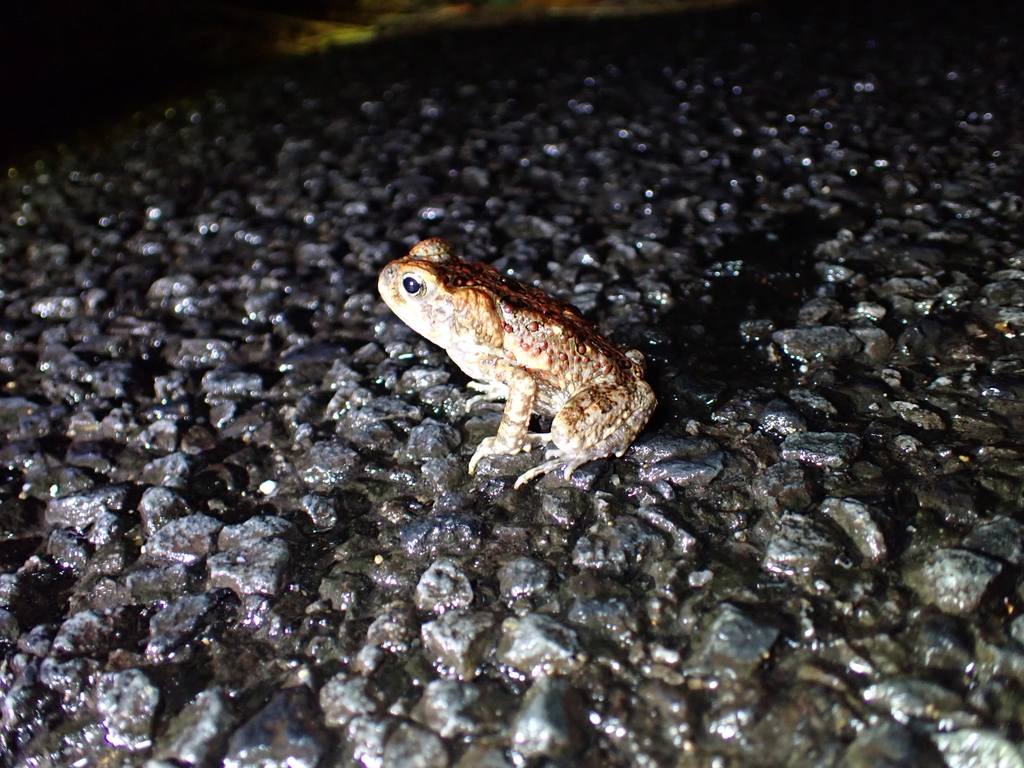
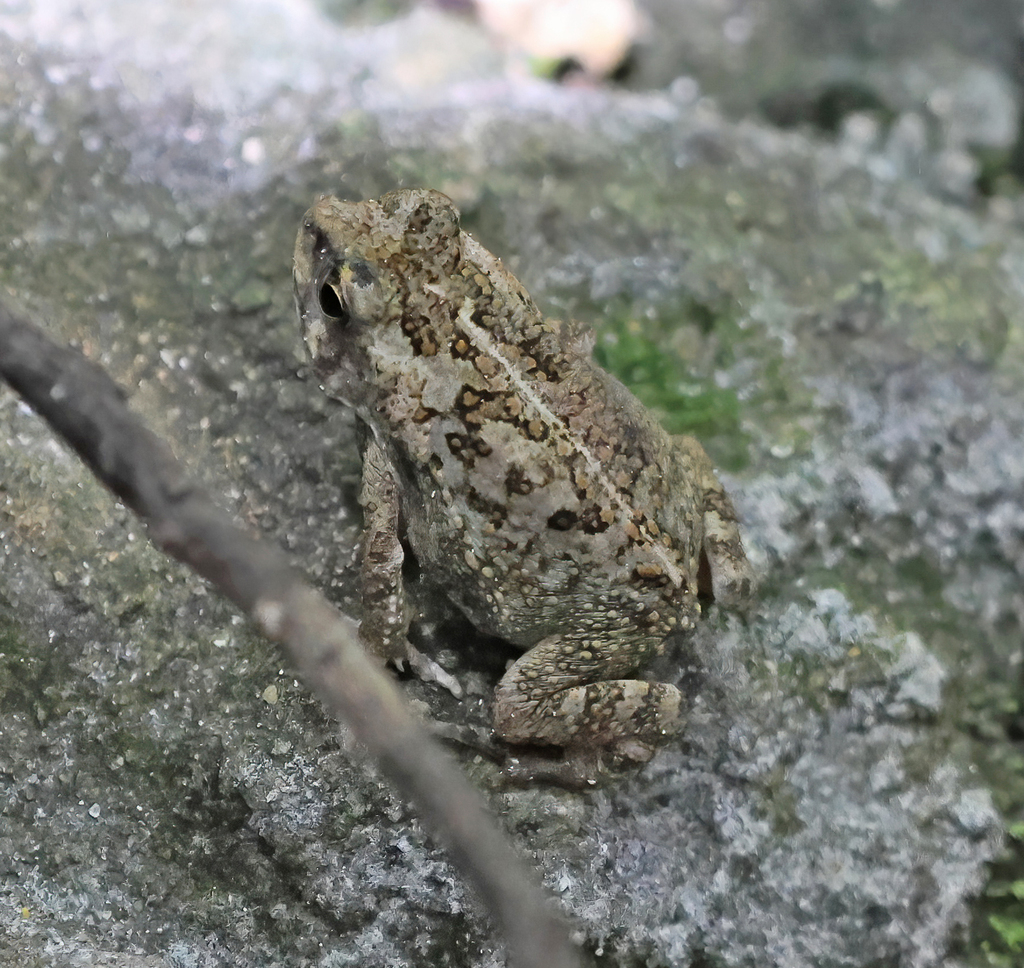
Samuel GUIRAUDOU · CC BY 4.0
Related Species
Was this profile helpful?