
Pinopsida · Pinales
Norway Spruce
Picea abies
Least ConcernAlso known as: Common Spruce, Norway Spruce, European Spruce, Norway spruce, European spruce
© no rights reserved · iNaturalist · CC0 1.0
Picea abies, the Norway Spruce, dominates the boreal and temperate forests of Europe with an imposing presence that has shaped both landscapes and human culture for millennia. This towering evergreen conifer reaches heights that make it one of the most recognisable trees across its native range, instantly identifiable by its dense, pyramidal crown and pendulous lower branches. Found across 21 countries from Scandinavia to the Alps, the Norway Spruce thrives in cool, moist climates where few other trees grow with such vigour.
Classified as Least Concern by conservation standards, the species faces no immediate threat from extinction. Its ecological flexibility, rapid growth rate, and capacity to regenerate in disturbed habitats have made it a cornerstone of European forestry for centuries. Today, the Norway Spruce represents far more than a botanical footnote—it is a timber giant, a cultural icon (particularly as the traditional Christmas tree across Europe and North America), and a keystone species that supports complex woodland ecosystems. Understanding this spruce is essential to grasping the ecology and resource management of the Northern Hemisphere’s most productive forests.
Identification and Appearance
Picea abies is a large, fast-growing evergreen conifer that typically reaches 35–55 metres in height, with a trunk diameter of 1 to 1.5 metres. Young trees grow remarkably quickly, gaining up to 1 metre per year for the first 25 years under favourable conditions, though growth slows considerably once the tree exceeds 20 metres tall. The overall form is pyramidal when young, becoming more cylindrical with age.
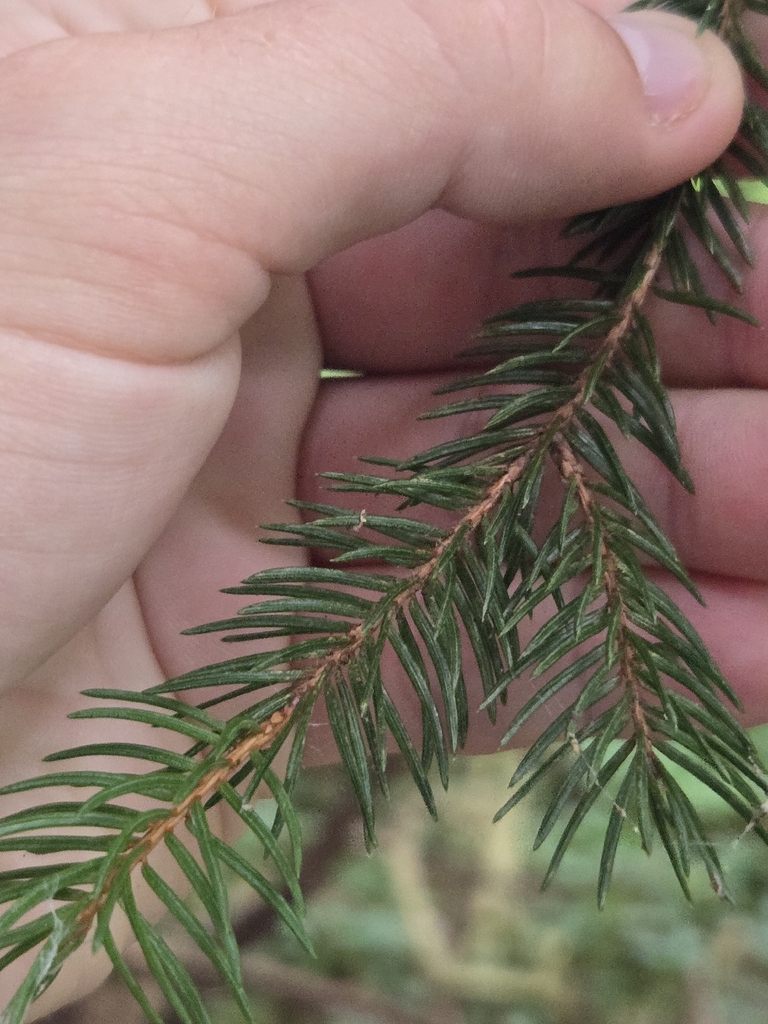
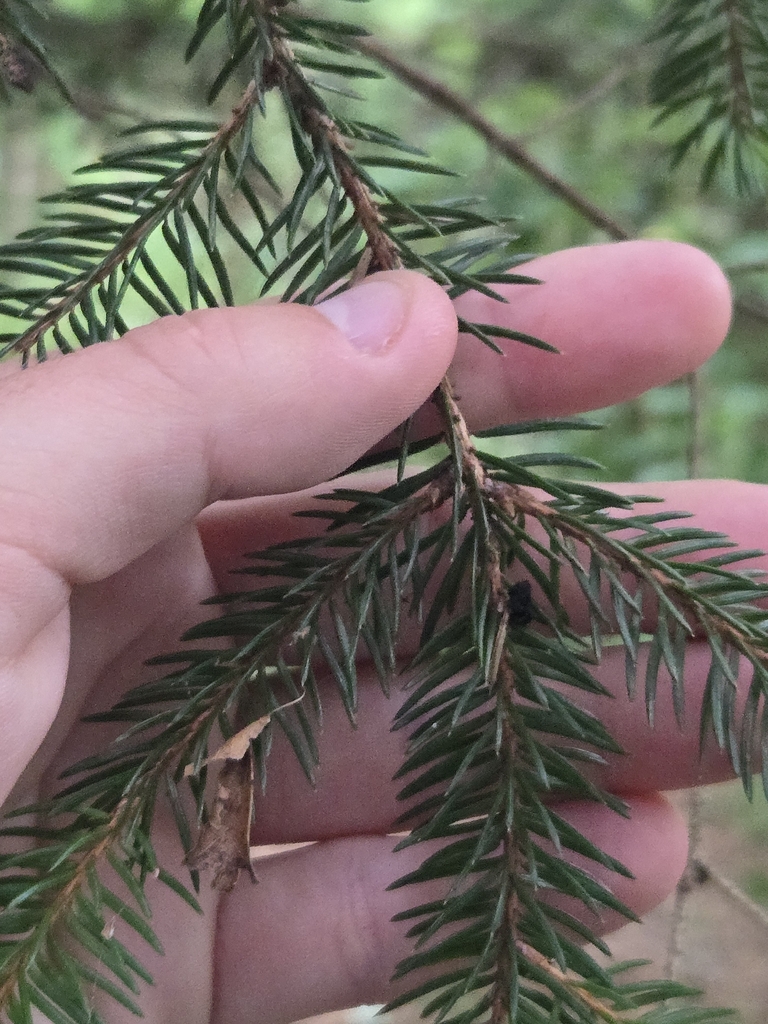
The shoots are distinctively orange-brown and smooth (glabrous). The needle-like leaves are short and compact, measuring 12–14 millimetres long, with blunt tips and a quadrangular cross-section. They are arranged radially around the twig, giving the branches a dense, brush-like appearance characteristic of spruce species. The foliage is dark green year-round, as the tree retains its needles throughout winter.
Reproductive structures
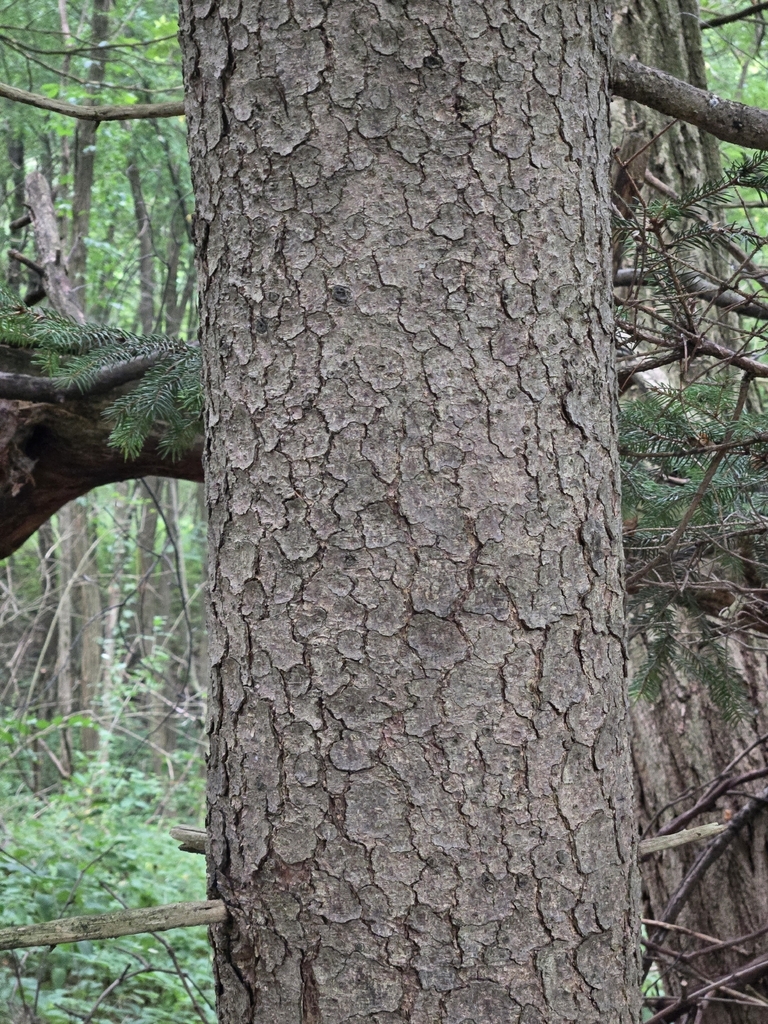
Cones are the primary visual indicator of reproductive maturity. Young female cones are initially upright and relatively inconspicuous, maturing into pendant cones that hang downward from branch tips. Male cones are smaller and more ephemeral, appearing in spring before shedding pollen. The bark on mature trees is reddish-brown and becomes deeply furrowed with age, providing another aid to identification in older specimens.
Distribution and Habitat
Picea abies is native to Europe and occurs across 21 countries, with its stronghold in northern and central regions. Sweden hosts the largest population (81 records), followed by Russia (38), Latvia (35), Germany (23), Austria (20), and Belgium (19). The species also appears in North America, with records from the United States (18), and smaller populations in Norway, Denmark, and Poland. This wide distribution reflects both natural range and extensive cultivation as a timber and ornamental tree.
Elevationally, Norway spruce thrives across a range of 421 to 1,864 metres, with an average occurrence at 1,067 metres. This vertical spread accommodates populations from lowland managed forests to alpine and subalpine zones where the species naturally regenerates. The species tolerates cool, moist climates and is particularly abundant in regions with adequate precipitation and well-drained soils.
Occurrence data shows a pronounced peak in January observations, likely reflecting inventory and forestry surveys conducted during the dormant season when tree identification is easier and management activities are most active. Outside this peak month, records diminish sharply, suggesting that collection effort concentrates on winter months rather than indicating seasonal migration or absence during other periods.
Growth and Cultivation
Growth
Picea abies, the Norway Spruce, is a large evergreen conifer that typically reaches heights of 40 metres or more in natural forest settings, with some specimens exceeding 60 metres. The tree develops a distinctive conical crown when young, gradually becoming more columnar and irregular in outline as it matures. The bark is reddish-brown and becomes deeply furrowed with age. Lateral branches extend nearly to ground level in open-grown trees, creating dense pyramidal silhouettes prized in ornamental landscapes.
The species produces a dense canopy of short needles arranged radially around twigs. Young shoots are initially pale green and smooth before developing the characteristic reddish-brown colour of mature bark. Growth occurs steadily throughout the year in suitable conditions, making Picea abies a long-lived tree capable of persisting for 300 years or more.
Flowering and Fruiting
Picea abies flowers in spring, producing separate male and female cones on the same tree. Male cones are small, clustered, and shed pollen in copious amounts during early spring. Female cones develop over two seasons, reaching maturity as elongated, pendulous brown structures 10–16 centimetres long. These cones remain on the tree through winter before releasing winged seeds in spring, allowing wind dispersal across considerable distances.
Cultivation
Norway Spruce thrives in cool temperate regions and prefers well-drained soils with moderate moisture. The tree tolerates a wide range of soil types and is adaptable to slightly acidic to neutral conditions. It performs best in full sun to partial shade and is highly cold-hardy, making it suitable for northern climates and high elevations. In warmer or drier regions, afternoon shade and consistent moisture improve establishment and reduce stress.
Young trees require regular watering during their first growing season to establish deep roots. Once established, the species is moderately drought-tolerant but performs better with adequate annual precipitation. Norway Spruce is commonly planted as a windbreak, shelter belt, and ornamental specimen in parks and gardens. It is also widely cultivated commercially for timber production and as a Christmas tree, with cultivars selected for compact form and dense branching available for horticultural use.
Conservation and Threats
Picea abies is classified as Least Concern on the IUCN Red List, reflecting its wide distribution across Europe and stable to increasing populations in managed and natural forests. This status indicates the species faces no imminent risk of extinction at a global scale. The population trend is currently increasing, driven largely by active forest management and reforestation efforts throughout its native range in Central and Northern Europe.
Threats
Despite its secure conservation status, Picea abies encounters localised pressures in certain regions. Climate change poses an emerging challenge, as warmer temperatures and altered precipitation patterns shift growing conditions, particularly at lower elevations and southern range margins where the species is less cold-adapted. Bark beetle outbreaks, especially the spruce bark beetle (Ips typographus), intensify during warm, dry periods and can cause significant mortality in stressed stands. Deforestation for agriculture and urban development continues in some areas, though on a smaller scale than in previous centuries. Genetic erosion from uncontrolled logging of wild populations and the planting of non-local provenances in forestry can reduce local adaptation and resilience, even if total numbers remain robust.
Conservation Efforts and Legal Protections
Norway Spruce benefits from extensive protection through European forestry regulations and habitat conservation frameworks. Many populations fall within protected areas, national forests, and EU-designated Natura 2000 sites. Sustainable forest management practices, including certification schemes such as the Forest Stewardship Council (FSC), promote responsible harvesting and regeneration. Seed banking and genetic conservation programmes, particularly in botanical institutions and forest research centres across Scandinavia and Central Europe, safeguard genetic diversity. Several countries maintain strict regulations on forest clearing in sensitive ecosystems, and afforestation with native seed sources continues to expand suitable habitat in degraded areas.
Cultural Significance
The Norway Spruce holds significant cultural importance across northern and central Europe, where it has been integrated into human traditions for centuries. Its prominence in European culture extends beyond its practical uses to encompass symbolism and festive traditions that remain central to winter celebrations today.
In contemporary practice, the Norway Spruce is most recognizable as the preferred Christmas tree species throughout much of Europe and North America. Its symmetrical form, dense branching, and ability to retain needles make it ideal for indoor decoration during the winter holidays. The species is commercially cultivated on extensive plantations specifically for the Christmas tree market, making it one of the most economically important conifers for this seasonal purpose.
Beyond seasonal decoration, the Norway Spruce has deep roots in European forestry and woodland management. Throughout Scandinavia and Central Europe, it has been a cornerstone of timber production and forest ecology for generations. The species appears in traditional names and place names across its native range, reflecting its long association with human settlements and land use. Its wood has been valued for construction, paper production, and musical instruments, particularly the sounding boards of violins and pianos.
Fun Facts
- Norway spruce can live for over 500 years in ideal conditions, with some individuals in Scandinavia reaching ages of 600 years or more. This extreme longevity makes them valuable subjects for dendrochronology—the science of dating historical events through tree rings.
- A single Norway spruce tree can produce tens of thousands of cones in a mast year (a year of unusually heavy seed production), then produce almost none the following year. This boom-and-bust cycle helps overwhelm seed predators during abundant years while conserving energy when resources are scarce.
- The oldest known Norway spruce, named Methuselah’s twin or “Old Tjikko,” grows in central Sweden and is over 9,550 years old based on radiocarbon dating of its root system. It has survived multiple ice ages by cloning itself—sprouting new trunks from its ancient root network when above-ground growth was killed by harsh conditions.
- Norway spruce wood is exceptionally resonant and has been the timber of choice for violin and piano soundboards for centuries because its cellular structure amplifies and transmits sound frequencies with minimal dampening. This acoustic property is so prized that premium spruce from specific Alpine regions commands prices ten times higher than ordinary timber.
- The species reproduces almost exclusively through seeds rather than vegetative propagation in the wild, making each tree a genetically unique individual. This genetic diversity within populations helps Norway spruce populations adapt to changing climates and resist disease outbreaks more effectively than genetically uniform plantations.
- Norway spruce needles are four-sided and can be rolled between your fingers, distinguishing them from the flattened needles of fir trees. This structure increases surface area for photosynthesis while reducing water loss in the dry continental climates where the species thrives.
- The species is not actually native to Norway despite its common name—it originates from the boreal forests of central and eastern Europe, particularly Scandinavia and Russia. It was introduced to Britain in the 16th century and later became popular as an ornamental and timber tree across temperate Europe and North America.
Ecology
Growing Conditions
Conservation Status
LC (Least Concern) · NT · VU · EN · CR · EW · EX
Photo Gallery
no rights reserved · CC0 1.0
Related Species
Was this profile helpful?