
Magnoliopsida · Fabales
Soybean
Glycine max
Also known as: Soya-bean, Soyabean, edamame
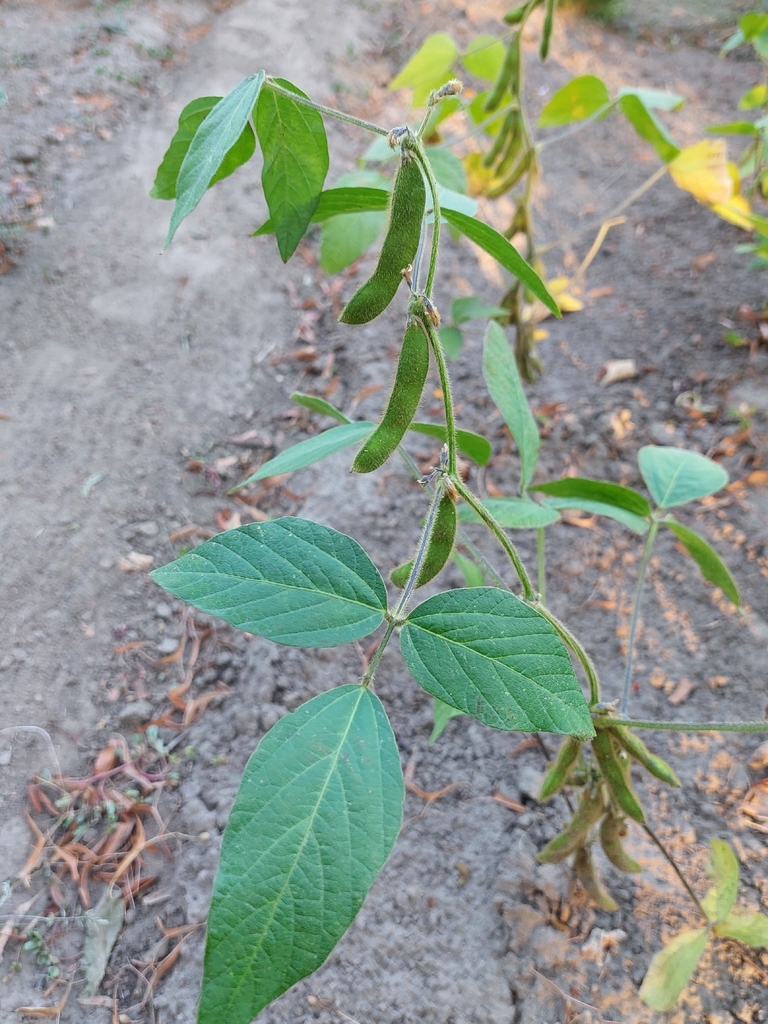
© Viktor Strenada · iNaturalist · CC BY 4.0
Scientific Classification & Quick Facts
Classification
Known For
Detailed measurements for this species are still being verified.
Glycine max, the soybean, is a legume that has transformed global agriculture and human nutrition over the past century. Native to East Asia, this modest herbaceous plant now flourishes across more than 20 countries, from the Americas to Africa and beyond, making it one of the world’s most widely cultivated crops. Its seeds are harvested for their exceptional protein and oil content, feeding both human populations and livestock worldwide, while its ability to enrich soil through nitrogen fixation has made it a cornerstone of sustainable farming systems.
Despite its global importance, the soybean’s conservation status remains classified as unknown, reflecting the reality that domesticated crop species are rarely evaluated through traditional wildlife conservation frameworks. What makes Glycine max particularly notable is the paradox of its success: while it has become humanity’s most economically valuable legume crop, its massive expansion—particularly in South America—continues to reshape landscapes and ecosystems. Understanding this species means grappling with both its immense nutritional and agricultural potential and the ecological consequences of its industrial-scale cultivation.
Identification and Appearance
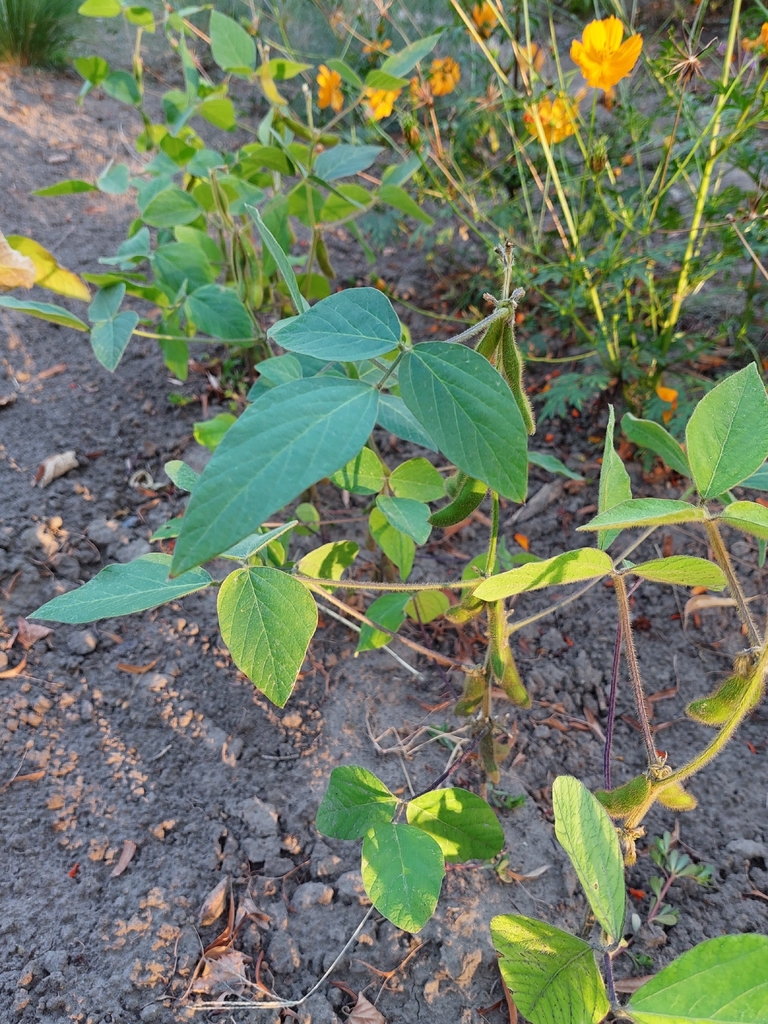
Glycine max, the soybean, is an annual herbaceous legume that grows as a bushy plant with a highly variable architecture depending on variety and growing conditions. Plants typically reach heights between 50 and 150 centimetres, though some cultivars extend beyond this range. The stem is erect and moderately branched, covered in fine hairs that give it a slightly rough texture. Leaves are trifoliate (divided into three leaflets), with each leaflet oval to elliptical in shape and measuring 6–15 centimetres long. The leaflets are smooth or slightly hairy, displaying a bright to medium green colour throughout the growing season.
Reproductive structures
Soybean flowers are small and inconspicuous, typically white, pink, or purple depending on cultivar, and appear in clusters along the stems. The flowers are characteristic of legumes, with a five-parted calyx and a pea-like corolla structure. Following pollination, the plant develops distinctive pods—the defining reproductive feature of the species. These pods are flattened, hairy, and yellowish-brown to dark brown when mature, measuring 3–8 centimetres in length. Each pod contains 2–4 seeds (soybeans), which are spherical to slightly flattened and typically yellow, black, brown, or bicoloured depending on the cultivar. Mature seeds measure approximately 8–10 millimetres in diameter.
Growth stages
Soybeans progress through distinct morphological stages as they develop from germination to maturity. Germination begins when the radicle (primary root) emerges from the seed coat, followed by elongation of the hypocotyl and emergence of the cotyledons and first true leaves. The seedling stage produces the characteristic trifoliate leaves that distinguish the plant throughout its life. As the plant matures, it develops compound leaves, flowers, and finally the harvestable pods. The entire developmental cycle typically spans 90–150 days depending on photoperiod sensitivity and temperature conditions.
Distribution and Habitat
Glycine max is cultivated across at least 20 countries worldwide, with the strongest concentration in East Asia and North America. China dominates global soybean presence with 142 recorded observations, followed by South Korea (46), the United States (30), and Russia (25). Taiwan, Ukraine, Japan, Belgium, India, and Austria also maintain established populations, reflecting the crop’s adaptation to diverse climates and agricultural systems.
The species thrives at modest elevations, with observations clustered between 323 and 432 metres above sea level, averaging 337.7 metres. This relatively narrow elevation band reflects soybean cultivation practices in lowland agricultural regions where mechanized farming is most feasible. The crop shows no strong preference for particular habitat types beyond cultivated fields and agricultural land.
Soybean exhibits a pronounced seasonal pattern tied to the Northern Hemisphere growing cycle. Observations peak sharply in August (93 records), reflecting harvest and peak plant activity, with sustained presence from May through September. June through July record 30 and 65 observations respectively, corresponding to mid-to-late growth stages. Activity drops to near zero from November through early April, indicating dormancy or absence during winter months across most growing regions.
Growth and Cultivation
Growth
Glycine max, the soybean, is an annual herbaceous legume native to East Asia. The plant typically reaches 0.5 to 1.5 metres in height at maturity, though some cultivars may grow taller under optimal conditions. The stem is erect and branching, bearing compound trifoliate leaves with an alternating arrangement along the length of the plant. Root systems are well-developed, with a prominent taproot that anchors the plant and allows access to deeper soil moisture.
Growth is relatively rapid under favorable conditions, with the plant moving from emergence to flowering within 5 to 8 weeks depending on variety and climate. The vegetative phase is marked by steady leaf production and stem elongation before the transition to reproductive growth. Soybean is sensitive to photoperiod; many varieties are short-day plants that require specific day-length thresholds to initiate flowering, making growing season and geographic location key factors in cultivation success.
Flowering and Fruiting
Soybean flowers are small, typically white, pink, or purple, arranged in short clusters along the stem and branches. Flowering occurs in the reproductive phase and is indeterminate in many cultivars, meaning new flowers continue to develop alongside maturing fruit. The flowers are self-fertile and primarily self-pollinating, though insect visitation can occur. Following pollination, the plant produces distinctive flattened, hairy pods that develop over 4 to 6 weeks.
Each pod contains two to four seeds (soybeans), which are the primary economically valuable part of the plant. Seeds are typically spherical, yellow, green, or black depending on variety, and accumulate protein and oil as they mature. Seed maturity is reached when pods dry, turning brown or black, and seeds rattle slightly within the pod. Under most conditions, a single growing season from planting to physiological maturity spans approximately 110 to 150 days.
Cultivation
Soybean cultivation requires full sunlight and well-drained soil with adequate organic matter. The plant tolerates a wide range of soil types but performs best in loamy soils with neutral to slightly acidic pH. While specific pH thresholds are not universally fixed, soybean generally thrives in the range of 6.0 to 7.5. Water availability is critical during flowering and pod development; the plant requires consistent moisture, with 40 to 60 centimetres of rainfall or irrigation during the growing season being typical requirements.
Temperature is another critical factor. Soybean is sensitive to frost and requires soil temperatures of at least 10°C for germination, with optimal germination occurring above 15°C. The plant is strictly annual and does not tolerate freezing conditions. In cooler climates, late-maturing varieties may fail to reach physiological maturity before the first autumn frost. Selection of appropriate maturity groups matched to local growing seasons is essential for successful cultivation. Nitrogen fixation by nodule-forming bacteria reduces the plant’s dependence on external nitrogen sources, making it valuable in crop rotation systems.
Conservation and Threats
Glycine max, the soybean, does not appear on the IUCN Red List as a species of conservation concern. As a widely cultivated crop, it is not evaluated under the standard Red List criteria, which focus on wild populations facing extinction risk. The species has an increasing global population trend, driven by its role as a major staple crop and protein source worldwide.
Threats
Although soybean itself is not threatened with extinction, cultivation of the crop faces several agronomic and environmental pressures. Pest and disease outbreaks—including fungal infections, root rots, and insect predation—regularly damage yields across growing regions. Climate variability, particularly drought and excessive rainfall, affects productivity in key soybean-producing areas. Soil degradation and nutrient depletion in intensively farmed regions reduce long-term agricultural viability. Additionally, the expansion of soybean cultivation has driven deforestation in tropical regions, particularly in South America, converting natural habitats to agricultural land and contributing to broader habitat loss and carbon emissions.
Conservation Efforts
Soybean conservation is primarily focused on protecting genetic diversity and maintaining productive cultivars. Seed banks and germplasm repositories worldwide preserve wild Glycine species and heritage soybean varieties to safeguard against crop failure and enable future breeding for climate resilience and disease resistance. Research institutions continue to develop improved cultivars tolerant to stress, pests, and pathogens, ensuring long-term food security.
Several regions have implemented sustainability standards for soybean production. The Roundtable on Responsible Soy (RTRS) certifies farms that meet environmental and social criteria, including restrictions on deforestation and habitat conversion. These initiatives aim to balance agricultural productivity with ecosystem protection, particularly in biodiversity-rich regions where soybean expansion threatens native forests and wildlife.
Cultural Significance
Soybean has become embedded in contemporary culture well beyond its role as a food staple. The crop has generated cultural discourse around nutrition, health, and masculinity in modern society. While scientific evidence regarding soy’s effects on human physiology remains inconclusive, popular perception has led to the emergence of cultural narratives around soy consumption.
One notable example is the pejorative term “soy boy,” which has entered online discourse to describe young men perceived as having feminine traits or lacking traditional masculine qualities. This slur, popularized in far-right online spaces, reflects unfounded associations between soy consumption and emasculation—claims that lack robust scientific foundation. The term demonstrates how a crop can become entangled in broader cultural debates about gender, identity, and masculinity, despite the absence of conclusive evidence linking soy consumption to hormonal effects in men.
Fun Facts
- Soybeans are the world’s most cultivated legume by both area and volume, dominating global legume production and surpassing all other beans combined in commercial importance.
- Native to East Asia, soybeans were domesticated thousands of years ago and have only become a major global crop in the last century, spreading from their ancestral homeland to become a staple on nearly every continent.
- A single soybean plant can form symbiotic relationships with nitrogen-fixing bacteria in root nodules, allowing it to enrich soil naturally and reduce the need for synthetic fertilizers—a trait shared by all legumes but particularly valuable at agricultural scale.
- Soybeans are unusually versatile among food crops: the same harvest supplies both human nutrition (tofu, soy milk, edamame, soy sauce) and animal feed for livestock and poultry worldwide.
- Soybean oil extracted from seeds is one of the most widely used vegetable oils globally, appearing in everything from cooking oils to biofuels, making soybeans a dual-purpose crop for both food and fuel production.
- A mature soybean plant produces pods containing two to four seeds, and modern breeding has created varieties ranging from 30 centimetres to over 180 centimetres tall depending on growing conditions and cultivar.
- Soybeans require a precise photoperiod (day length) to flower, meaning the same variety planted in different latitudes will flower at different times—a sensitivity that breeders have exploited to adapt soybeans from the tropics to temperate regions like Canada and Scandinavia.
Ecology
Growing Conditions
Edibility
Photo Gallery
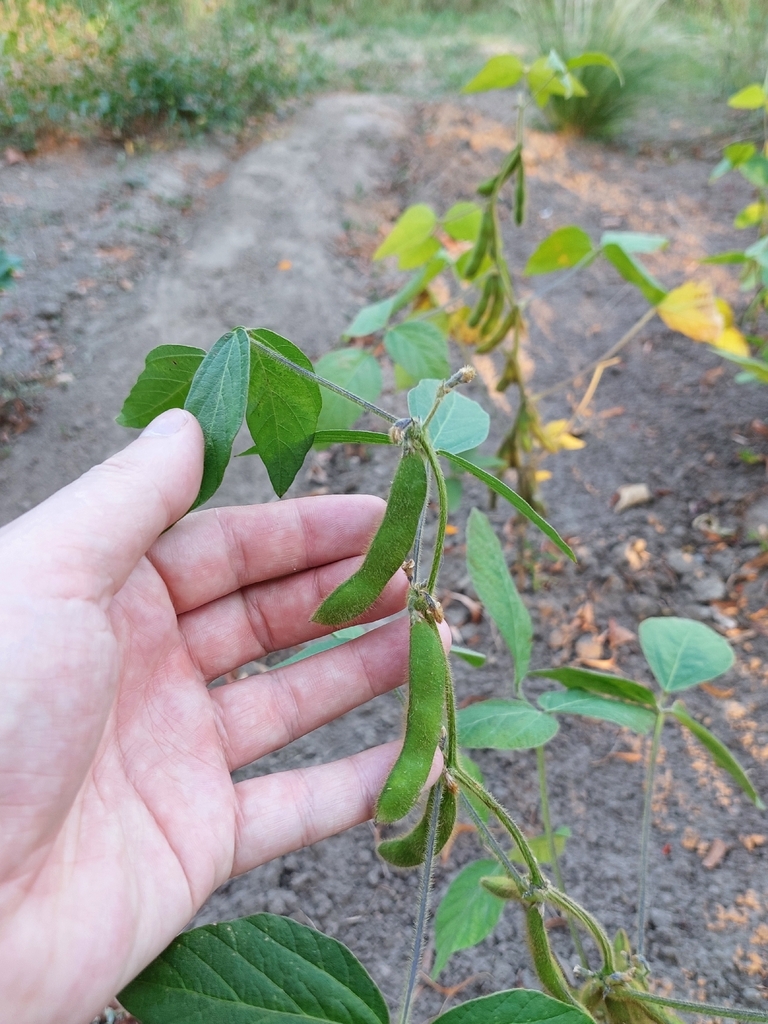
Viktor Strenada · CC BY 4.0
Related Species
Was this profile helpful?